There’s a problem with the proposed merger of Elon Musk’s SpaceX and Tesla, Fortune’s Shawn Tully writes. The addition to SpaceX’s GAAP profits per share would be minuscule. SpaceX’s bottom line is growing, and Tesla’s is dropping. And thus the deal would prove extremely dilutive for the Starlink provider.
Right now, Tesla’s market cap is $1.52 trillion; tack on a 30% acquisition premium and SpaceX would be out $1.98 trillion. SpaceX’s valuation stands at $2.14 trillion. We’re looking at almost a merger of equals. SpaceX would need to issue the equivalent of 92% of its outstanding shares to capture Tesla. Hence, SpaceX’s share count would zoom from 13.1 billion to 25 billion shares.
SpaceX would be awarding nearly half of its future earnings to Tesla’s selling shareholders. And what’s it getting in return? Tesla booked just $3.28 billion in GAAP net profits over the past four quarters.
MORE FROM FORTUNE
Mrs. Dow Jones: Why the Old Money Rules Don’t Work Anymore | Fortune Daily
Bono on U2 ticket prices: Floor spots start around $160 on the new tour, and the band has ‘no problem’ letting rich fans pay $1,500 – James LaForge
Kathy Hochul defies her own party on Trump’s $26 billion school choice bet: ‘I’m not going to leave money on the table’ – Lara Murray-Sterzel
Gen Z and millennials expect to inherit $124 trillion—but retired boomers are ‘spending their kids’ inheritance’ to go on vacation instead – Orianna Rosa Royle
The next K-pop? POPS founder Esther Nguyen hopes TikTok can make Southeast Asian music a global phenomenon – Angelica Ang
POLITICS
Is Britain’s Andy Burnham secretly planning to hold a snap election? ING thinks so.
Last month, U.K. Prime Minister Andy Burnham went on the record to say he would not call an unscheduled election before 2029. But ING’s James Smith believes that if you ignore what Burnham says and observe what he is doing, it looks very much like he is laying the groundwork for a surprise vote next year.
Burnham’s problem is that he has big, bold spending plans, but he is hemmed in by his predecessor’s promise not to make any major tax rises. Because Burnham succeeded Keir Starmer via a palace coup and not a popular vote, he lacks a mandate to break the promises that won the Labour party the election in 2024.
There are two clues that suggest Burnham may be tempted to pull the trigger. The first is that he pushed back a major government spending review into the autumn of 2027. “If you’re also thinking of an early election, then a Spending Review is something you’d almost certainly want to do afterwards,” Smith wrote in a note.
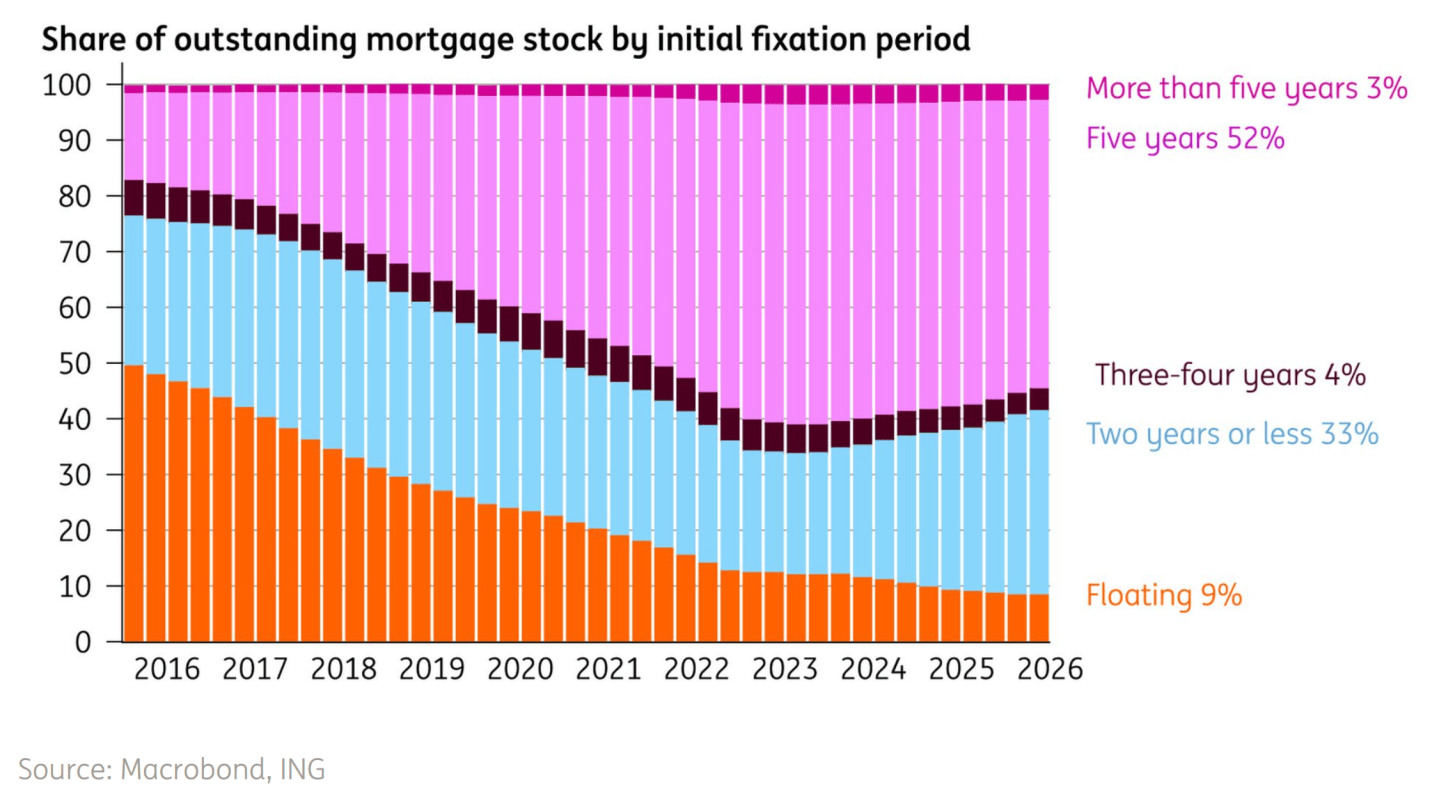
Secondly, interest rates are rising in the U.K. Rates are much more politically sensitive in Britain than they are in the U.S. because the vast majority of homeowners are on mortgages that either track the base rate or are refinanced every five years. (Only 3% of U.K. mortgages are fixed for more than five years.) With rates going up, homeowners who must refinance face monthly increases of hundreds of pounds. It’s an advantage for Burnham to go to the voters now, while most people are on yesterday’s low rates, rather than wait for everyone’s bills to go up.
Labour isn’t doing very well in the polls but it has seen a “Burnham bounce” putting it ahead of the other major parties. More significantly, right-wing voters are now split across three different parties—the Conservatives led by Kemi Badenoch, Nigel Farage’s anti-immigration Reform U.K., and Rupert Lowe’s ultra-nationalist Restore Britain. In Britain’s “first past the post” system, “elections are won or lost depending on which side of the political divide is least split,” Smith notes.
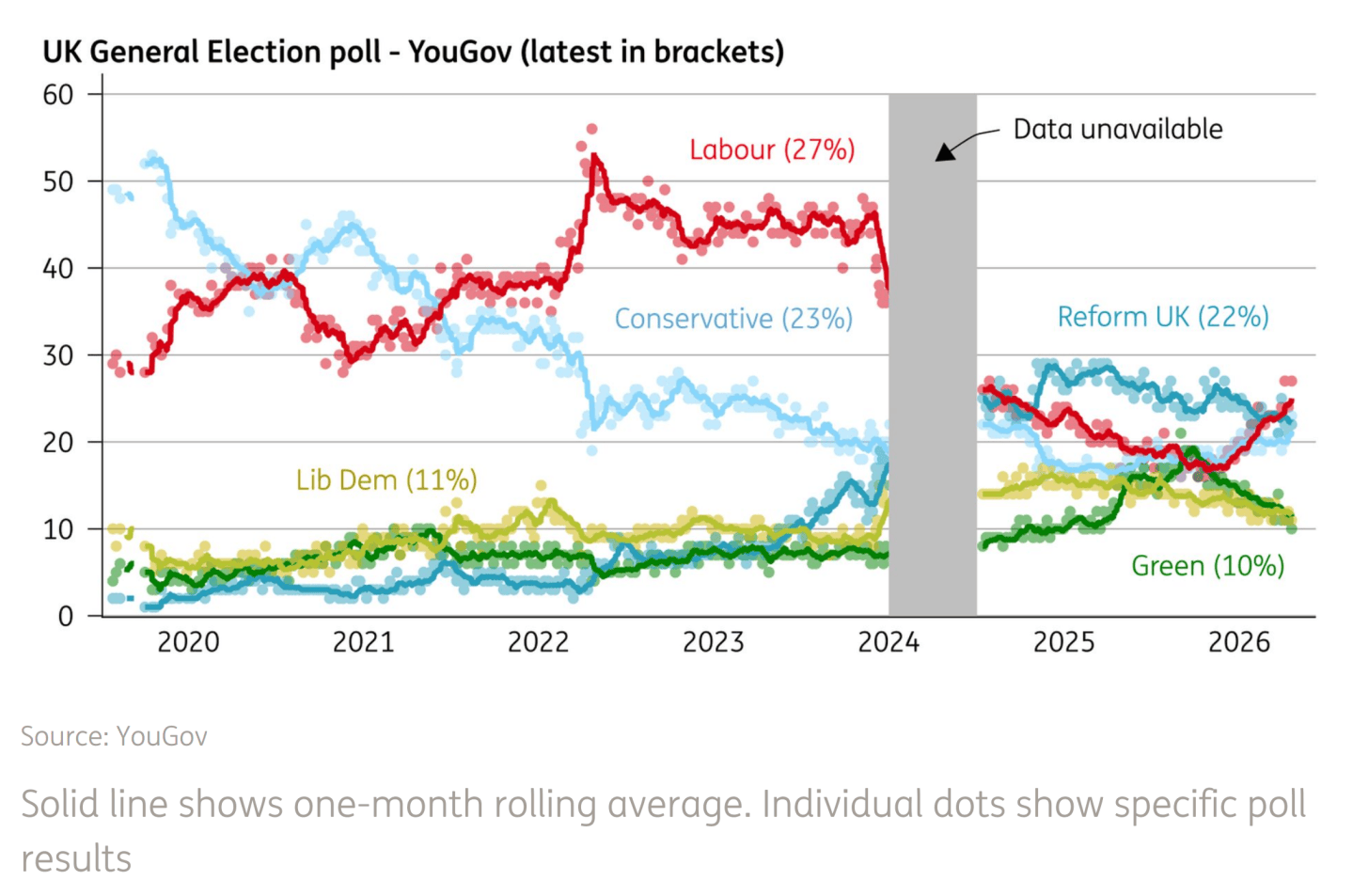
Burnham thus has a chance to repeat what Starmer did: Win a majority in parliament with a minority of the nation’s votes. “I think all roads increasingly lead in that direction,” Smith believes.
THE MARKETS
Markets sell off worldwide as further conflict looms in the Middle East
The mood in the markets turned sharply negative today as traders sold off stock around the world. S&P 500 futures were down more than 1% before the New York open. Futures in the tech-heavy Nasdaq fell even more, down 1.82%. Asia and Europe were both largely down.
A number of familiar factors appear to be driving the selling. The Iran-backed Houthis conducted further drone strikes on Saudi airports and the Saudi Aramco Shaybah oil field. The U.S. ordered its staff to vacate the U.S. embassy in Riyadh. Iran continued its campaign of striking ships trying to use the Strait of Hormuz, with four droned in the last 24 hours. Washington and Israel are reportedly planning to restart major combat operations against Iran after the midterm elections in America. Unsurprisingly, the price of oil rose to $112 per barrel.
High oil prices are bad for Asia, which imports most of its fuel. On top of that, the supply of oil to China from Iran’s “shadow fleet,” which had been at sea prior to the blockade of the Hormuz, has finally been exhausted, the Wall Street Journal reported. China’s CSI 300 index declined 1.84%, down 15% year to date.
Tesla fell by 5.35% in after-hours trading following its Q3 earnings call. The company cut its 2026 capex guidance from $25 billion to $20 billion. “So that raised questions about the speed of its transition into AI and robotics, while current revenue and earnings were close to expectations,” Deutsche Bank’s Jim Reid noted this morning.
Finally, the yield on French 10-year bonds hit 5.1%—a level they haven’t seen since 2002—signaling that traders don’t yet believe that France has put its fiscal crisis behind it.
- S&P 500 futures were down 1.02% this morning. The index rose 0.58% yesterday.
- In Europe, the Stoxx 600 fell 0.92% in early trading, and the U.K.’s FTSE 100 fell by 0.46% before lunch.
- Asia: South Korea’s KOSPI was down 3.52%. Japan’s Nikkei 225 was down 2.65%. India’s Nifty 50 was down 0.82%. China’s CSI 300 was down 1.84%, and is now down 15% year to date—clearly in correction territory.
- Brent crude rose to $112 per barrel.
- Bitcoin declined to $81,922.
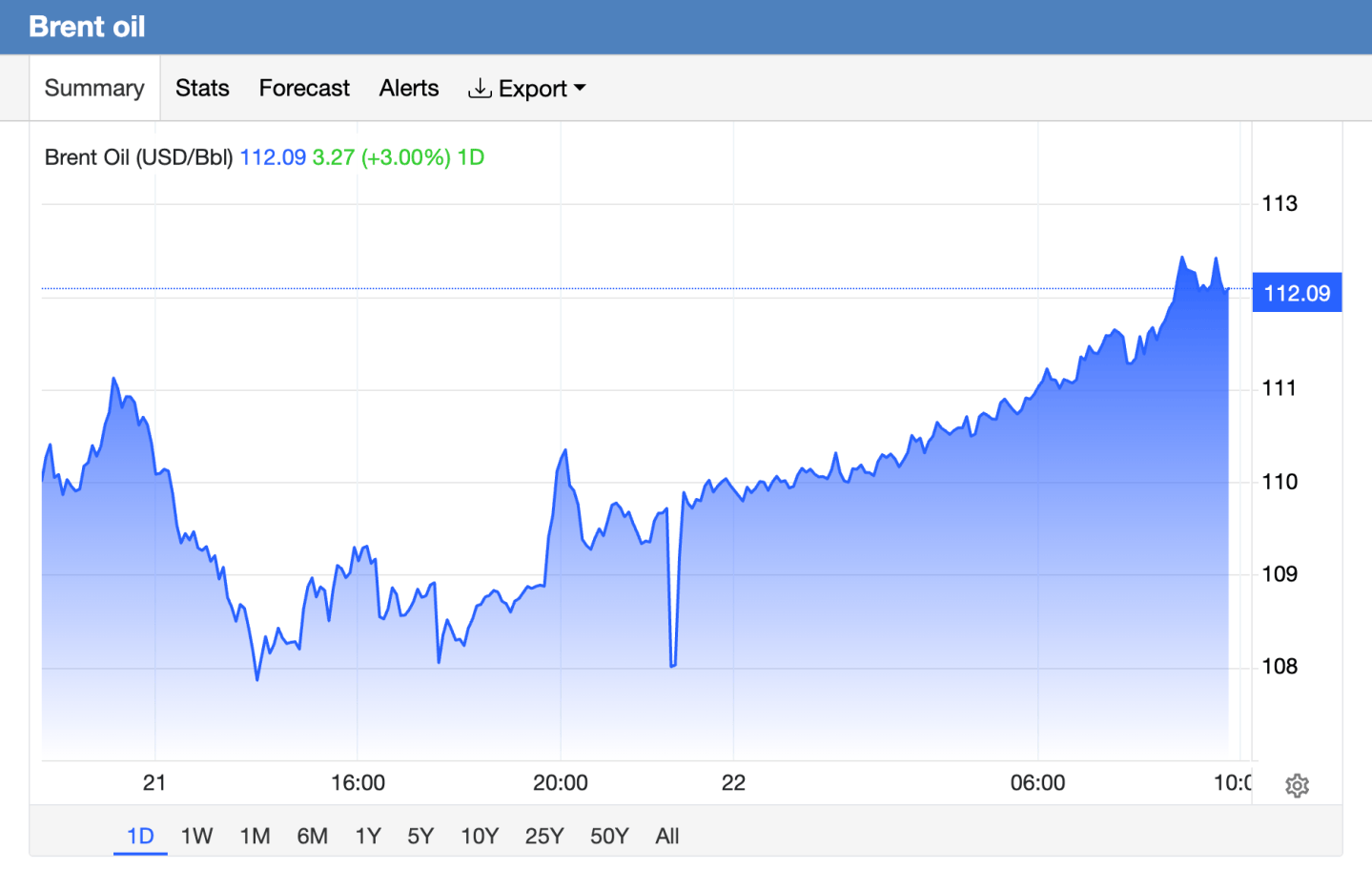
CHART OF THE DAY
Attacks on shipping in the Strait of Hormuz are as bad as they’ve ever been
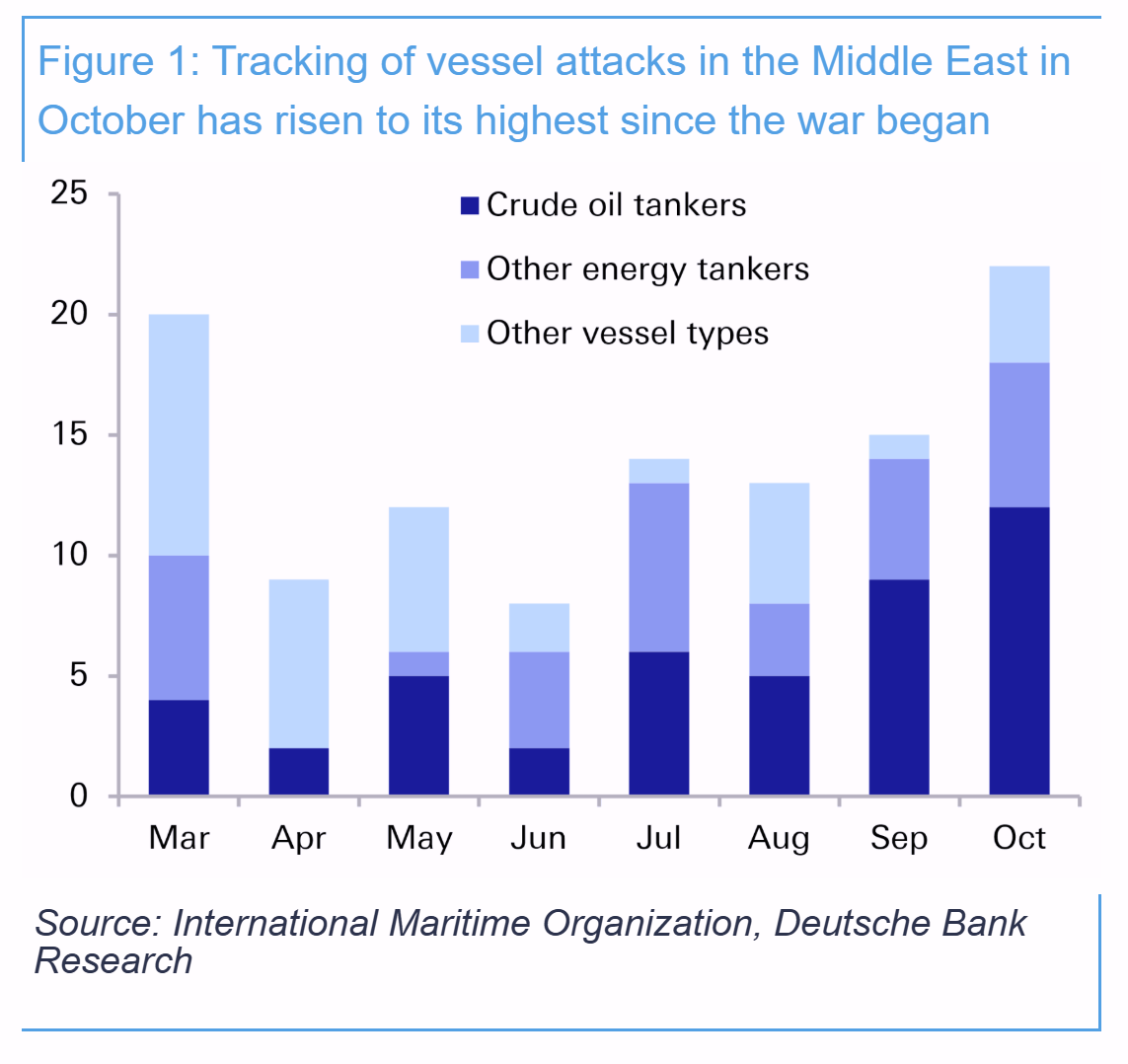
Although the amount of oil coming out of the Gulf region has risen back to the levels they were at before the Iran war started, the number of attacks on ships in the Strait of Hormuz is as bad as it’s ever been, according to Deutsche Bank’s Michael Hsueh. Charter prices for supertankers have doubled—keeping the price of oil above $110 per barrel.
NUMBER OF THE DAY
$2,000-plus
The cost of childcare that 7.7% of American parents pay monthly. That’s the highest band measured by Bank of America Institute’s Taylor Bowley and Jon Kaplan in their recent survey of spiraling childcare costs. The share of people in that band has doubled since 2023, while those paying $1,000 or less has declined. The total number of parents paying for childcare also declined, by 1% year on year.
THE FRONT PAGES TODAY
Meta agrees deal to keep Mark Zuckerberg in California despite wealth tax proposal – FT
Highland Spring billionaire’s property empire hit by loan defaults and creditor action – FT
U.S. pulls diplomats from Saudi Arabia as it reportedly readies Iran strikes after midterms – CNBC
White House to Politico: Retract stories or face “consequences” – Axios
The Superrich Are Buying $100 Million Mansions Just to Tear Them Down – WSJ
Musk Tries to Lock In His Tesla-SpaceX Dream Before Trump’s Exit – Bloomberg
Meta Ordered to Pay $25 Billion for Deceiving Users on Privacy – NYT
Amazon employee files explosive lawsuit claiming senior executive raped her on NYC business trip – NY Post
ONE MORE THING
Get ready for “The Bank of OnlyFans” and its possible IPO
OnlyFans plans to expand into financial services and go public, Fortune’s Emma Hinchliffe reports. OnlyFans CEO Keily Blair, onstage at the Fortune Most Powerful Women Summit last week, outlined the company’s new roadmap. The first major change will be to offer financial services products to the 2.5 million creators on the platform. Many of them make explicit content and are thus often rejected by mainstream banks. Even Blair herself has been rejected by a bank for serving as OnlyFans’ CEO.
Blair says that OnlyFans can offer banking products where mainstream institutions can’t because it has more information about its creators. “We have full visibility into the content that’s being created,” she told me. “There’s a huge difference between perceived risk and actual risk.”
OnlyFans is one of the most successful tech companies to come out of the U.K. It did $1.55 billion in revenue in 2025, its 20% cut of $7.85 billion processed on the platform that year.
“We’re thinking about that pathway towards an IPO and working toward that as a potential goal for the company,” Blair says.
- ➡️ Would you like to sponsor this newsletter? Contact advertising@fortune.com for details.
- ➡️ If you would like to receive this information in your inbox every morning before the markets open in New York, sign up here.
Disclaimer : This story is auto aggregated by a computer programme and has not been created or edited by DOWNTHENEWS. Publisher: fortune.com