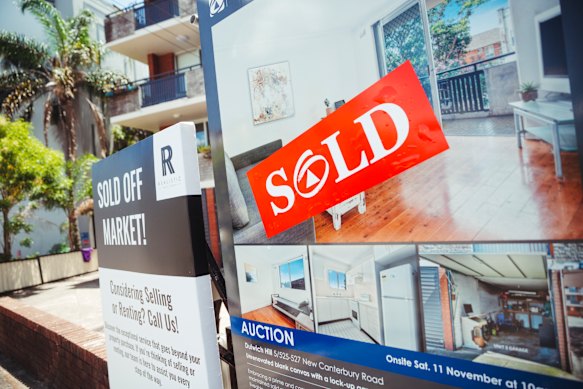

A 30-year property super-cycle that has made Australian homes among the most expensive in the world may finally be coming to an end, one of the nation’s top economists has predicted, despite warnings prices will eventually rebound due to a chronic shortage of homes.
AMP chief economist Shane Oliver on Monday said a combination of higher interest rates, record-poor affordability, a slowdown in immigration and the federal government’s budget changes to property taxation may have finally ended a cycle that has pushed home prices way above fair value.
Data released by Cotality this week showed the national property market at its weakest point since the Albanese government came to office in 2022, with capital city values falling by 0.9 per cent last month.
House values in Sydney dropped by 1.7 per cent while they edged down another 1.4 per cent in Melbourne. But every major capital city market is now either slowing or has turned negative.
Despite the downturn, national values have retreated only to their March levels, while the median house values in Sydney, Brisbane, Perth, Adelaide and Canberra all remain above $1 million.
Oliver said a range of factors, including the decline in official interest rates since the early 1990s, had contributed to a property super-cycle that had pushed up property prices across the country well above their long-term value.
But with interest rates staying higher, the government removing key property tax concessions, the commitment by both sides of politics to ease immigration and a property market that was unaffordable for many potential buyers, that super-cycle had probably ended.
Oliver believes instead of sharp increases over the coming decade, property prices are likely to tread water.
“If the property super-cycle upswing is over, it could mean a decade or so of real house prices ranging sideways and a moderation in home price-to-income ratios,” he said.
“It could also mean that cyclical downturns in property prices are deeper and upswings take longer for prices to reach new record highs.”
Oliver expects a 7 per cent easing in prices through to next year. Even after that, property values in every capital city will still be well above their long-term fair value.
He estimates Sydney property values are 41 per cent above their long-run price levels, with Brisbane values are 65 per cent higher. Even in Melbourne, the nation’s weakest property market, values are 25 per cent above their long-term trend.
But Oliver said prices could step up given the ongoing shortage of housing across the country.
That’s a view shared by KPMG chief economist Brendan Rynne, who will on Tuesday forecast a nationwide drop of 1.1 per cent in house prices this year before rebounding by 3.4 per cent in 2027.
KPMG is expecting house values in Sydney to fall 4.4 per cent this year before lifting 3.6 per cent next year, while in Melbourne, it believes a 5 per cent drop in 2026 will be partially recovered by a 3.3 per cent lift in 2027.
Both Brisbane and Perth are expected to experience house price increases of 3.6 per cent next year after lifting by 4.6 per cent and 6.4 per cent respectively this year.
Rynne said higher interest rates, affordability pressures and a decline in investor activity were behind the drop in prices this year.
But a dearth of homes meant the property market would go through a “V-shaped” recovery.
“While demand has weakened, Australia’s underlying housing issues are stronger than ever,” he said.
“Australia continues to face a housing shortage. Population growth remains firm, rental vacancy rates are still exceptionally low and housing supply is still well below demand.”
Deputy Liberal leader Jane Hume said the entire property market was being upended by a shortage of houses, higher rents and now “uncertainty” for first time buyers and investors.
She suggested the drop in prices was a deliberate action of the government through its budget measures.
“I wonder whether this was an intentional or an unintentional consequence of Labor’s housing taxes,” she told News24.
Treasurer Jim Chalmers said the decline in values so far this year was similar to seven previous falls in the property market that have occurred over the past 20 years, including episodes in 2022 and between 2017 and 2019.
He said people bought homes as a long-term investment rather than focused on a short-term easing in prices.
“People don’t make investments in housing from day to day or week to week, month to month, and so from time to time you will see movements in prices like these,” he told ABC radio.
“But housing is a long-term investment, and we continue to expect over the course of the coming years that prices will continue to rise, but more modestly than before.”
Cut through the noise of federal politics with news, views and expert analysis. Subscribers can sign up to our weekly Inside Politics newsletter.
 Shane Wright is a senior economics correspondent for The Sydney Morning Herald and The Age.Connect via X or email.
From our partners
Disclaimer : This story is auto aggregated by a computer programme and has not been created or edited by DOWNTHENEWS. Publisher: www.smh.com.au