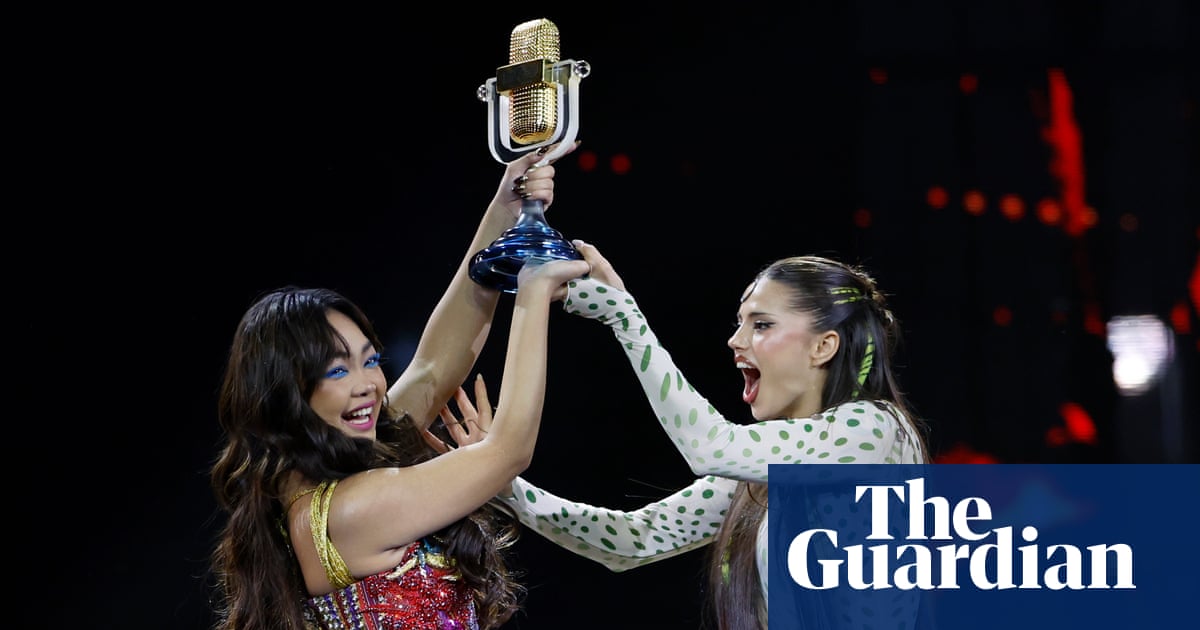
Eurovision’s organisers have said they are “surprised and disappointed” that the first Eurovision Asia was altered when it was broadcast in Malaysia, apparently removing LGBTQ+ imagery and people from the show.
The European Broadcasting Union (EBU), the alliance of public broadcasters that owns Eurovision, said it would write to Voxovation, the company producing the Asian contest under licence, and ask it to establish with the Malaysian broadcaster TV3 why it happened.
Footage circulating online of the contest, which was won by the Philippines’ Carmelle, showed the first of two cuts during the voting in Saturday’s final in Bangkok, when the Philippines’ spokesperson, Vice Ganda, awarded the Philippine jury’s points.
Vice Ganda is gay and identifies as non-binary. The comedian is among the biggest stars on Philippine television, has fronted the country’s most watched daytime show, and has campaigned for LGBTQ+ acceptance at home.
Announcing a national jury’s points is one of the most visible roles in a Eurovision final. Each country’s spokesperson appears in turn to reveal how their jury has ranked the other entries.
While the international feed showed Vice Ganda announcing that the Philippine jury had given its 12 points, the maximum, to the Malaysian entrant, Aina Abdul, TV3 viewers saw only the scoreboard.
Separate footage shows part of the show’s opening number showcasing Thai culture, in which drag performers appeared on street food carts, replaced with a wide shot taken from rehearsals.
Eurovision fans accused the channel of “censorship”. The Guardian has not been able to review TV3’s broadcast independently as its livestream is no longer available online.
Martin Green, the director of the Eurovision song contest, said: “We are surprised and disappointed to learn that the broadcast of Eurovision Song Contest Asia was altered in Malaysia.
“We take this matter seriously and will be writing to Voxovation, the producers of the show, to seek clarification and ask them to establish with Malaysian broadcaster TV3 why this happened.
“This appears to be isolated to the Malaysian broadcast of the show, and all other transmissions were not altered.”
Voxovation said in a statement that it was aware of the concerns raised and was “looking into the matter with the broadcaster to establish the circumstances … We are working with the Malaysian broadcaster to make sure this doesn’t happen again.”
Neither the EBU nor Voxovation said whether the contest’s participation agreement required broadcasters to carry the show unedited or what the consequences would be if one did not.
The Guardian has asked Media Prima, Malaysia’s largest media group and TV3’s owner, for comment.
This is not the first time the wider Eurovision song contest has faced allegations of censorship. In May 2018 the EBU terminated its partnership with the Chinese streaming service Mango TV after it dropped the Irish and Albanian entries and blurred a rainbow flag in the audience, saying such censorship was not in line with its “values of universality and inclusivity”.
Asked before Saturday’s final how the EBU’s commitment to its values squared with the laws in Malaysia and Bangladesh, the other competing country where same-sex relations are criminalised, the EBU’s head of communications, Dave Goodman, said the contest’s values were “non-negotiable”.
Malaysia has some of the harshest anti-LGBTQ+ laws in Asia, with oral and anal sex being punishable by up to 20 years in prison.
Rights groups have warned of a hardening climate. In November last year, authorities raided a men-only spa in Kuala Lumpur and detained more than 200 men, though no charges followed. And in 2022, police raided an LGBTQ+ Halloween party in the capital and arrested 20 people.
In 2023, a festival appearance by the British band the 1975, whose singer criticised the country’s homophobic laws and kissed a male bandmate on stage, led to the event being cancelled and prompted tighter entry rules for foreign performers.
TV3 has faced pressure over LGBTQ+ visibility before. In February 2025, it apologised after male guests arrived at a red carpet event in clothing resembling women’s dress.
Disclaimer : This story is auto aggregated by a computer programme and has not been created or edited by DOWNTHENEWS. Publisher: theguardian.com