Burgeoning electric vehicle uptake spurred on by cheaper new models and soaring fuel costs has led to converts flooding the second-hand market with used petrol and diesel cars, with sellers increasingly forced to cut asking prices to offload their old automobiles.
Australians’ newfound love affair with electric engines may have been the dominant story of the car industry this year – with an EV sold every 100 seconds in the first six months – but the trend has also dramatically shaken up the dynamics of the used vehicle market.
Used car listings swelled to a peak of 437,855 in July, according to AutoGrab data covering dealerships and private listings. About 98 per cent of these are petrol, diesel or hybrids – vehicle types that many motorists are turning away from in droves.
“The Australian automotive market is undergoing the most significant transformation in its history,” is how James Voortman characterises it.
Voortman is chief executive of the Australian Automotive Dealer Association (AADA), which represents used car vendors. “We’ve had an amazing set of circumstances in the past nine months.”
Ross Perry, chief revenue office at industry data analysis platform AutoGrab, puts more bluntly the dilemma facing dealers, lenders and insurers. “Nobody making a decision on a used car can rely on what it was worth last year.”
A buyer’s market
The nation’s new and used car markets are closely linked, with developments in the former heavily shaping movements in the latter. While new car sales figures are strong – more than 1.2 million were sold in 2025 – most Australians are shopping in the second-hand market, which recorded about 2.3 million sales in the same year.
This meant that when a record 157,958 new electric vehicles sold in the first six months of this year, expanding market share from one in 10 new car purchases last year to more than one in four this year – a ripple effect hit the used market.
Among the options available to buyers are new entry-level EVs from Chinese brands such as BYD, Geely and MG, which can sell for between $20,000 and $30,000 driveaway, and the prospect that a typical driver can save about $3000 a year in running costs from avoiding the bowser.
A buyer with $30,000 to spend on a car might have previously considered a five-year-old European car, but could now purchase a new Chinese EV with modern features and a factory warranty for a similar price.
“When consumers can buy a new EV for $25,000, the maths around the second-hand market starts shifting quite a lot,” says Bruce Billson, executive of the Motor Trades Association of Australia which represents mechanics.
Though seasonal stock levels fluctuations in the second hand market are common, and baseline supplies are consistent thanks to the short turnovers of company fleet and novated lease programs in Australia, this year was different. In July’s peak, 12.2 per cent more petrol and 16.8 per cent more diesel vehicles were listed than in the same month last year.
Contributing to a supply glut was a smaller appetite from Australians for used petrol and diesel cars. The outbreak of the war in the Middle East that shuttered the Strait of Hormuz and wreaked havoc on global fuel supplies only served to bolster the appeal of EVs, both new and the relatively small number available on the second-hand market.
In the six months to the end of June, sales of used petrol cars dropped just shy of 10 per cent, and diesel by 4 per cent, compared to the same period in 2025. At the same time, sales of used EVs soared to 25,417 – a 54.6 per cent rise.
“We had the humungous spike in new EV sales – there were waitlists – and so when people had FOMO [fear of missing out] they came to the used car market,” says Voortman.
While the peak of listings has since eased – the figure dropped to 390,184 in September – and sales have improved, the massive shift to electric cars has dramatically hit the value of used fuel-reliant vehicles.
Petrol and diesel cars aged between one and five years depreciated by more than 8 per cent just in the eight months to September. The value lost so far this year is about four times the total depreciation the same kinds of vehicles suffered in all of 2025.
Some vehicles are bucking the broader trends. Hybrids are a key example. As of September, the average 2020 hybrid has retained 81 per cent of its purchase value, compared to an EV model the same year, which kept just 40 per cent.
However, AutoGrab data shows that year by year, newer EVs are defying their predecessors’ notoriety of steep depreciation due to obsolescence fears. For 2024 builds, the depreciation differential is now just 8 per cent less than for a petrol model from the same year.
Beyond broad vehicle types, certain makes and models that are highly sought after are also retaining their value, says AutoGrab’s Perry. “The old rules about what holds its value are being tested car by car,” he finds. Utes, four-wheel drives, vans and vehicles that need to tow are also holding up better as they don’t have practical electric alternatives.
While that phenomenon with newer builds holding more of their purchase value will probably affect the market in the future, the outlook across the entire second-hand market remains softer.
“When all those people make the jump and dispose of their current vehicle to get an EV, it leads to a spike in listings,” Voortman says. It’s a buyer’s market now, which has “presented some good opportunities for those shopping for a used car”.
Melbourne personal trainer Jess Bricker is among those benefiting from the oversupply. The 30-year-old recently moved back to the city with her partner, Jonathan, after years of living overseas. One of the first things she did to restart their lives here was look for a car. As her job requires early morning shifts, Bricker wanted to find one before taking on more work.
As moving back home was costly and their combined incomes are still modest, a brand-new car was outside the couple’s budget. Instead, they turned to the second-hand car market, and Bricker dedicated many days over the month-long process at dealerships and on websites, inspecting cars.
“We didn’t have a car, so then we needed to borrow [Jonathan’s] mum’s car whenever we went to go see a car,” she says. “There were just a lot more hurdles, and I started feeling fairly desperate.”
Electric vehicles felt inaccessible to Bricker, given how renters don’t have certainty they’ll always be living in a home where they can easily charge their car.
Conscious of the fact she would be committing to a vehicle exposed to the ever-rising petrol prices, Bricker was eager to pay a reasonable price. She also felt more comfortable buying from a dealership than from a private individual in case there were after-sale issues.
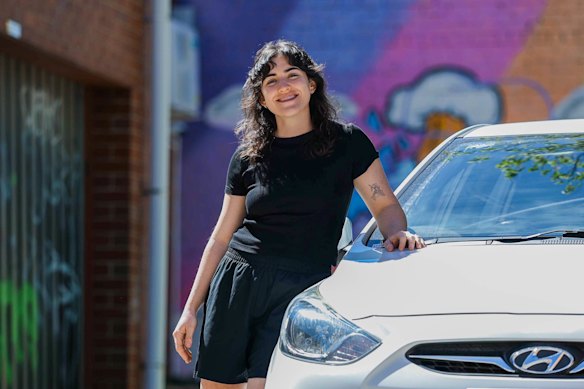
She was thrilled when they eventually found a 2013 Hyundai Accent for $12,500 at a dealership last month which had done 50,000 kilometres.
“The fact that we have a car now, and we essentially paid six-and-a-half grand each feels amazing,” she said. “It felt like a much more manageable amount of savings to spend. It was fully clean, checked… (and) we have people to hold account for if anything goes wrong,” she says.
‘Sellers are having to work harder’
Meanwhile, sellers are now more likely to be pushed into lowering their asking prices.
In June, 51.1 per cent of used cars less than five years old that sold did so with a discount – a share which increased by more than 6 percentage points since January. And the size of discounts for these vehicles has increased too; by June, the average discount had increased to 3.7 per cent.
The headline depreciation and discounting figures stand in remarkable contrast to the heights of the second-hand car market in the pandemic era, when supply chain shortages and surging demand saw many used vehicles selling for more than their initial purchase price, says the MTAA’s Billson. “The abundance of choice has meant sellers are having to work harder,” Billson says.
Soaring costs to repair older cars – spurred by a shortage of parts; increasingly complicated componentry of sensors affected by routine collisions; and manufacturers keen to keep maintenance within their brand’s networks making it harder for independent mechanics to conduct fixes – are also factors, he explains.
Fears of dealing with such costs and headaches might push someone shopping for a car to spring for a new, cheaper EV instead of taking a risk on a second-hand car, Billson says – even if a guarantee of decent after-sales service from new brands compared to established operators is far from certain.
The collapses of online buying platform Carconnect and national dealership Ozcar, while rooted in structural management and governance issues, have led to stories of customers left in the lurch and complicated the image of the industry. Dealers still account for about half of all used car sales, the rest come from private listings such as online ads.
Ben Landau, chief executive of the Flipacar online platform, which serves as a marketplace to sell novated leasing, rental and corporate fleets, says wholesale buyers such as dealerships were becoming more reluctant to purchase second-hand fuel-reliant vehicles, leading to a pricing mismatch.
It has created significant uncertainty in the wholesale second-hand car market, which is where many of the 2.3 million used cars bought each year are sourced from.
Landau says things have become so unpredictable that wholesalers that once bought vehicles needing repairs to sell them on for a profit are now reluctant to take the risk, fearing that prices could fall in the short time it takes to fix them.
As the first wave of Chinese EVs purchased through novated leases begins returning to the second-hand market over the next 12 to 24 months, buyers and sellers should gain a clearer picture of their long-term value.
“This is really the first time that we’ve seen this extent of market volatility,” Launda says, pointing to the influx of cheap EVs, high fuel prices and cost-of-living pressures as a “perfect storm” for the industry.
“Any one of those elements is enough to destabilise the entire market, right?” he said. Now, “you’ve got three of them. It’s difficult to know how things are going to end up.”
The Business Briefing newsletter delivers major stories, exclusive coverage and expert opinion. Sign up to get it every weekday morning.
 Elias Visontay is a National Consumer Affairs Reporter at The Sydney Morning Herald and The Age.Connect via email.
From our partners
Disclaimer : This story is auto aggregated by a computer programme and has not been created or edited by DOWNTHENEWS. Publisher: www.smh.com.au