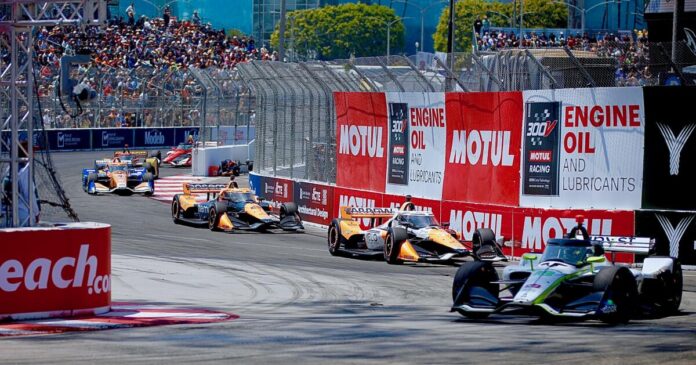
The high-powered Indy cars that will be racing in Sunday’s Grand Prix of Long Beach will burn about two gallons of fuel on each of their 90 trips around the tight 1.968-mile street course.
So if all 27 cars that start the race also finish it, the field will use 4,860 gallons of fuel. And that doesn’t include the fuel used in qualifying or in the other five classifications of cars that will be participating in the three days of racing in Long Beach.
That’s a lot of fuel for drivers who will end up in the same place they started, especially when seven weeks of war in the Middle East has driven the price of gasoline to record highs. However, the fuel the IndyCar series uses differs significantly from what that comes out of the pump at the gas station.
“This year marks the fourth season that IndyCar has used 100% renewable race fuel for the NTT IndyCar Series — the first motorsport series in North America to utilize this type of fuel,” an IndyCar spokesperson wrote in a statement. “Developed through a collaboration with Shell, this innovative fuel consists of a blend of second-generation ethanol derived from sugarcane waste and other biofuels mainly derived from animal waste. The use of this renewable race fuel enables a 60% reduction in life cycle greenhouse gas emissions.”
So while driving Indy cars 177 miles in a circle may seem wasteful during a gas crunch, Sunday’s race will have a negligible affect on the price and availability of fuel at service stations. The greater impact will be made by fans driving to Long Beach; last year’s three-day race weekend drew more than 200,000 people.
Disclaimer : This story is auto aggregated by a computer programme and has not been created or edited by DOWNTHENEWS. Publisher: latimes.com