LONDON – Phase one of the resistance is divided into two parts, the first is the war of supporting Gaza until the many resistance leaders were eliminated. It was then followed by the “battle of determination” where the comprehensive confrontation took place, which was the attempt to completely eliminate the resistance.
This phase began on October 8, 2023, following the October 7 Al-Aqsa operation and continued until November 27, 2024, lasting approximately one year and one month. Its general character was a confrontation between the Israeli occupation entity and the resistance forces in the region. The basis of the confrontation was initially the response to the October 7 operation, followed by the involvement of the resistance in Lebanon in support of Gaza.
The primary objective of the resistance in Lebanon was to support Gaza. During this phase, it achieved a very important objective, which was paralyzing the north of the Israeli occupation entity. For the entity, the phase began with an attempt to contain the resistance in Lebanon while focusing on Gaza. It ended, however, with a shift towards seeking to eliminate the resistance in Lebanon altogether, through the killing of its leaders and the destruction of parts of its military infrastructure.
The Israeli occupation entity was unable to achieve its ultimate objectives during this phase despite the severe blows it inflicted on the resistance. This is despite the fact that the leader of the resistance and a large number of other leaders were killed, and parts of the resistance’s infrastructure were struck. Had it not been for the strength of the resistance, its institutions, its spirit, and its determination, it would not have been able to withstand this confrontation. The imbalance in capabilities, the scale of the penetration that had taken place, and the extensive use of technology created conditions under which the confrontation could have ended with the elimination of any other resistance. Therefore, the resistance’s very ability to withstand the confrontation constitutes an important asset for it. During this phase, Israel was unable to advance beyond the front line more than approximately two to three kilometers.
The second phase began on November 27, 2024 and continued until March 2, 2026. It was a nominal ceasefire phase, while the Israeli occupation entity retained five positions and continued attempting to expand. The most significant development during this phase was the elimination of the Syrian government as part of an international and regional conspiracy, in cooperation with Turkey and the United States, and the installation of a new regime. This resulted in the loss of the strategic depth on which the resistance had relied on Syria and completely complicated its logistical operations, particularly its supply, equipment, weapons, protection and support lines.
The second phase was one of the most difficult phases for the resistance, psychologically and organizationally, because the decision was to remain silent on the ground. There was an urgent need for restoration, repair, restructuring and rebuilding, as well as for learning from the lessons of the first phase. The resistance used this period to rebuild itself and adapt its organizational, military and security structures, while learning from the lessons of the first phase, which had exposed significant vulnerabilities. It also had to adapt to the reality of the second phase, in which the resistance no longer had a strategic rear in Syria.
It was difficult for the Lebanese resistance to remain silent in the face of Israeli transgressions, attacks and violations without responding. However, the balance of power, the political circumstances, and the need for restructuring and reorganization compelled it to maintain this silence. The November 27 agreement, and its provision for the handover of resistance positions to the Lebanese authorities, reduced the resistance’s presence during the second phase.
This negatively affected the confrontation in southern Lebanon and made it easier for the Israeli occupation entity to expand.
The Lebanese resistance entered the third phase on March 2, 2026, which is considered the most important phase, when it seized the appropriate regional moment to connect itself to the broader conflict in the region. After the objective had been to contain, exclude, besiege and eliminate it, the resistance entered the battle through the widest possible gateway when the Israeli occupation entity and the United States’ level of aggression reached the point of attempting to topple the Islamic Republic of Iran.
The Lebanese resistance’s greatest drive was to contribute to preserving the Resistance Front. It therefore entered the battle and transformed the conflict in Lebanon from a local sphere into a regional and international one. The same applied to the Israeli occupation entity, as the results of this war would impose consequences on both sides. Its ultimate outcome therefore became linked to the outcome of the larger battle, a battle that the resistance believes will ultimately favor the Resistance Front led by the Islamic Republic.
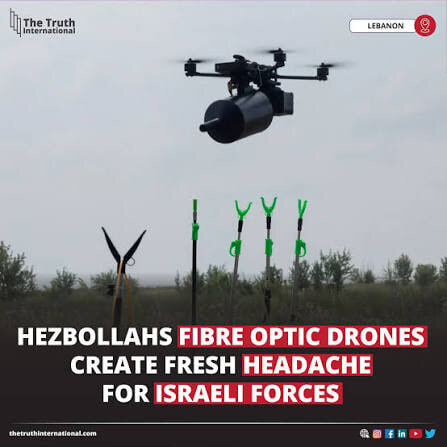
The Lebanese resistance entered a war in support of the Islamic Republic of Iran and a battle to restore the standing of the resistance in Lebanon. It employed new means that it had spent fifteen months developing during the period when it had reluctantly remained silent in the face of Israeli attacks, which included the use of fiber-optic drones. These had a significant impact in terms of Israeli casualties and equipment losses, thereby slowing the entity’s ability to advance. It should not be overlooked that every advance by the enemy in Lebanon occurred during periods of ceasefire, rather than during periods of direct confrontation.
Disclaimer : This story is auto aggregated by a computer programme and has not been created or edited by DOWNTHENEWS. Publisher: tehrantimes.com