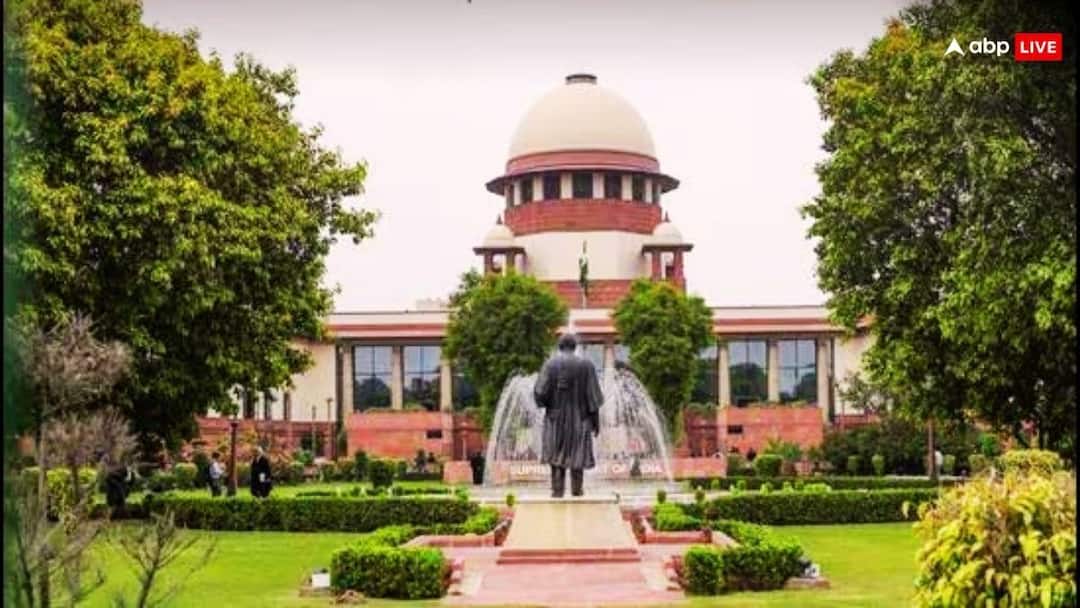
- Supreme Court upholds Election Commission’s electoral roll revision process.
- Free, fair elections depend on accurate voter lists, court states.
- Election Commission acted within constitutional powers for voter roll revision.
- Exclusion from voter lists does not equate to loss of citizenship.
The Supreme Court of India on Wednesday upheld the Election Commission’s Special Intensive Revision (SIR) process of electoral rolls, saying the exercise was within the constitutional powers of the poll body and could not be termed unconstitutional.
A bench comprising Chief Justice Surya Kant and Justice Joymalya Bagchi delivered the verdict after hearing multiple petitions challenging the legality of the SIR process.
Here are the top observations made by the Supreme Court:
“Free And Fair Elections Are Not Just About Polling”
The court observed that democracy does not depend only on the process of voting but also on maintaining accurate electoral rolls.
“Free and fair elections do not rest merely upon mechanics of polling,” the bench said while defending the Election Commission’s authority to revise voter lists.
Also Read: Supreme Court Upholds Bihar SIR, Says Election Commission Acted Within Its Powers
“Election Commission Acted Within Its Powers”
The Supreme Court ruled that the Election Commission had exercised powers granted to it under the Constitution and the Representation of the People Act.
“The Election Commission has exercised its powers, not acted beyond them,” the court observed, adding that the entire SIR process cannot be labelled unconstitutional.
Also Read: Siddaramaiah To Get Rajya Sabha Seat? Speculations Rife Amid Karnataka Power Change Buzz
“Removal From Voter List Does Not Mean Citizenship Ends”
One of the court’s key remarks was that exclusion from the electoral roll should not be interpreted as loss of citizenship.
The bench clarified that the Election Commission is not empowered to determine citizenship status. However, it said suspicious cases can be referred to the Central government for further examination.
“SIR Was Conducted As Per Need”
The court said the steps taken during the Special Intensive Revision were necessary and proportionate considering the scale of the exercise.
It also rejected arguments that the burden of proof had been unfairly shifted entirely onto voters.
The bench noted that even if a person had shifted residence, they or their family could still have records in earlier voter lists, meaning the process was not arbitrary.
“Election Commission Can Reject Doubtful Documents”
The Supreme Court said the poll body was entitled to verify the credibility of documents submitted by voters.
“The Election Commission can refuse inclusion if documents do not appear genuine,” the court said, adding that such scrutiny cannot automatically be interpreted as a citizenship determination exercise.
Challenge Against SIR Process
The petitions had challenged the Election Commission’s SIR exercise, arguing that it went beyond powers granted under Article 326 of the Constitution and the Representation of the People Act, 1950.
Petitioners objected particularly to the requirement that voters missing from electoral rolls prepared in 2002 or 2003 in certain states must now establish proof of citizenship and ancestral linkage with persons whose names appeared in earlier voter lists.
However, the Supreme Court ultimately concluded that the SIR exercise satisfies constitutional and legal requirements and that the Election Commission has the authority to frame procedures for such a large-scale revision process.
Before You Go
Breaking News: Lionel Messi Statue in Kolkata Secured with Ropes Amid Safety Concerns
Disclaimer : This story is auto aggregated by a computer programme and has not been created or edited by DOWNTHENEWS. Publisher: abplive.com