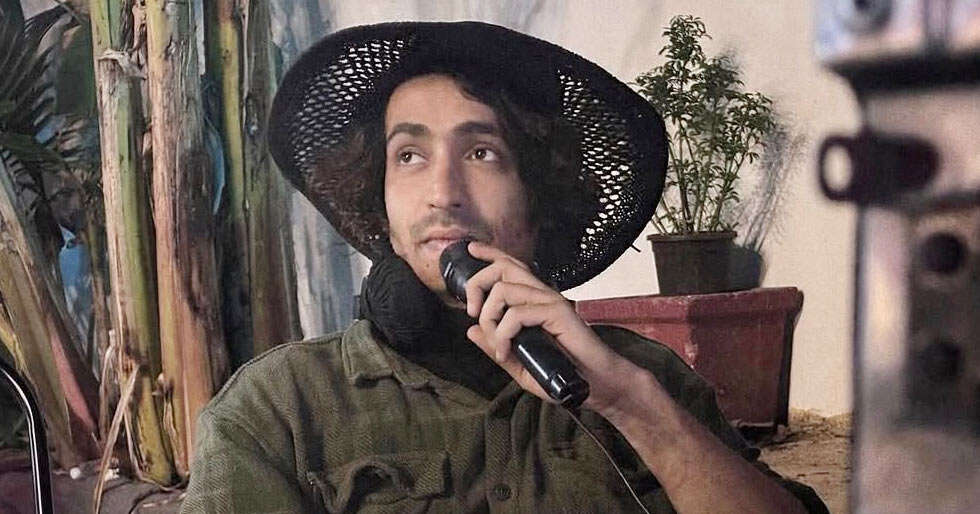
Bollywood parties, the insider-outsider debate and a dose of dark humour: filmmaker Chand Mohammad’s Junglywood brings all these elements together in a dark comedy and psychological thriller that, he says, is intended to entertain rather than target anyone. A fan of David Fincher, Anurag Kashyap and Rajkumar Hirani, the writer-director spent almost three years assembling a crew that shared his passion for and commitment to practical filmmaking. The film’s trailer has also received a vote of encouragement from British actor and rapper Riz Ahmed, who responded to Chand with an email expressing interest in watching his work. In a conversation with Filmfare, Chand talks about the idea behind the film, the freedom of independent cinema, why he believes audiences will continue to turn up for a good story, and more.
How did the idea of Junglywood first come about? Was there a particular incident or experience that inspired you to make the film?
I had always wanted to write a movie centred around Bollywood parties because I hadn’t really seen a film like that in India. While developing the idea, I began reading about the film industry and the conversations around nepotism, which has become a particularly hot topic over the last five or six years. I thought, why not bring these two ideas together? A film about Bollywood parties that also explores the insider-outsider debate and nepotism. I didn’t want it to be just a film with an ethical or social message. I wanted it to be a fun-filled story that explored these issues through entertainment.
Junglywood explores Bollywood through the lens of a dark comedy and psychological thriller. What made you choose this particular genre to explore the subject?
I’ve always been a big fan of psychological thrillers and dark comedies. As a filmmaker, I want to create something that I would genuinely like to experience as an audience member. I chose this genre because I feel there’s a lot more to explore within it, especially in Indian cinema. What you’ve seen in the trailer is perhaps only 20 per cent of what the film actually has to offer. The subject is quite serious, but we’ve chosen to present it in an entertaining way. We’re not targeting anyone. We simply wanted to have fun making this film and, hopefully, give the audience an equally enjoyable experience.
The insider-outsider debate has been discussed extensively, both within and outside the film industry. In 2026, do you think Bollywood is genuinely welcoming towards outsiders, or is there still a gap between perception and reality?
I think the film itself has a lot to say about this, so I wouldn’t want to comment too much and give away its message. I’ve heard plenty of conversations about insiders, outsiders and nepotism, but I also believe this is something that exists across industries. Bollywood is a very old industry, and there are many people who try to create news around these conversations. Our film doesn’t simply support the outsider’s perspective. It also looks at the insiders, why they are where they are, what they deserve and what the outsiders deserve. We explore different sides of the debate, and the audience will get to see that in the film.
You’ve also spoken about consciously staying away from VFX. How rewarding was that approach, and what challenges did it bring along?
That’s actually the fun part of filmmaking. Trust me, there’s nothing better than practical filmmaking. When you’re working practically, you’re creating things with your own hands, alongside a team that genuinely loves the process of making cinema. It took me almost three years to find the right people for this film. Whether it was the VFX team, the technical crew, the cinematographer or my assistants, I wanted people who understood my vision and knew how to translate it into cinema. My idea was to create as much as possible practically. Even the title card you see in the film was created practically. I enjoy that process, and I will always try to follow an old-school approach to filmmaking.
You’ve had considerable experience with independent filmmaking. What do you enjoy most about it, and what do you think are its biggest advantages and disadvantages compared to commercial cinema?
Independent filmmaking teaches you through experience. You learn through practice and hard work. There’s no teacher, no fixed guidance and no pressure from anyone. You get to do your own thing. In many ways, I think independent filmmaking is a film school in itself. There’s very little external influence, and you get the freedom to develop your own ideas. Whether the outcome is good or bad, at least you’re attempting something original. Commercial cinema, on the other hand, often comes with references and expectations. People tell you what you’re supposed to do, what’s trending and what kind of content works. That’s one of the biggest differences I see between the two.
When you’re an independent writer, you’re essentially writing for yourself. You get to tell the stories you want to tell, and I think that’s the best part of the process. I’ve always loved writing. When I started my career, I wanted to make a feature film, but I approached a few established writers and they weren’t keen to work with me because I was new. That’s understandable; it’s part of the process. The scripts I was getting from other newcomers also weren’t connecting with me. So I decided to start writing my own stories and directing them myself. That’s how I got into writing. Even today, it’s the part of filmmaking that I’m most drawn to.
As a writer-director, are there any filmmakers whose work have influenced your creative journey?
David Fincher has been a huge inspiration to me. In Indian cinema, I’d say Anurag Kashyap and Rajkumar Hirani have had a significant impact on my filmmaking. Anurag Kashyap inspires me because of the way he started with independent cinema. And Rajkumar Hirani’s films have a message, strong storytelling and a filmmaking style that connects with audiences, which I really like.
With OTT platforms and social media changing the way audiences consume content, there’s often a conversation around shorter attention spans and instant gratification. Do you think storytelling is adapting to this shift?
Over the last four or five years, we’ve seen a significant rise in short-form video content. But if you look at films with good content and strong storytelling, there’s still tremendous progress happening. People love cinema. There’s a perception that OTT platforms and social media have made audiences impatient, but I don’t entirely agree with that. Of course, there’s an audience for shorter content, but people who genuinely love cinema will continue to watch films. Look at films like Obsession or Dhurandhar. Audiences have been willing to spend three-and-a-half hours in a theatre when the content engages them. They don’t necessarily care about the duration or whether the film has a slow pace. If you make a good film, people will come to watch it.
You recently received appreciation from Riz Ahmed for the trailer of Junglywood. How did that interaction come about?
I’ve been following Riz Ahmed’s work for almost six years now. I’ve admired his work since Nightcrawler, and I particularly loved his performance in Digger. I’m someone who regularly watches films and shares my appreciation for good performances and cinema on social media. I eventually reached out to him and shared my story. To my surprise, he liked it. I wasn’t expecting a response, but a couple of days later, I received an email from him. He expressed interest in watching the trailer, and I got the opportunity to share it with him. What makes the gesture even more special is that he’s such a busy person, with several projects on his plate. He’s an accomplished actor and a musician. He could have simply responded to my Instagram story with a thank-you, but he took the time to write an email. That meant a lot to me. As a filmmaker who has admired his work for years, receiving that kind of encouragement is incredibly motivating. It’s something I’ll always remember.
Also Read: Chand Mera Dil Box Office Day 1: Ananya Panday and Lakshya’s Film Has a Modest Start
Disclaimer : This story is auto aggregated by a computer programme and has not been created or edited by DOWNTHENEWS. Publisher: filmfare.com