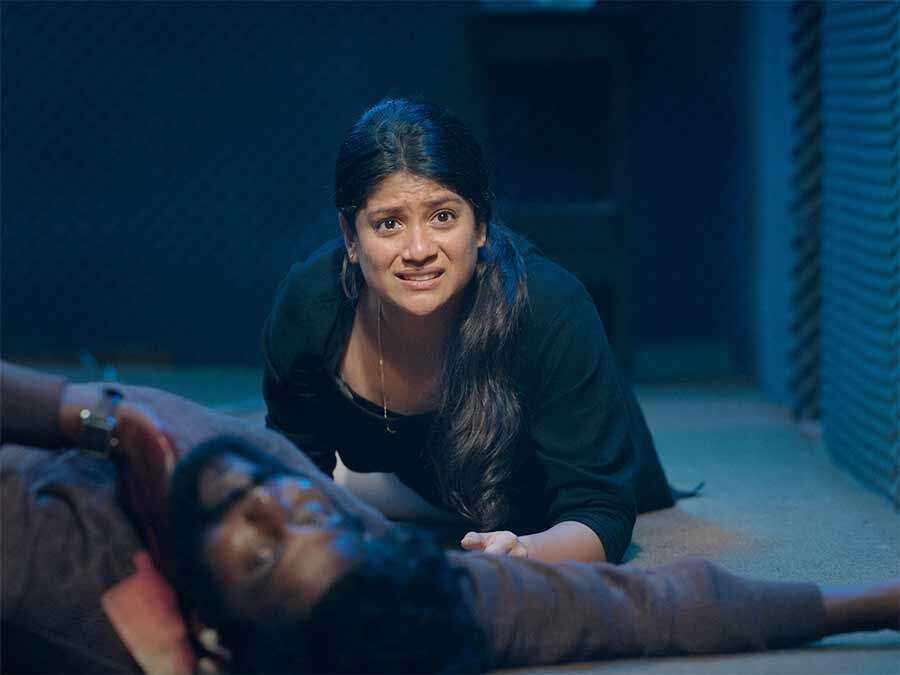
At a time when crime thrillers are increasingly occupied with serial killers, gang wars, and political conspiracies, Exam finds suspense in something far more familiar and arguably more unsettling: the government recruitment examination system. The seven-episode Tamil web series follows Jhansi (Dushara Vijayan), a determined young woman whose dream of entering public service is derailed by an examination scam, setting her on a path that exposes corruption, power networks and the human cost of a broken system.
The series comes from producer duo Pushkar and Gayathri, whose work on projects such as Vikram Vedha and Suzhal: The Vortex has consistently blended genre storytelling with social commentary. With Exam, they back filmmaker A. Sarkunam’s exploration of examination fraud, a subject that affects thousands of aspirants across Tamil Nadu, but has rarely found space in mainstream fiction.
In a conversation with Filmfare, along with actor Abbas, the duo revealed that what first attracted them to the project was not just the topicality of its subject, but the emotional story at its centre.
“Sarkunam said he was working on an idea based on the scam that happens during these civil service exams. We jumped on it immediately because it felt fresh,” recalls Gayathri. “A lot of people count on these examinations to change their lives, but surprisingly there hasn’t been a film or series that really explored this world.”
Yet the challenge, she says, was ensuring that the project did not become a dry procedural focused solely on the mechanics of corruption. “The concern was whether it would become too documentary-like. Would audiences get invested in the characters? What worked for us was that Sarkunam had built the story around Jhansi’s journey. There was an emotional narrative running alongside the investigation, and that gave us something to hold on to.”
That emotional anchor became particularly important because Exam is not merely interested in exposing a scam. It is equally concerned with the people shaped by it. Through characters such as Jhansi, former jailer Jayachandran (Abbas) and the morally complex Kumaresan (Jeya Sooriya/Naren Mani), the series explores how individuals respond when institutions fail them. Some persist. Some compromise. Others reinvent themselves entirely.
The setting, too, reflects that focus on lived experience. Instead of centring urban coaching hubs or national-level examinations, Exam unfolds largely within rural Tamil Nadu, where a government job can transform the fortunes of an entire family.
“When it comes to state civil service examinations, the aspiration is often strongest among rural and disadvantaged communities,” explains Pushkar. “One person getting into government service can transform not just their own life but the life of an entire family or village.”
The authenticity of that world stems from Sarkunam’s own observations. According to the creators, several of his friends spent years preparing for government examinations, often watching opportunities slip away despite their efforts. “A lot of his friends had spent years preparing for these examinations,” says Pushkar. “They worked incredibly hard while watching others somehow get opportunities through unfair means. That frustration and disappointment came from a very personal place.”
That grounding in reality is perhaps most evident in the show’s characters. While Jhansi functions as the audience’s primary point of entry into the story, one of Exam’s most compelling decisions is the attention it devotes to Kumaresan, a character who could easily have been reduced to a conventional antagonist.
Several episodes open by revisiting his past, gradually revealing how his journey mirrors Jhansi’s in unexpected ways. “What resonated with us was that Kumaresan and Jhansi actually begin from very similar circumstances,” says Pushkar. “Both are intelligent people who are denied opportunities. Both are failed by the system. The difference lies in how they respond.” For the creators, that contrast lies at the heart of the series. “The system failed both of them. One chose this route, and the other chose that route.”

Exam repeatedly returns to the idea that circumstances alone do not define a person. The choices made in response to those circumstances matter just as much. Kumaresan’s evolution is therefore not presented as the story of a villain, but as the story of someone who gradually moves away from the ideals he once held.
Pushkar points to a detail involving a promise made by Kumaresan’s mother as an example of the layered morality embedded within the character. Despite acquiring wealth and influence, he never fulfils a vow connected to obtaining a government job because, deep down, he knows he never truly earned it.
“It tells you something about the morality operating within him,” says Pushkar. “Those little details are what make a character interesting.”
“That idea of the identity which Kumaresan creates, Jhansi creates, Maramalli creates; and how it becomes fluid between them, really intrigued us,” says Pushkar. “Jhansi goes to perform the job which Maramalli was supposed to go to. Now, if the system had worked, Jhansi would have been the person to actually go there, and she could have cracked it down. But because of people like Maramalli and Kumaresan, the system becomes self-propagating. If Maramalli had helped the scam happen that year, she would get more people who were willing to pay to scam in the exam and get jobs; and then, the next generation would keep doing that, and the next…”
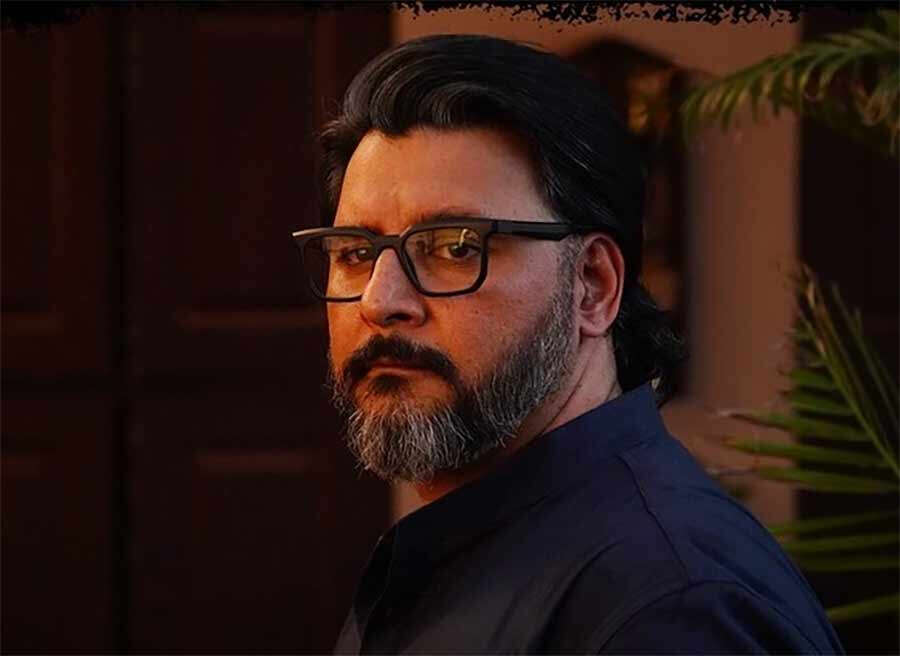
The same attention to character informs the arc of Jayachandran, played by Abbas in one of his most notable Tamil screen appearances in recent years. The actor reveals that he first expressed interest in working with Pushkar and Gayathri several years ago, long before Exam entered production.
“I told them if they came across something interesting, I’d love to hear it,” says Abbas. “When they narrated Exam, I immediately connected with it because I’ve always been drawn to stories about underdogs. This felt real. It wasn’t superficial.”
Jayachandran quickly emerges as one of the story’s moral centres, making the character’s fate all the more shocking for viewers. For Pushkar and Gayathri, that reaction was precisely the point. “When that moment happens, audiences don’t expect it,” says Gayathri. “You assume this character will continue to be part of the story. That’s exactly why it works.” Pushkar believes the decision strengthens Jhansi’s arc. “As long as she has a mentor, she has someone to lean on. Once he is gone, she has to carry the burden herself. That becomes the real test of her character.”
For Abbas, meanwhile, Exam marks the beginning of a new chapter. Following the series and the recently released Happy Raj, the actor says he is actively seeking characters that allow him to move beyond the image audiences traditionally associate with him. “For years I played variations of similar characters,” he says. “I wanted to experiment with different shades. That’s what excites me now.”
He also reveals that he is set to appear in a multilingual film titled Half: Blooded Vampires, which he says showcases a very different side of him as a performer. “I’ve got another project called Half”; and then immediately clarifies: “Half-Blooded Vampires. That’s going to be coming out maybe shortly. Originally shot in Malayalam, but it’s multilingual.”
While the creators remain tight-lipped about future plans, they confirm that Sarkunam is already exploring another examination-related scam as the basis for a potential continuation. “He’s researching another examination scam right now,” says Gayathri. “The challenge is always finding the right balance between the actual mechanics of the scam and the emotional drama.”
If there is one thread viewers seem particularly eager to revisit, it is the dynamic between Jhansi and DSP Maramalli (Aditi Balan). Though the two characters spend much of the series on opposite sides of the conflict, their brief alliance towards the end hints at an intriguing partnership. Pushkar and Gayathri acknowledge that audiences have responded strongly to that relationship, but say they are waiting to see where Sarkunam takes the story next.
“We’re asking the same questions,” Gayathri says with a laugh, referring to whether the two characters could share more screen time in a potential second season. For now, the creators remain as curious as viewers about how that equation might evolve.
What ultimately elevates Exam above a conventional scam thriller is its refusal to divide the world neatly into heroes and villains. Jhansi and Kumaresan begin from similar places, carrying similar aspirations, and facing similar disappointments. One remains steadfast. The other adapts. By framing them as products of the same broken system rather than simple opposites, the series finds its most compelling question: when institutions fail people, what determines the path they take next?
Also Read: Planet Marathi Filmfare Awards Marathi 2022:Nehha Pendse, Pushkar Jog and more walked the red carpet
Disclaimer : This story is auto aggregated by a computer programme and has not been created or edited by DOWNTHENEWS. Publisher: filmfare.com