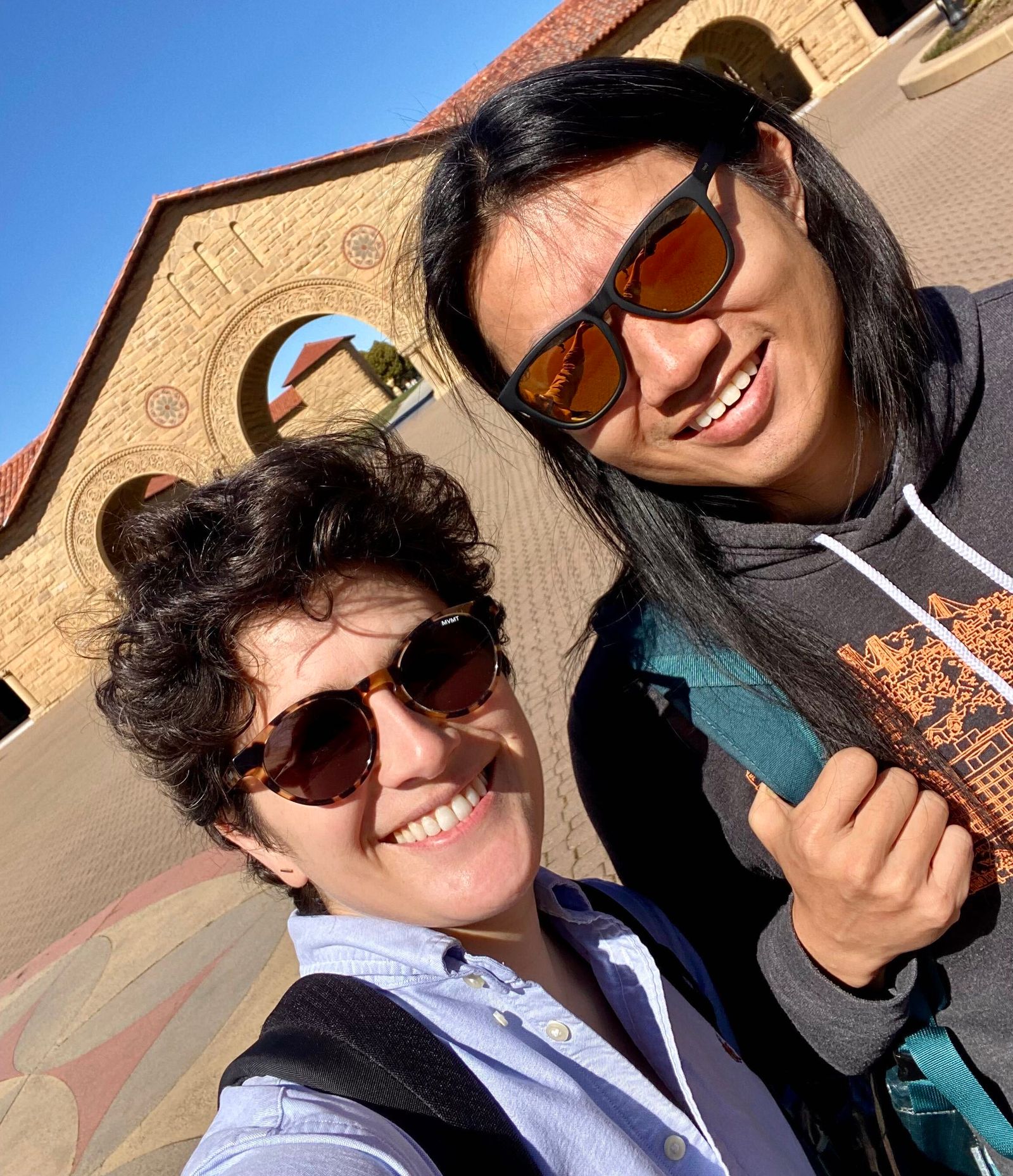
Tessa Brown is visibly excited to talk to me about Germ DM, her secure messaging platform. It’s now available on Android, a major expansion for the small startup. Her eyes light up as she explains how her ambitious, three-person team—including an ex-Apple engineer who worked on iMessage—could pull off this platform expansion.
“It’s essential to be able to talk to everybody, and that’s really what this Android launch unlocks for us,” she says. Brown was previously a lecturer at Stanford University, and her cofounder, Mark Xue, worked on iMessage’s privacy provisions. The duo first launched the iOS app for Germ in 2023.
The platform expansion makes it easier to recommend Germ as an interesting alternative to Signal, especially for early adopters curious about trying new ways to message others and connect with the world.
My favorite aspect about Germ is that the platform doesn’t nudge you to attach a phone number. “Germ is a multi-identity messenger,” Brown says. “The way walled gardens are constructed means that every time you log into an app you get one identity that the app owns.” On Germ, it’s not about creating a permanent handle that you give to everyone; multiplicity is central to this messenger’s pitch.
The app revolves around “burner cards.” Each card works like a separate phone line built into the app. Instead of a dedicated number or a public handle, you can share these Germ cards in two ways: a QR code or a direct link. You can scan QR codes inside the app if meeting someone in person. For digital connections, you can generate a custom link tied to the card, from just one to 100.
After downloading the app, you create these cards by tapping on the green plus button under the Me tab. Choose the name, pronouns, and photo you want to use for that card. Cards associated with your Germ account are not mutually discoverable, and who you connect with on each card is private. As the name suggests, if you delete these “burners” at any time, the connections associated with that card will no longer be able to contact you, and those chats will be removed from your device.
The Germ network runs on Messaging Layer Security, built by the Internet Engineering Task Force as an end-to-end encryption standard. When you are exchanging those “burner cards,” you are actually exchanging cryptographic keys with your new contacts. However, Germ has not undergone a third-party audit, though Brown is open to doing so in the future.
“People want to share different parts of themselves with different people,” Brown says. “Queer folks get Germ immediately; it’s not just queer people. It’s also people who are gig workers and creatives that have multiple jobs.” Germ is built to share with people in different parts of your life and let them contact you in a central hub through distinct messaging channels.

Xue is serious about the work Germ put into building a secure platform, including addressing the looming issue of quantum computing. Essentially, security experts worry that super-powerful computers could break encryption protections and reveal previously private messages. Developers at large messaging platforms, like iMessage and Signal, have built protections against these quantum concerns. “What we’ve accomplished as a small team is we’ve reached the same level of security,” he says. Germ publicly laid out how the platform claims to be “quantum secure.”
Germ’s most recent success came from its integration with Bluesky. Since that social media platform is built on the Authenticated Transfer Protocol, Bluesky users can connect their existing handles to Germ and display it as a messaging button in their profile. This lets friends on the platform easily send you encrypted texts. While many users enjoy that platform-specific integration, Germ’s expansion to Android is a fresh opportunity to meet a new user base.
Brown already has her sights set on Germ’s next move: group chats.
“We’ve worked together this whole time over the belief that the future of communication is in private chats,” she says. For now, the platform supports one-on-one conversations, but the team is ready to build support for larger, group threads.
It might be hard to convince your group chat to switch to a new app, but flashing a QR code to a stranger you just met to continue a conversation could actually work.
Disclaimer : This story is auto aggregated by a computer programme and has not been created or edited by DOWNTHENEWS. Publisher: wired.com