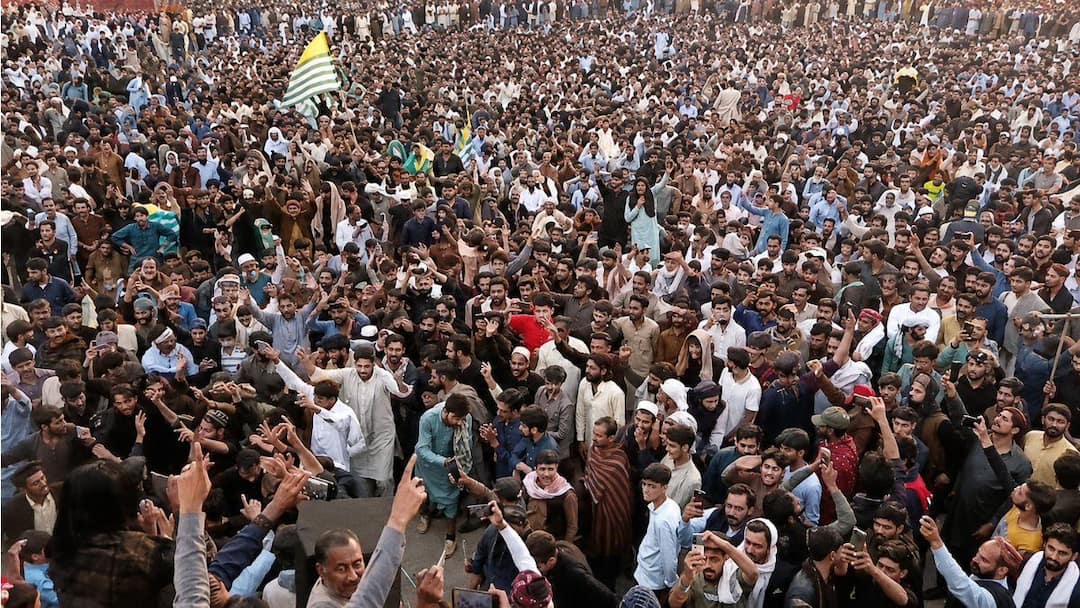
- Thousands protested in Rawalakot, asserting PoJK not part of Pakistan.
- Alleged food blockade triggered intensified protests and 38-point demands.
- Protestors warned of closer India allegiance amid ongoing grievances.
- Authorities suspended internet, prompting global solidarity protests.
A large protest in Rawalakot has intensified political tensions in Pakistan-occupied Jammu and Kashmir (PoJK), with thousands of demonstrators gathering at Eidgah ground to declare that the region is “not a part of Pakistan” and warn Islamabad of a possible permanent shift in allegiance towards India.
The demonstration comes amid an ongoing agitation led by local figures, including civil rights activist Sardar Aman Khan. The movement gathered momentum after Pakistani authorities allegedly imposed a two-week blockade on essential food supplies and rations, triggering widespread public anger.
Addressing thousands of supporters amid loud applause, Khan delivered a sharp message to Pakistan’s administrative authorities. “PoK is not a part of Pakistan. We do not need Pakistan; rather, it is Pakistan that desperately needs PoK,” he told the crowd.
Protesters Warn of Closer Ties With India
The agitation has continued beyond Rawalakot, with another group of protesters staging a sit-in near the Line of Control (LoC) since June 9.
Speaking at the gathering, Khan suggested that residents could seek closer ties with India if the current situation continued. He said that if the Pakistani establishment maintained the blockade on food supplies, “the remaining borders of PoJK could open up.” He further claimed that, should such a situation arise, Islamabad would be left appealing to the people of PoJK to remain.
The remarks underscored growing frustration among sections of the protesters, who linked the alleged blockade to broader grievances against the Pakistani administration.
ALSO READ | ‘Drone Dropped RDX’: Protesters Allege Failed Midnight Strike On PoJK Demonstrators
Movement Driven by Longstanding Grievances
According to the protesters, the public movement is centred around a 38-point charter of demands highlighting decades of alleged state repression, soaring inflation and administrative neglect.
For more than three weeks, demonstrators have maintained a continuous presence at the Rawalakot protest site, occupying the grounds day and night while calling for what they describe as complete freedom from Pakistan’s control.
The prolonged sit-in reflects the determination of protesters to sustain pressure on the authorities as they pursue their demands.
ALSO READ | ‘Direct Threat To Regional Peace’: India Slams Pakistan’s Air Strikes On Afghanistan
Internet Suspension and Global Solidarity
The protesters also alleged that the Pakistani government suspended internet services across the region from June 5 in an attempt to prevent developments on the ground from reaching an international audience.
Despite the reported digital restrictions, the agitation has continued, with supporters claiming that the movement has gained attention beyond the region.
According to the organisers, demonstrations expressing solidarity have taken place outside Pakistani embassies and high commissions in several countries. Protest leaders have also maintained that the campaign will continue until Muzaffarabad and the rest of PoJK are freed from Pakistani administrative control.
Before You Go
Ram Mandir Donation Scam: Probe Deepens as Evidence Trail Reaches Banks, Trust Under Fresh Scrutiny
Disclaimer : This story is auto aggregated by a computer programme and has not been created or edited by DOWNTHENEWS. Publisher: abplive.com