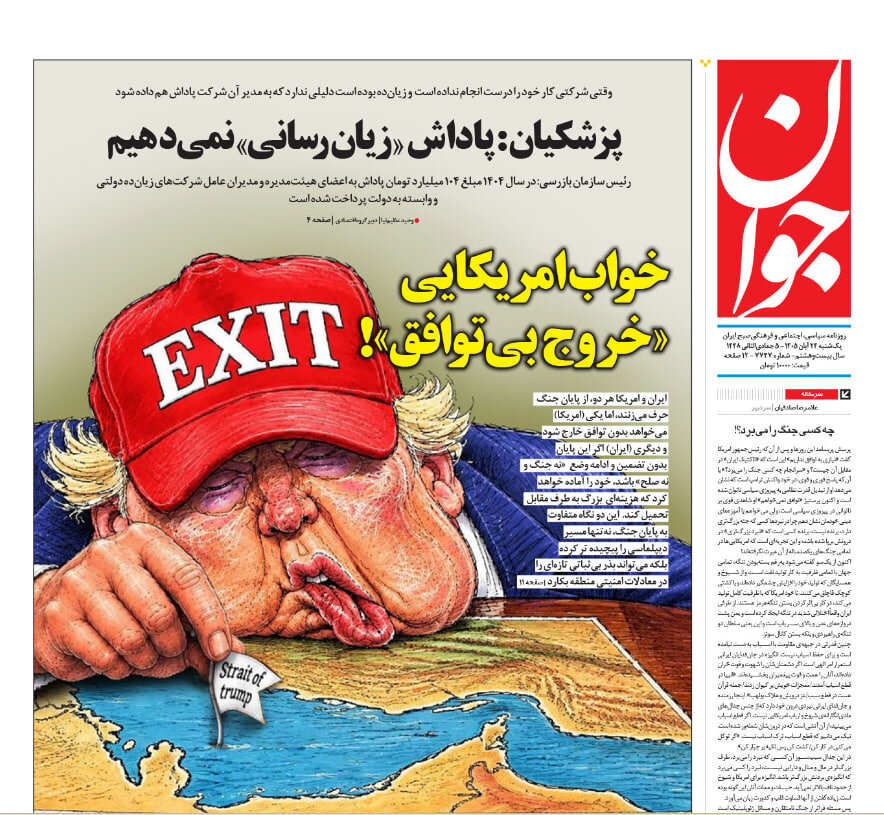
Esmail Kosari, a member of Parliament, discussed Iran’s missile-range expansion in an interview with Javan. Following growing threats, the Islamic Republic of Iran unveiled an increase in the range of its missiles as part of its broader strategy to strengthen deterrence capabilities. The move came after remarks by Iran’s Leader emphasizing an immediate response to threats without geographical limitations.
The announcement received extensive international media attention, with some analysts describing it as a sign of a shift in Tehran’s deterrence doctrine. Iranian officials have repeatedly stated that if another confrontation occurs, the country will reveal part of its advanced military equipment and capabilities on the battlefield, creating a new level of surprise for its enemies. The country aims to maintain the capabilities necessary to respond wherever required, whether at the regional or extra-regional level, within the framework of deterrence and countering hostile actions by its opponents.
Etemad: A turbulent transition period
In an article, Etemad examined the simultaneous formation of a new government in Israel and the transfer of congressional power in the US. The current transition period is what makes the situation particularly complicated. Recent political setbacks do not necessarily reduce the likelihood of war. Although Trump suffered an electoral defeat, he still retains significant authority as commander in chief. In a post-election environment, he could seek a quick military success to compensate for political weakness. At the same time, Netanyahu may face fewer political costs during a transitional period because he no longer has to contend with immediate electoral pressures. This could encourage him to increase pressure for military action before a new political structure becomes firmly established in Washington. As a result, the period between electoral defeat and the consolidation of new political power may prove to be one of the most dangerous phases rather than a window for peace.
Ettelaat: Israel has lost ground in America
Ettelaat argued that developments in recent years indicate a gradual change in Israel’s position within American public opinion and the US political environment. Declining popularity in opinion polls, growing support for reducing military aid, criticism from younger generations, increasing partisan disagreements, and the results of the 2026 midterm elections are all presented as signs that the traditional consensus supporting unconditional backing for Tel Aviv is weakening. However, these developments do not signal the end of the strategic alliance between the US and Israel. Security, economic, and political institutions continue to support the relationship, while presidential powers can limit the impact of some congressional changes. Nevertheless, if current trends continue, including the effects of the Iran war, the persistence of the Palestinian conflict, regional developments, and shifting attitudes among younger Americans, the gap between American society and official Israeli policies could become increasingly visible in the years ahead.
Khorasan: A nuclear decision or a negotiating strategy?
Khorasan examined Iran’s nuclear strategy and discussed speculation surrounding possible efforts to develop nuclear propulsion technology. Discussions about such ambitions have existed for years, yet no reliable evidence has emerged showing that Iran has actually entered this field in practice. As a result, questions remain about whether Tehran possesses the technological capabilities required to move in that direction. The analysis argued that even raising such issues could provoke a response from the United States and increase pressure on Washington to accelerate efforts to end the conflict with Iran. It also suggested that Iran’s new approach may involve reducing nuclear concessions that had been discussed, directly or indirectly, during months of postwar negotiations. From this perspective, the strategy could be interpreted as a response to intensified pressure and containment efforts by Iran’s adversaries, while also preventing the US from gaining additional time to prepare for military action or strengthen the effects of economic and political restrictions.
Jam-e-Jam: Significant losses suffered across the Persian Gulf region
In an explanation, Jam-e-Jam reviewed the economic situation of regional countries aligned with the United States. The economic growth forecast for members of the Persian Gulf Cooperation Council was reduced from 4.4% to 1.3%. The aviation, tourism, and air travel sectors in Persian Gulf Arab states have experienced significant declines. Citing assessments by Western think tanks, it argued that food and water security in the Persian Gulf region remains fragile. GCC states reportedly obtain more than 90% of their drinking water through desalination facilities, making them highly vulnerable to infrastructure disruptions. According to the editorial, these conditions highlight the strategic vulnerabilities of southern Persian Gulf states that have pursued cooperation with the US and Israel. The newspaper further said these countries, along with many others that have been affected by the unlawful war carried out by the United States and Israel against Iran, increasingly view the Trump-Netanyahu alliance as responsible for significant material and non-material losses suffered across the region.
Disclaimer : This story is auto aggregated by a computer programme and has not been created or edited by DOWNTHENEWS. Publisher: tehrantimes.com