
Disha Mishra and Akanksha Khushi
Bengaluru: The World Health Organisation on Sunday declared an Ebola outbreak in the Democratic Republic of Congo and Uganda a “public health emergency of international concern”.
The WHO said the outbreak, caused by the Bundibugyo virus, did not meet the criteria of a pandemic emergency –but countries sharing land borders with the DRC were at high risk for further spread.
The UN health agency said in a statement that 80 suspected deaths, eight laboratory-confirmed cases and 246 suspected cases had been reported as of Saturday in the north-eastern province of Ituri in at least three health zones, including Bunia, Rwampara and Mongbwalu.
The DRC health ministry had said on Friday that 80 people had died in the new outbreak in Ituri.
There could potentially be a much larger outbreak than what was detected and reported so far, the WHO said, given the high positive rate in initial samples and the increasing reports of suspected cases.
The outbreak was “extraordinary” as there were no approved Bundibugyo virus-specific therapeutics or vaccines, unlike for Zaire strain of the virus, it said.
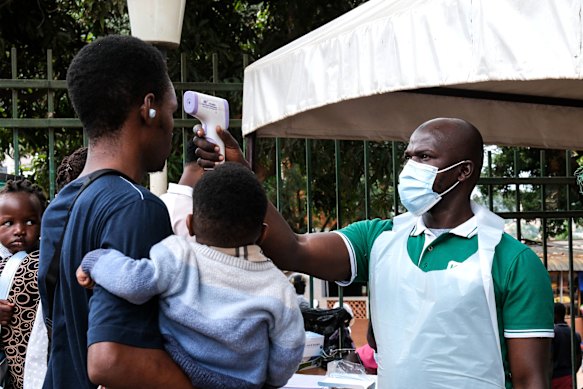
The DRC-Uganda outbreak posed a public health risk to other countries, with some international spread already documented. The agency advised countries to activate national disaster and emergency-management mechanisms and start cross-border screening and screening at main internal roads.
In Uganda’s capital, Kampala, two apparently unrelated laboratory-confirmed cases, including one death, were reported on Friday and Saturday, from people travelling from the DRC, the WHO said, and another laboratory-confirmed case reported in the DRC capital, Kinshasa, was from a person returning from Ituri.
The WHO advised that Bundibugyo virus-disease contacts or cases should not travel, unless as part of a medical evacuation. Confirmed cases should be isolated, with daily monitoring and no international travel until 21 days after exposure.
At the same time, the WHO urged countries not to close their borders or restrict travel and trade out of fear, as this could lead to people and goods making informal border crossings that were not monitored.
Ebola virus disease, a severe and often fatal illness, is endemic to Congo’s vast tropical forests. It spread through direct contact with the bodily fluids of infected persons, contaminated materials or persons who had died from the disease, the Africa Centres for Disease Control and Prevention said.
Reuters
Get a note directly from our foreign correspondents on what’s making headlines around the world. Sign up for our weekly What in the World newsletter.
From our partners
Disclaimer : This story is auto aggregated by a computer programme and has not been created or edited by DOWNTHENEWS. Publisher: www.smh.com.au


