Farmer says hosting 4G mast is a ‘nightmare’ as fees cost him thousands
-
Published
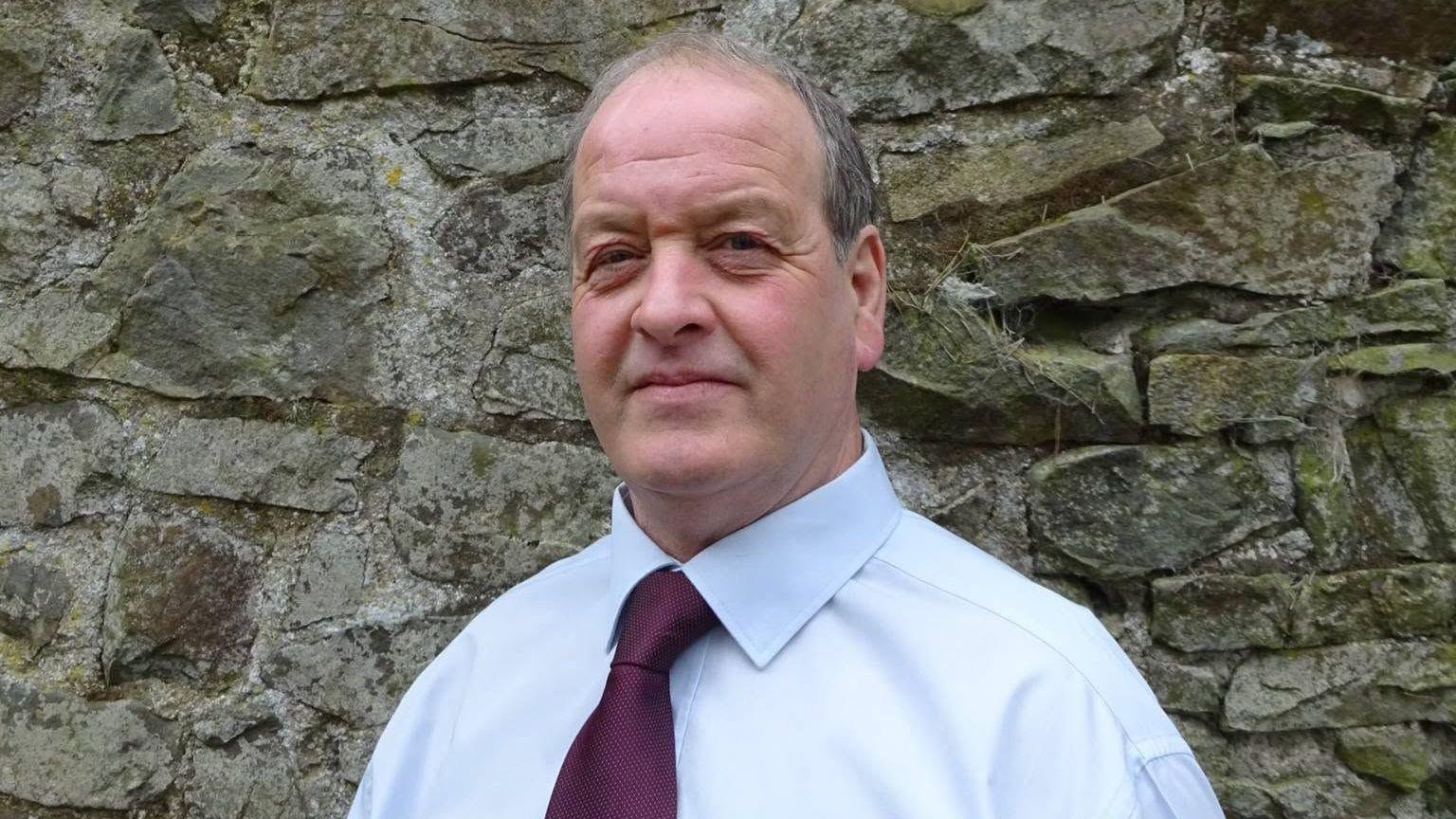
A farmer says hosting 4G masts on his land has become a “nightmare” after the rent he receives was halved, and it costs him £5,000 in fees.
Alan Watson, 68, from Llanbadarn Fynydd in Powys, has had a mast on his land for more than 20 years, but claims farmers are being “bullied” into accepting worse terms due to legal changes between telecoms operators and landowners.
The Farmers’ Union of Wales (FUW) said it was concerned a cut in rent would put people off putting up masts, affecting connectivity in rural Wales.
The UK government’s Department for Environment, Food & Rural Affairs (DEFRA) said its reforms ensured landowners were “treated fairly when negotiating with mobile operators”.
Nearly a quarter of Wales lacks 4G coverage from every mobile network operator, according to Ofcom, external – leaving some communities reliant on masts hosted by farmers and landowners.
Watson said he had been left with “no negotiation” about how much rent was paid to him for his land, and warned landowners tempted to host masts not to “touch it with a barge pole”.
“It feels like landowners trying to do their bit are being bullied into accepting worse terms, putting people off hosting the infrastructure the country needs,” he said.
“When I tried to get my agreement finalised, the process ended up costing me more than £5,000.”
At the centre of the dispute are changes made to the Electronic Communications Code in 2017, external, which governs agreements between telecoms operators and landowners hosting their infrastructure.
The reforms changed how rents are calculated in an effort to reduce the cost of deploying mobile infrastructure.
But landowners argue the changes have driven down payments by as much as 90% in some cases and made negotiations more adversarial, according to former Tory MP for South Derbyshire, Heather Wheeler, external.
“It was very much like David and Goliath, I was the little one fighting the big company,” said Watson, adding that under the code, he felt there was “nothing he can do”.
“I’ve always been happy to do my bit to support better mobile connectivity in the local area.
“But changes to the system have seen my rent cut in half, from £5,000 to £2,500, while dealing with the telecoms companies has become a nightmare.”
Watson estimates he has received about £55,000 in revenue before tax over the 20 years he has hosted masts, with tax then taking 40% off.
He claims he has now paid £10,00 in fees and legal costs “dealing with telecoms companies”.
 Image source, Getty Images
Watson said: “The boot is on the telecommunication companies’ foot. I could take it to court but it wouldn’t be financially viable… and there is no guarantee of me winning if we took it to court.”
He added: “Within the act it says negotiations are supposed to take place, and if negotiations aren’t fruitful, then the company can take you to court.
“There is no negotiations, it’s going straight to court.”
Watson said he was worried that connectivity across the UK could be “severely reduced” as a result of the changes.
“Why would a land owner want to rent space on their land when they’re going to be paid next to nothing for it?”
“It’s only the company versus you… you’re fighting your own corner,” he said.
The farmer compared his situation to renting out a home, adding: “I set the rent… it’s like my tenants coming back to me and saying ‘no, it’s too much I can only pay half of it’.
“It isn’t being used in the matter which it is meant to be used.”
In a statement, Mobile UK, the trade association for the UK’s mobile network operators, said mobile connectivity is “an essential service, not a luxury”.
It said the government reformed the Electronic Communications Code because the cost of accessing land was becoming a “significant barrier” to building and upgrading the mobile networks across the UK.
It added that the total demand and network traffic continues to rise, and the mobile operators are investing around £2bn each year to “meet the challenge”.
 Image source, Alan Watson
Watson has called upon the government to intervene, which he claimed was “blind to what is happening to landowners across the country”.
“If we genuinely want to improve mobile connectivity, we need a system that encourages co-operation between landowners and operators, rather than driving them further apart,” he said.
The National Infrastructure Commission for Wales, external has warned that falling rents are reducing incentives to host mobile masts and putting existing sites at risk, with Cardiff and Swansea facing growing pressure from landowners submitting notices to quit.
Tim Faire, FUW’s land use and climate change committee chair, said: “Farmers across Wales have hosted mobile masts in good faith for decades, helping to keep rural communities connected.”
“But they cannot be expected to continue doing so while rents are slashed and reaching agreements becomes increasingly costly and difficult.
“At a time when too many rural communities still struggle with poor mobile coverage, we need a policy framework that treats farmers fairly and encourages landowners and operators to work together, rather than driving them further apart.”
In response, DEFRA said it recognised the “vital role” landowners played in providing digital connectivity.
It added it wanted to “strike the right balance” between their needs and the connectivity needs of communities.
“Our reforms support the ambition for high-quality 5G coverage across all populated areas by 2030 and ensures landowners are treated fairly when negotiating with mobile operators.”
More top stories
-
-
Published17 hours ago

-
-
-
Published22 hours ago

-
-
-
Published8 hours ago

-
Disclaimer : This story is auto aggregated by a computer programme and has not been created or edited by DOWNTHENEWS. Publisher: BBC