The ChatGPT prompts read like a to-do list.
Build “a continuous audio recorder.” Add “live listening” and “downloading/deleting recordings.” Encrypt the SD card. Make the USB output “power-only.” Develop “a second unit and speech-triggered recording,” then “a third unit.” Finally, “apply final protection and silence boot output.”
According to court documents unsealed Tuesday, the prompts were sent between Sept. 24 and Sept. 30 from a ChatGPT account linked to the wife of Abdulrahman Alfozan, an OpenAI engineer, a Saudi national who has been a U.S. legal resident since Sept. 2020. Prosecutors say that on or about Sept. 28, Alfozan hid a recording device behind a television in an executive conference room in one of the company’s San Francisco buildings after prompting an AI chatbot associated with his wife to build it. The complaint does not charge his wife.
The federal complaint against Alfozan does not list which chatbot Alfozan is alleged to have used to make such prompts, but close sources familiar with the incident have confirmed to Fortune that the chatbot was OpenAI’s own ChatGPT. The chatbot referenced Alfozan’s personal AI chatbot account and shared unique identifiers and IP usage. But his wife’s account isn’t the only chatbot Alfozan is alleged to have used in this recording incident: about six weeks earlier, court documents say Alfozan used a productivity agent internal to OpenAI to determine which meeting rooms had a capacity for six or more people, and which rooms would host high-powered meetings.
“How about external partners, where would those usually meet with,” Alfozan is said to have prompted the productivity agent at OpenAI, according to court documents. OpenAI has not yet responded to Fortune‘s request for comment on whether the company was alerted to Alfozan’s prompts before discovering the recording device. According to the FBI agent’s affidavit in court documents, Alfozan is said to have chosen this specific conference room, after prompting the productivity agent, because meetings there would “frequently involve discussions of highly confidential technical, commercial, and strategic information, including proprietary research, product plans, and business-development opportunities.”
The affidavit also reads that the room “typically is used for internal leadership meetings…as well as external briefings with government officials and business counterparts.” Alfozan did not have access to the conference room; only executives and their assistants could reserve it.
Who is Abdulrahman Alfozan and what did he do?
Alfozan, 35, a Saudi national, was arrested Oct. 9, according to the Justice Department. He faces one count under the federal Wiretap Act, which carries up to five years in prison.
The affidavit says he used a device to intercept oral communications, but it is still unknown whether the device actually captured a conversation. When OpenAI made a forensic copy of the memory card, “none of the files on it could be recovered or decrypted,” the agent wrote.
OpenAI and the Justice Department have described the contents as encrypted; the affidavit says they “may have been.”
The rest of the case runs on cameras and logs. OpenAI had no camera in the room when the device went in. CCTV inside the company’s offices placed Alfozan near the room on 10 different days in September. On Sept. 28, the day the device’s firmware was compiled, he was there from 2:18 p.m. to 6:30 p.m.
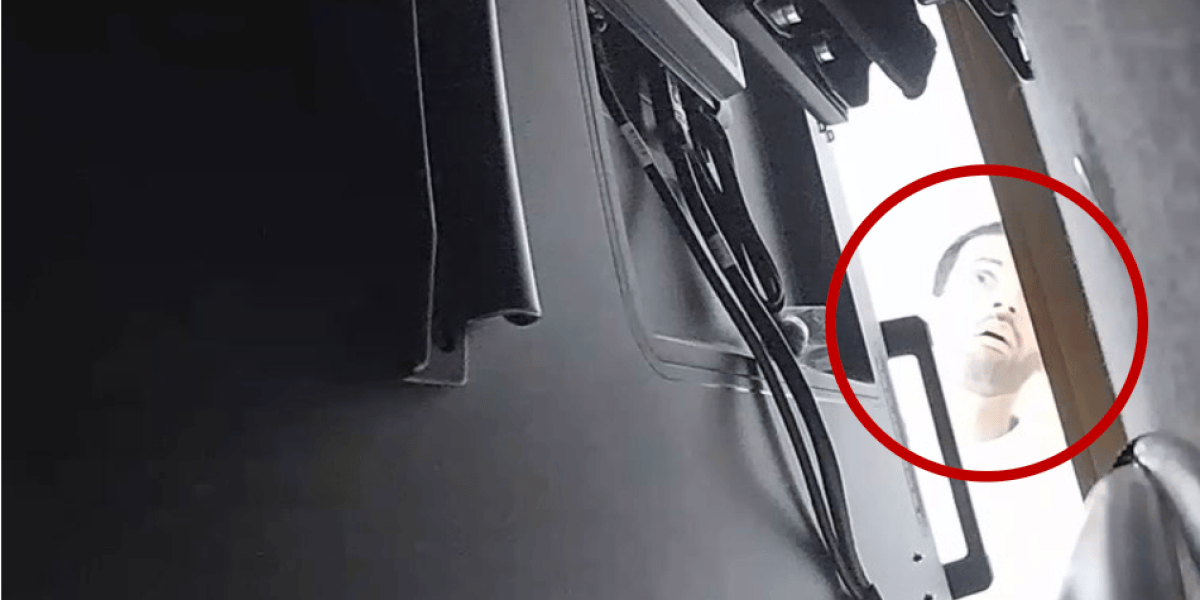
Staff found the device on Sept. 30, wrapped in toilet paper, tucked behind a TV in the room during a routine sweep, sources familiar with the incident told Fortune. It was a Seeed XIAO ESP32-S3 Sense, a thumb-sized board with a microphone and microSD storage, made by a Shenzhen-based company. This prompted cooperation between OpenAI and the FBI, and by Oct. 5, a camera had been placed in the room. In the photo in the complaint (and above), Alfozan was caught in the video at 1:20:47 p.m. that day, checking behind the TV.
That same day, court documents say he left a bag in a printer room. Security went through the bag and found his wallet, his ID, and a second Seeed recording board inside—which security removed from his bag. After he told the company he had lost the bag and picked it up from lost and found around noon the next day, he sent a written update inquiring about what he characterized as “stolen” items.
“A few items were stolen: one credit card, cash (~$500), 2 AirPods, 1 headphone, sunglasses, power bank.” He didn’t ask about either device. CCTV then showed him that day moving items into a Target shopping bag.
According to the motion, Alfozan, his wife and a third family member had booked one-way tickets from San Francisco to Saudi Arabia, via Istanbul, for Oct. 12. Prosecutors wrote that he “has the means—and will have an incentive—to flee the United States sooner if he learns about this case before he is arrested.” He was arrested on Oct.9, three days before his one-way flight.
What are the consequences?
The government’s cover sheet asks for no bail and lists “deportation” among possible penalties.
The complaint doesn’t charge trade-secret theft or economic espionage, and it doesn’t allege a foreign tie. But a trial attorney from the National Security Division’s Counterintelligence and Export Control Section is assisting the prosecution, according to the Justice Department. The sealing motion also asked to let prosecutors share the files with “any other law enforcement and intelligence agencies as may be necessary for investigative purposes.”
Director of National Intelligence Jay Clayton said the intelligence community is committed to protecting American intellectual property “from foreign threats.” FBI Director Kash Patel called protecting “American SI innovation” one of the bureau’s “highest counterintelligence priorities.” OpenAI said in a post on X that it had “no indications” he took model weights, source code or customer data.
Under the Speedy Trial Act, prosecutors have 30 days from his arrest to indict him, and a grand jury can add charges. Alfozan made his initial appearance Tuesday and is due back in court Oct. 19 for a detention hearing.
Disclaimer : This story is auto aggregated by a computer programme and has not been created or edited by DOWNTHENEWS. Publisher: fortune.com