Good morning. The Federal Reserve held its benchmark interest rate steady at 3.75%–4% on Wednesday, citing the need for more economic data to guide its next move as inflation remained elevated and economic growth and business investment stayed strong.
For investors, the decision raises a broader question: Can higher interest rates restrain the AI investment boom without derailing the wider expansion?
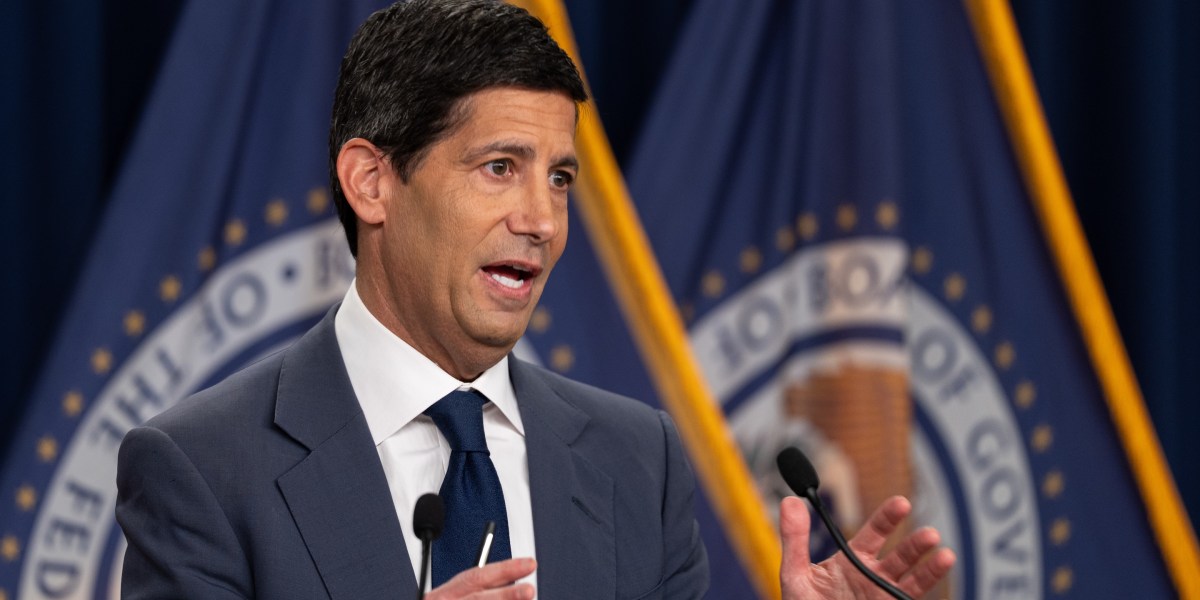
Fed Chair Kevin Warsh said at a news conference on Wednesday that AI investment is not insulated from monetary policy. He pushed back against what he said is a narrative that higher rates would have little effect on AI investment because “the returns that investors are expecting are so different.”
He rejected the idea that expectations of unusually high returns make financing costs irrelevant.
“With respect to the new technology and this investment surge, do interest rates matter?” he said. “I believe they do, and I don’t believe that they’re somehow divorced from the rest of the economy.”
He added: “Interest rates get in the cracks. Interest rates affect directly, or indirectly, almost everything.”
Higher rates may not stop companies from investing in AI, but they can influence which projects attract financing, how much capital they receive and what returns investors demand.
Warsh pointed to widening credit spreads for some assets as evidence that investors are becoming more selective. In credit markets, that could mean a growing divide between borrowers with credible paths to cash flow and those whose projects depend on more optimistic assumptions about future demand and profitability.
That distinction matters as companies commit substantial capital to AI-related projects, including data centers and computing infrastructure. Even when the long-term opportunity remains attractive, higher financing costs can weaken project economics and make investors more sensitive to execution risks.
Warsh also cautioned against attributing the economy’s strength to technology alone.
“High-tech investment” is leading the acceleration, but spending is strengthening elsewhere, too, he said, suggesting that capital spending is broadening beyond technology.
That resilience complicates the Fed’s task. Strong growth gives policymakers room to keep rates elevated while they assess inflation, but sustained investment and demand could also make price pressures harder to contain.
For markets, the implications are mixed. Expectations of fewer future rate hikes could support Treasury prices, while persistent inflation, strong growth and large fiscal deficits could limit declines in longer-term yields.
Julius Bendikas, U.S. head of economics and dynamic asset allocation at Marsh, said the Fed’s decision to hold rates steady reinforced the case for patience.
“In our view, there is no need to rush with labor markets balanced, wage growth subdued and longer-term inflation expectations anchored,” Bendikas told me. “We expect Treasury yields to have room to fall as expectations for future hikes moderate.”
Lower Treasury yields could ease borrowing costs even without a Fed rate cut. But Bendikas cautioned that “strong growth, elevated energy prices and ongoing large fiscal deficits create upside risks.”
Sheryl Estrada
Sheryl.Estrada@fortune.com
Leaderboard
Matt Ofilos will resign as EVP and CFO of engineering firm Parsons Corporation (NYSE: PSN), effective Nov. 6, to pursue another opportunity. George Ball, Parsons’ former CFO and a current member of the board of directors, was appointed to serve as interim CFO. Ball previously served as Parsons’ finance chief from 2008 to 2022.
Chuck Silberstein was appointed CFO of NovaBridge Biosciences, Inc. (Nasdaq: NBP), effective Nov. 2. Silberstein succeeds Kyler Lei, who is stepping down. Silberstein has more than 25 years of experience. Most recently, he served as co-Founder and CEO of FytonBio. Previously, he served as CFO of GentiBio and CFO and head of business development at formerly Nasdaq-listed Applied Therapeutics.
Big Deal
The race for AI talent may start closer to home than tech services leaders think. BCG’s new report argues that the people needed to capture a $100 billion–$200 billion applied AI opportunity by 2030 are largely already on companies’ payrolls. The challenge is turning that existing talent into a workforce ready for a different business model.
That will take more than another training program. As AI erodes traditional billable work and clients increasingly pay for outcomes, firms will need to rethink roles, career paths, and incentives. BCG lays out why that transformation is becoming urgent—and why companies that move too slowly risk losing their people along with their competitive edge.
Going deeper
Alphabet’s Google Cloud more than doubled its revenue to $30.7 billion in Q3, helping to soften some of the more tepid growth from Google Search and YouTube, Fortune’s Amanda Gerut reports.
However, despite the strong showing from its cloud business, investors sold off and Alphabet’s after-hours stock price dropped more than 11% following the release of its quarterly results on Wednesday. The drop wiped out more than $280 billion in market value. Read more here.
Overheard
“Chief executives will have to manage expectations inside their organizations and with their boards so that modest early pilot results are understood as necessary progress rather than failure.”
—Jeffrey Sonnenfeld, David Siegel, and Stephen Henriques write in a Fortune opinion piece titled “The AI payoff is real. The timeline is the problem.” They are co-authors of the forthcoming book When Machines Act: The Promise and Peril of Our Agentic AI Future.
Disclaimer : This story is auto aggregated by a computer programme and has not been created or edited by DOWNTHENEWS. Publisher: fortune.com