The street has emerged as the supremo of public discourse in India — even when barricaded, ringed by police and paramilitary forces. Parliament may legislate, television anchors may shout, and social media may rage. But the street is where the country’s unsettled arguments are increasingly colliding with the people who live them.
I am writing this column from a village in Maharashtra. Meanwhile, an unscripted irony hangs over Delhi, India’s teeming capital, where I have lived for four decades. The city continues to be draped in heavy metal barricades to deter protesters demanding the resignation of India’s Chief Election Commissioner Gyanesh Kumar over revisions to electoral lists that critics say benefit the ruling Bharatiya Janata Party (BJP). Protests also rocked Mumbai and Bengaluru.
Last week, as I walked around, relishing Delhi’s festival of barricades, watching young activists and Opposition coalitions throng the streets to protest alleged electoral manipulation, notching 10,000 steps, the visual punchline was impossible to miss.
Outside Nirvachan Sadan, the headquarters of the Election Commission of India in the heart of Lutyens’ Delhi, there was a wall of yellow steel barricades effectively sealing the building off from the public. Behind this cordon, half-hidden by trees, hung an official placard telling Indian citizens to “celebrate the biggest festival of democracy”. There were other signs carrying the promise that “Every Voter Counts. Wherever they Are”.
Down the road, there was a massive posse of Delhi Police and paramilitary forces, flanked by microphone-wielding media and freelance photographers hired by the police to document the unrest. Sipping adrak chai, the incongruity of the scene struck me when one police-hired photographer casually confided that these protests were a welcome “lean-season” gig before the wedding photography season sets in.
In barricaded Delhi, public announcements warned people of the consequences of going too close to the protesters. I had rarely seen so many people in uniform gathered in one place. What leapt out was how tightly disenfranchisement was bound to India’s “developed” country aspiration by 2047.
Disenfranchisement and development are not binaries because the citizen opposing one is often demanding the other at the same time. Those behind the barricades are not rejecting Viksit Bharat. They want to make sure they are counted inside it.
The streets around the Election Commission brought together things that are usually discussed separately: the right to be counted, the right to protest without fear, behaviour of the police, erosion of trust and safety of women in public spaces.
At the centre of the protests is a dispute over who gets to vote. India’s Election Commission, the constitutional body responsible for overseeing elections, has removed more than 130 million names from draft electoral rolls, including names of people who had died, relocated or could not be traced through its Special Intensive Revision (SIR), a large-scale exercise to verify voter lists. Protesters argue that eligible voters are being wrongly excluded and that the process lacks transparency. They are demanding the resignation of chief election commissioner Gyanesh Kumar, a halt to the exercise and the restoration of earlier voter lists. Citizens say they need not prove every deletion wrongful before they can demand transparency and peacefully protest.
The past week has seen extraordinary security, transport restrictions and police high-handedness. Heartbreaking accounts of mass detentions, brutal beating of young Indians demanding greater transparency in electoral-roll revision, Internet shutdowns, restrictions on mobility and harassment of journalists have dominated news coverage and social media.
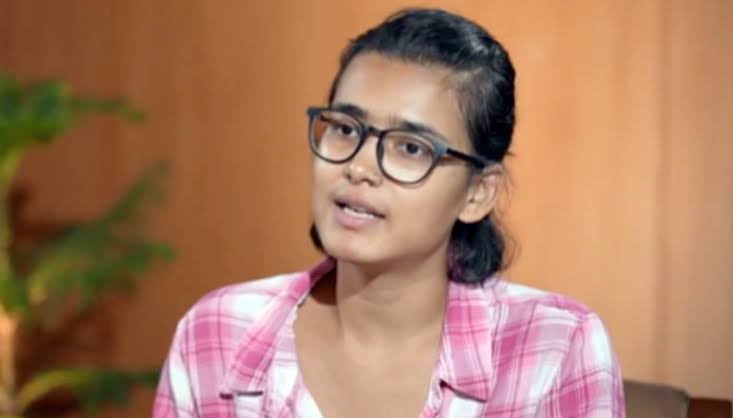
Despite detentions, protesters in Delhi and other Indian cities are not giving up. The courageous, and strategically brilliant Neha Bora, 29, of the All-India Students’ Association (AISA) and the youth-led Cockroach Janta Party have flipped the protest playbook, emerging as inspiring leaders, and bringing a generational edge to a wider mobilisation against alleged electoral manipulation. On October 12, after a weekend filled with huge protests in Delhi, Congress leader and Leader of the Opposition in the Lok Sabha, Rahul Gandhi, alongside other Opposition figures, activists and student groups, led another huge procession through Delhi, this time towards the Supreme Court.
As I write, Delhi Police have denotified Jantar Mantar as a protest site. The decision has been challenged in the court. CJP leaders Saurav Das and Ashutosh Ranka have been remanded in five days’ judicial custody. Security forces and barricades remain.
Yet, tellingly, while the state can cordon off a stretch of road, it cannot so easily contain the questions that bring people there.
The massive removal of voters has moved beyond a purely political battle and risks hampering economic and human development (Vikas) through institutional data-linking. West Bengal and Bihar governments, for example, have sought to link electoral roll deletion to welfare access, creating the risk that an administrative voting decision can affect food security and other benefits. Citizens struck off the rolls potentially face exclusion from vital welfare programmes, and subsidised rations — even as the linkage remains under challenge in court.
How scientific is this “purification” of electoral rolls? The government invokes the threat of infiltrators; the Election Commission has cited the exclusion of “foreign illegal immigrants” as one rationale for the SIR. Yet, it leans heavily on opaque automated software whose “no mapping” and “logical discrepancies” filters have flagged even prominent public figures, raising questions about how ordinary citizens with fewer resources can challenge errors. Another anomaly: Form 6, intended for new electors, requires a declaration that the applicant seeks inclusion as a new voter, complicating re-enrolment for existing voters.
Ordinary citizens and their advocates have hit the streets, braving police barricades, tear gas and severe restrictions, because they fear permanent political lockout. Going missing from the draft rolls in a critical election cycle can effectively silence their democratic voice for that entire term, as appeals are often too slow, or burdensome to address in time.
Once a government is formed without their input, it has no electoral incentive to direct resources or development to their communities. For dalits, adivasis and women, the vote represents decades of struggle for dignity. Data showing that the SIR disproportionately deleted mobile labourers, women who relocated after marriage and other marginalised groups have fuelled fears of a structural rollback of social progress. Indeed, it is precisely because people have a stake in India’s future that they insist on having a say.
Prime Minister Narendra Modi’s phrase “We will do it” is a promise about collective national effort. The street is asking a surprisingly simple question of Viksit Bharat: Who is included in that “we”? A country asking its citizens to imagine a transformed India cannot be surprised when those citizens ask whether they will still have a place in determining that transformation.
Disclaimer : This story is auto aggregated by a computer programme and has not been created or edited by DOWNTHENEWS. Publisher: deccanchronicle.com