
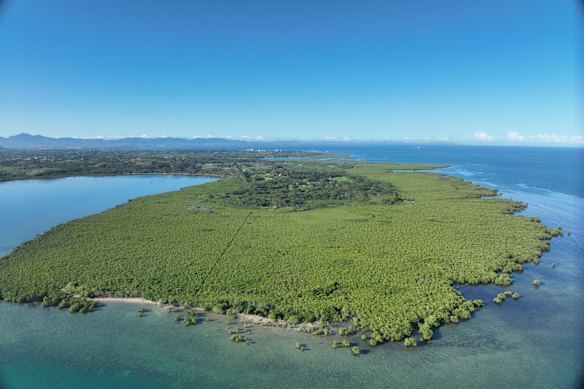
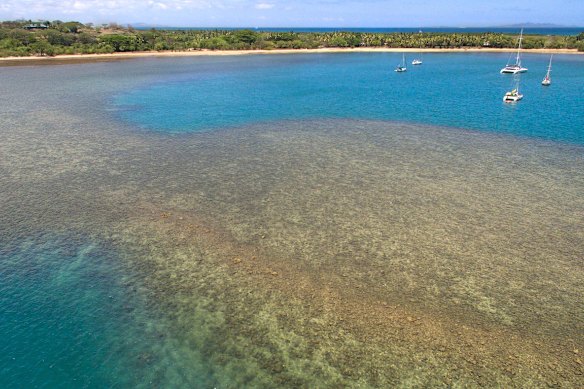
At a glance, it seems an odd place to solve Australia’s growing waste crisis. Saweni beach lies on the western flank of Viti Levu, Fiji’s main island. Its waters are not only clear, but still, protected from the rolling South Pacific by the headland at Naikorokoro Point that arcs around its blond sands from the south. The area is known locally as the Heritage Coast. It is thought to be around here that the first Fijians, led by chief Lutunasobasoba, landed in the archipelago some 3500 years ago.
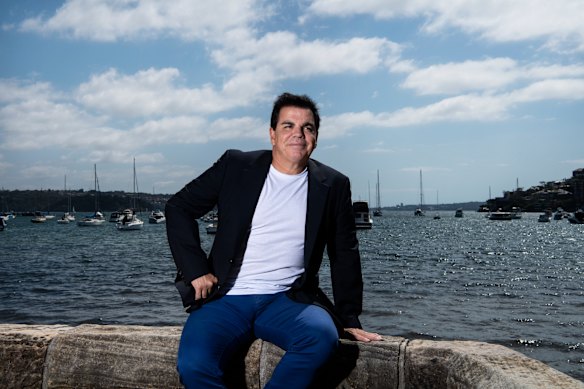
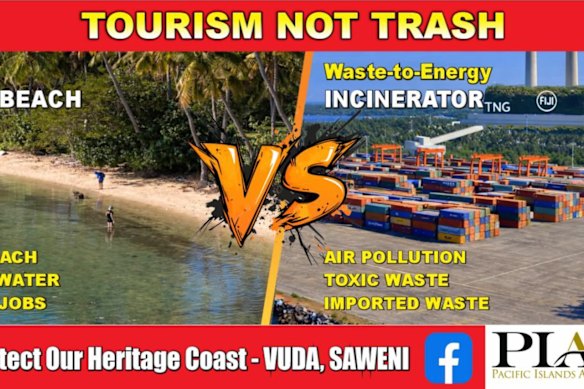
It is also here that two wealthy Australians, Ian Malouf – who made his pile founding Dial-a-Dump but now leases mega-yachts – and Kookai fashion label boss Robert Cromb propose to construct a facility capable of burning 900,000 tonnes of non-recyclable garbage from Fiji, Australia and the other Pacific island nations each year in an incinerator fed by a new deepwater port.
With four towering chimneys, it was described by one local as a giant upturned table. Unsurprisingly, the proposal, called The Next Generation Fiji, has caused controversy. Inoke Tora from the nearby village of Lauwaki, which has traditional custodial responsibility for the area’s coast and waters, said his clan had expected and backed tourism development for the site.
“If you want to burn your waste, do it in Australia,” he says. Lauwaki says that opposition against the proposal at community meetings held last weekend and attended by Cromb was universal.
Neither Cromb nor Malouf responded to requests for an interview but, according TNG Fiji’s promotional video, the project would not only solve Fiji’s growing problem in dealing with non-recyclable waste, its furnace would make enough energy to meet a third of Fiji’s electricity demand. Sitting on Naikorokoro Point, it would create up to 1000 jobs in construction and generate power for a new industrial park. Crucially, it would reduce Fiji’s reliance on diesel imports, which not only contribute to the nation’s greenhouse gas emissions, but leave it vulnerable to the sort of price spikes the world is now weathering.
Malouf has told The Australian newspaper the project has government backing, though the Fiji prime minister’s office denies this, referring this masthead to a report in The Fiji Times. “[Deputy Prime Minister Bill] Gavoka has vehemently opposed the proposed waste-to-energy plant, stating that the Vuda corridor is earmarked for tourism development and that the tourism projects planned for that area are substantial,” it said. “He has said the industry does not want those plans jeopardised. The minister has also warned that the impact would not be confined to the immediate site, stating that the whole of Nadi Bay, from Saweni to Denarau, could be affected.”
Around the world, waste-to-energy incinerators do not always face such trenchant opposition.
A waste-to-energy incinerator sits in suburbs on the fringe of Helsinki in Finland and faced little organised opposition when its construction began in 2011. Its two incinerators can burn up to 400 cubic metres of waste per second, and the energy it creates heats 70 per cent of the buildings in the neighbouring city of Vantaa, cutting the fossil fuel use by the energy provider that owns it by 30 per cent.
When it was proposed, locals raised concerns about truck movements and amenity, but there was no organised opposition. When this masthead visited the incinerator in 2024, there was no obvious pollution from its chimney and no odour. Standing by its front door there was no scent of burning, and apart from the trucks that fed it, no evidence of a garbage dump.
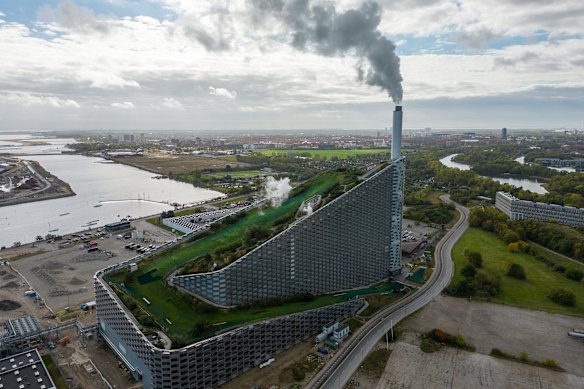
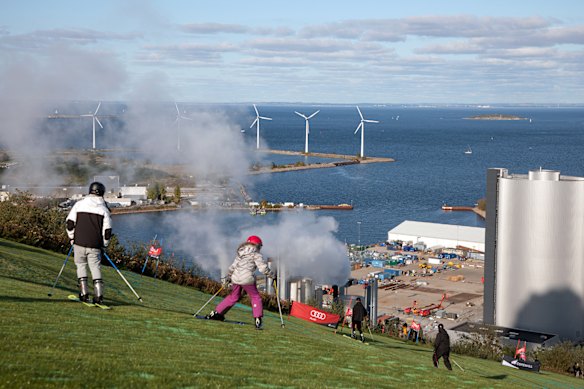
In the Danish capital of Copenhagen a vast waste-to-energy incinerator sits in suburbia just two kilometres from the royal palace. The structure, now known as CopenHill, has a become a tourist destination known for the 400-metre ski slope descending from the apex of its roof.
“It has a nice view from the top,” says Tobias Johan Sorensen, an energy analyst with the Danish environmental think tank Concito. While the incinerator has won over the people of Copenhagen, judging its environmental credentials is more complicated.
Burning waste that cannot be reused or recycled solves land use problems, particularly in a small nation like Denmark, and modern efficient incinerators do not create dangerous particulate pollution. The plume from its chimney is mostly steam. Further, burning waste in a modern efficient incinerator produces far less greenhouse gasses than would be released if the rubbish decayed in landfill.
Making energy with heat from the incinerator displaces fossil fuels. Around half a million tonnes of waste a year is incinerated beneath the ski slope at CopenHill to produce 766,000 MWh (megawatt hours) of heat and 135,000 MWh of electricity.
But what is true of one facility is not necessarily true of them all, says Sorensen. Because Copenhagen requires heating for nine months of the year, incineration makes efficient use of energy embodied in waste. The same might not be true in a warmer climate.
And as energy grids become cleaner due to the deployment of renewable sources like wind and solar, the comparative climate benefit of burning waste to make energy declines. In a net zero grid it would disappear entirely. In the long run, as economies decarbonise, he says, investment would be better spent in reducing waste – reducing consumption – rather than efficiently burning waste. Or as he puts it more bluntly: “We just need to use less shit.”
When it comes to waste in the Pacific are other considerations. Australia might view itself as the big brother in what our leaders like to call the Pacific family, but it is also seen as a post-colonial power, says Dr Wesley Morgan, a climate change and Pacific islands relations specialist with the University of NSW.
As it seeks to counter China’s rising influence in the region it might not be helpful for Australia, one of the world’s largest nations, to ship its waste to Fiji, one of its smallest.
It is also not lost on critics that Australia has form, shipping plastic waste to China and across South-East Asia until China banned waste imports under a policy called Operation National Sword in 2018, prompting its neighbours to follow suit.
Of all people, Malouf would understand the strength of opposition to waste incineration. He once led a proposal for such a facility at Eastern Creek in Sydney’s far west. The project collapsed in the face of protest and the NSW government later effectively banned the use of the technology in the greater Sydney region.
Victorian Minister for Climate Action and Energy Lily D’Ambrosio both passed legislation to allow for waste-to-energy incinerators in Victoria and opposed a proposed plant in her electorate. “Over the past few months, we’ve been working with community to understand the way forward on the proposed waste-to-energy incinerator,” she wrote in a statement in 2024. “We’ve listened to the community. It is clear that residents are not supportive of the proposal in Wollert, and we’re with you.” A string of waste-to-energy plants are still progressing through the approvals process in and around Melbourne.
Sydney is now effectively out of space to dump and bury its non-renewable waste, and much of its rubbish is being compacted into containers to be moved by train to Tarago, south of Goulburn, around 230 kilometres away, where the French company Veolia buries it in landfill, and where it proposes to build a waste-to-energy plant.
Another has been proposed for the town of Parkes, 350 kilometres west of Sydney, which sits on a junction of the $30 billion inland rail system built in part to facilitate regional industrial growth. In January, the local council unanimously voted to oppose it.
When this masthead reached Parkes Shire Mayor Neil Westcott by phone this week he was hard at work on a tractor.
Westcott said he at first urged the council consider the proposal, given it would attract $1.5 billion worth of investment and create 50 full-time jobs, but later reconsidered.
His objections echo those of landowners in Fiji. He listened to locals who feared smell and fumes and property value losses. He took on concerns about reputational damage to a town proud to be known for its clear skies and gigantic radio astronomy disk, its Elvis Festival, and its agriculture.
But he said there was one killer argument against the plant. “If burning Sydney’s rubbish is so safe, why do they want to put on a train to Parkes?”
Parkes Energy Recovery’s director Ed Nicholas still hopes locals might yet be convinced of the safety and huge economic benefits of the proposal. So what does he think of the idea of shipping 600,000 tonnes a year of Australian waste to Fiji rather than Parkes? “It’s a lost opportunity.”
Professor Jun Huang from the University of Sydney agrees. Waste-to-energy plants are now common across much of Asia, he says. Some in Shanghai are disguised as urban parks, with locals often unaware that rubbish is being burnt and power generated on-site.
Modern waste-to-energy plants create tiny amounts of particulate pollution and vast amounts of power. The ash that comes out of their furnaces – between one and two per cent of the mass of the garbage they ingest – can be used in road building and construction. New technology will soon allow for the carbon dioxide they emit to be captured and turned into synthetic fuel – though Huang, a specialist in biorefinery engineering and green chemicals, admits this would only be viable if a government was brave enough to introduce a carbon tax.
Either way, he says, shipping garbage to Fiji is a misuse of resources. Australian communities should learn to reduce their waste and treat what they can’t recycle, in our cities or close to our cities and towns, he says.
This would make more sense – economically, environmentally and diplomatically – than sticking it on a ship and burning it by a beach in Fiji.
Get to the heart of what’s happening with climate change and the environment. Sign up for our fortnightly Environment newsletter.
Disclaimer : This story is auto aggregated by a computer programme and has not been created or edited by DOWNTHENEWS. Publisher: www.smh.com.au


