
Flag injunction case ‘spiralling out of control’
-
Published
The co-founder of anti-migrant group Raise the Colours has said an interim injunction banning him and others from putting flags on lamp-posts in Birmingham is “spiralling out of control”, as he learned the case could go to trial.
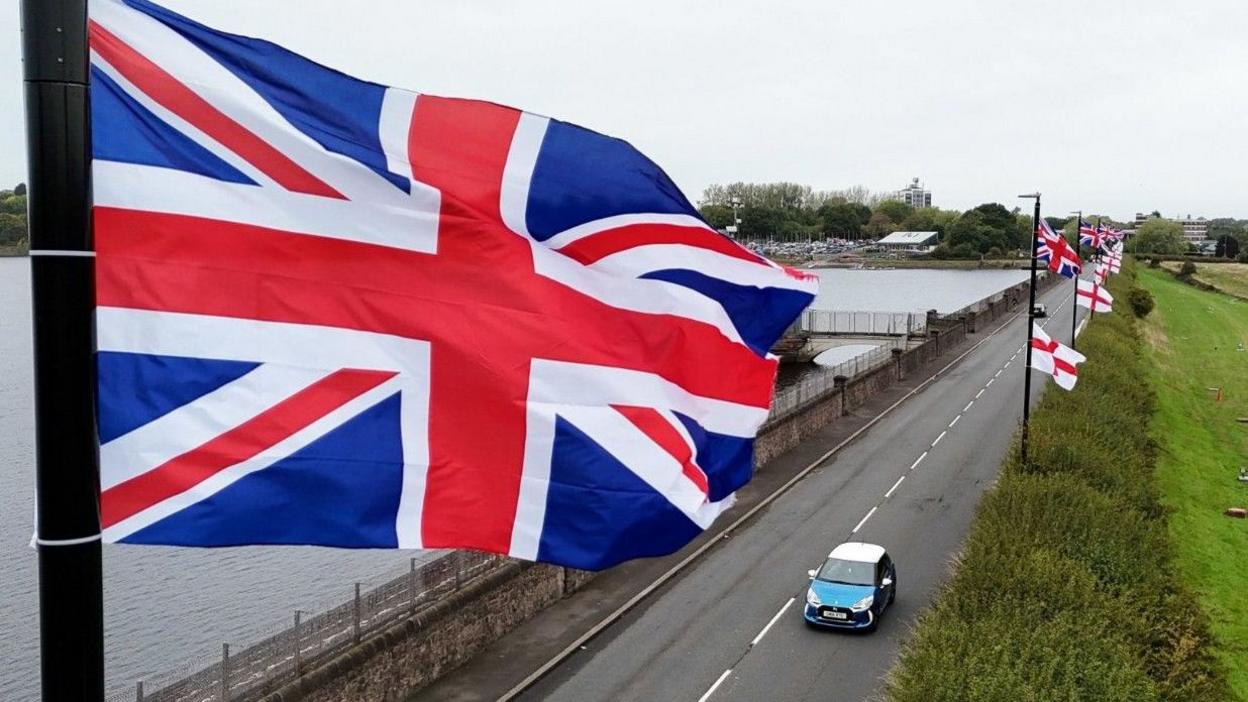
The High Court granted Birmingham City Council the order on Wednesday against Ryan Bridge and others, after thousands of union jacks and St George’s flags were put up across the city.
The council argued that they posed a hazard on lamp-posts, signs and other highway structures, and fuelled community tensions.
On Thursday, Bridge attended another hearing where he was told the injunction had come into force and would be in place until a trial or further court order.
The 45-year-old heard that if the council sought a permanent injunction, the case could involve at least three to four days of evidence.
He said: “It’s spiralling out of control, isn’t it?” and added that he did not “want to exploit any more of the public purse and the council’s money”.
Bridge, from Blackwell, near Bromsgrove in Worcestershire, said he stopped putting up flags in Birmingham when he first heard about the injunction.
He said the other defendants in the case, which include six other named individuals and “persons unknown” who may put up flags, thought the case was “done”.
 Image source, Press Association
One of the other named defendants in the case, Billy Allison, who is an activist with Raise the Colours, was found guilty of murder on Wednesday after punching a man in the neck on a dance floor in Lichfield, Staffordshire.
The court heard on Thursday there was not “much point” in pursuing the civil claim against Allison because he faced a mandatory life sentence.
Judge Emma Kelly said the interim injunction was “not the court nor the claimant ‘banning the union jack’ or the display of Pride flags or anything of the like”.
She added that the court would encourage the parties to reach a resolution without going to trial.
A Freedom of Information request published earlier this week showed that the council spent almost £170,000 this year, up to the end of October, removing unauthorised flags from public infrastructure.
The maximum sentence for breaching a civil injunction is two years in prison.
Bridge asked for clarification on what amounted to “encouragement” under the injunction, saying he was concerned about how it could be interpreted.
He told the court: “If I say ‘your flag looks nice’ I could be encouraging somebody and go to jail for two years.
“It’s quite worrying for me and regular everyday people.”
Kelly said the term was routinely included in injunctions and that whether something amounted to encouragement would depend on the circumstances of each case.
The court also heard the council’s injunction application included reports of alleged intimidation, harassment and obstruction linked to flags being put up in the city.
Kelly said the court would encourage the parties to reach a resolution without going to trial.
She added that the interim injunction was “not the court nor the claimant ‘banning the union jack’ or the display of Pride flags or anything of the like”.
The order covers flags of all types but relates only to unauthorised flags attached to street furniture in Birmingham.
Get in touch
Tell us which stories we should cover in Birmingham and the Black Country
Follow BBC Birmingham on BBC Sounds, Facebook, external, X, external and Instagram, external.
-
-
Published21 hours ago

-
-
-
Published2 November

-
-
-
Published30 September

-
-
-
Published26 August
-
Related internet links
Disclaimer : This story is auto aggregated by a computer programme and has not been created or edited by DOWNTHENEWS. Publisher: BBC




