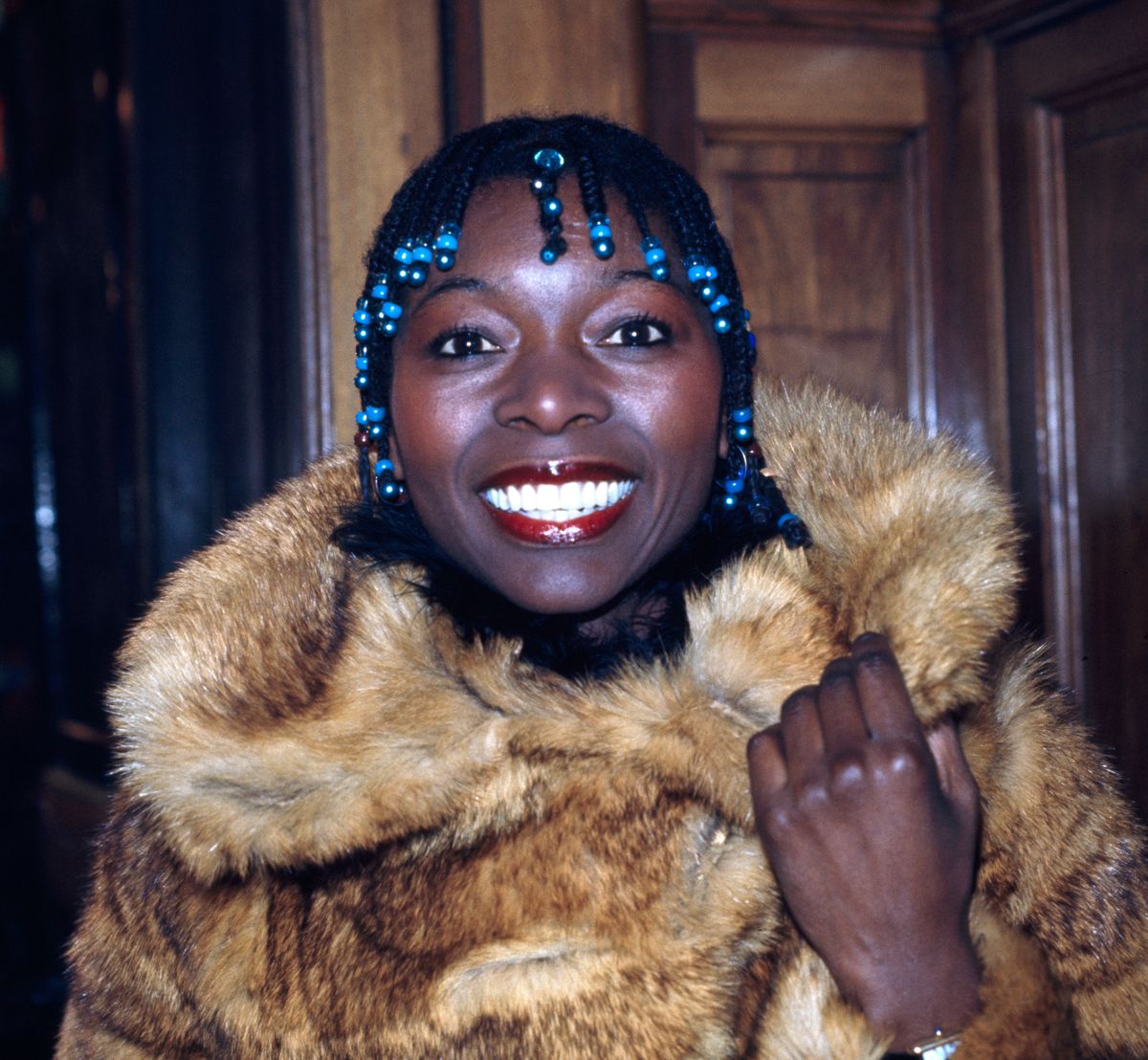
Fifty years since becoming one of Britain’s first black TV presenters, Floella Benjamin believes a new generation of wise children will eventually stamp out racism in the UK. In 1976, Floella became famous flying the flag for diversity on the BBC kids’ show, Play School – educating youngsters about the world, alongside the programme’s famous toys, Humpty, rag doll Jemima, Hamble, Big Ted and Little Ted.
And, in later life, she has brought star quality to politics – becoming a life peer in the House of Lords in 2010. Never losing her knack for communicating with children, she says hundreds of kids from all backgrounds write to her each day, saying society needs to be inclusive.
Floella says: “Children today get it. They actually really get it. I receive hundreds of letters every day from children which say, ‘dear Floella, we know all about the Windrush generation. We should never be horrible to people because they are different to us’. Other letters read, ‘when I grow up, I wanna be just like you’. They are from little white children, who send their pictures to me.”
Baroness Benjamin, 77, says the sackfuls of handwritten notes arriving at her parliamentary office are thanks to her book, Coming To England, which depicts her own 1960s Windrush journey from Trinidad to London, aged 10. Published in 2016, the picture book is widely used in primary schools across the UK, as part of early years English and history education.
Floella says: “I wrote the book 30 years ago and it is now read in every school. “Children just adore it. I wrote it through the eyes of a child. I wanted children to understand the emotions. The book is changing lives and the children who are reading it now, one day, they will be policy makers and they will be there to change the world.
“What a wonderful thing to have happened. Knowing you are inspiring children and giving them hope in their hearts to see things differently. They really understand.”
Speaking at a London talk, hosted by the Royal Television Society, Floella supports BBC plans to revive Play School in 2027 after a 38-year hiatus. And she still gets recognised from her days on the show when she shops in Lidl. She says: “I was in a supermarket a few weeks ago. I love Lidl. I was with my trolley and was pushing out and the doors open and in comes this woman.
“When she saw me she burst into tears saying, ‘it is my Play School mummy. I lived in a children’s home in care and I did not have a mum and I used to tell everyone ‘that Floella is my mummy.’ I prayed to meet you as everything I have done in my life is for you, to make you feel proud of me’.
“I said ‘oh my darling. Let me hug you’. We hugged in Lidl. I have had more pictures taken in Lidl than ever, in the food and freezer section. The parents follow me around.”
The revamped Play School, part of the CBeebies Parenting Promise, is expected to have a live-action format, with 14-minute episodes, reflecting modern viewing habits. It will retain classic elements like songs, stories, movement, music and poetry, alongside the original toy line-up.
Floella believes it will work, if it avoids bombarding youngsters with too much information. She says: “When I did Play School I spoke to children as if they were the only ones watching me. I gave them time to react. Children nowadays get so hyped, because we are not allowing them to take charge … to think. We are not allowing them to breathe and feel motivated.”
Whatever the format, Floella is confident the revamped show will be more inclusive than the original. She says: “In the 1970s, I was the first person in this country to walk about with plaits and beads. I used to be laughed at until I went on Play School.
“At my audition, the person who interviewed me was not taken with how I looked, so I leant forward, took my wig off and my beads and plaits came down. Interestingly, the head of the BBC was not sure. So I did the first four shows with my plaits and beads. On the Friday, I put my wig on and the audience went ‘where are the beads? Where have they gone?’
“The wig went out of the window. The BBC then sent out instructions to children on ‘how to look like Floella’ – how to wear plaits, beads and polar earrings.”
Floella, whose co-hosts were Johnny Ball, Derek Griffiths and Brian Cant, was also instrumental in bringing diversity into on-screen story books, soon after joining on September 27, 1976. She says: “I said to the producer, Cynthia Felgate, ‘I am telling the stories, but all the illustrations on-screen are of white children. Can we have some Asian, Chinese faces?’”
While Cynthia hadn’t noticed, she listened. Floella adds: “From that afternoon, the illustrations were changed to represent the diversity of the audience. It worked. So many families have told me over the years, ‘we used to say ‘you see her? If she is there then you can get there too’.”
On leaving Play School in 1988, Floella started making TV programmes with her own production company – but it wasn’t easy. Telling a prominent BBC producer she wanted to be a producer, too, she says: “She said ‘oh, Floella. You have got to be terribly, terribly clever to be a producer’.”
Everything changed when she met Rosemary Shepherd at Channel 4, who asked for her ideas – resulting in the creation of the children’s show Treehouse, which Floella presented. Now campaigning for children within Parliament, Floella is currently fighting for greater age restrictions on social media platforms, to prevent youngsters accessing adult material online.
And in 2022, she secured the placing of The National Windrush Monument in Waterloo station in London, commemorating the thousands of immigrants who sailed to the UK from the West Indies and Caribbean from 1948-1971, searching for a better life – like her parents, Roy and Veronica.
They arrived in Britain in 1960 from Trinidad – followed by their children. But, the racism Floella experienced in London was appalling. She says: “You were identified by the colour of your skin and that was pretty hard. I used to fight every day until I was 14. People used to spit at you. You never knew who was going to lift your skirt and say ‘where is your tail monkey?’”
One day, on a railway platform, two men even tried to urinate on her and her sister, Sandra. Despite these horrific experiences, she says: “I had a spiritual moment which said ‘these prejudices are to do with stupidity. You can’t change the colour of your skin. If they have a problem then it is theirs, not yours.’ So I learnt to smile. Winners smile and I was going to be a winner. My smile was my armour. Nothing was going to penetrate my smile.”
Crediting her mum, who would have been 100 this month, with making her resilient, Floella says: “I call myself Baroness Benjamin of Beckenham, because of my mum. “When I came to Britain we lived in one room and eventually we moved to a bigger house in Beckenham, Kent.
“When we looked at the house, the neighbours called the police, as they thought we were stealing the fixtures and fittings. But my mum said ‘we are going to buy this house. We are going to live in this house’. She lived there for 40 years and died in that house of bowel cancer.”
Losing her mum before she became a Baroness, after joining the House of Lords in 2010, Floella says: “I went to the cemetery and said ‘Mammy, Daddy. I want to claim Beckenham for you. I want to call myself Baroness Benjamin of Beckenham’.
“There is a pub there with a sign which reads, ‘well known people who belong to Beckenham. Enid Blyton, David Bowie and Floella Benjamin’. I opened the Beckenham library recently. On the wall there is a big mural with a picture of me in Play School with Humpty, Jemima and all the toys. It says ‘Floella will always belong to Beckenham’. Who would have thought, eh?”
Disclaimer : This story is auto aggregated by a computer programme and has not been created or edited by DOWNTHENEWS. Publisher: mirror.co.uk