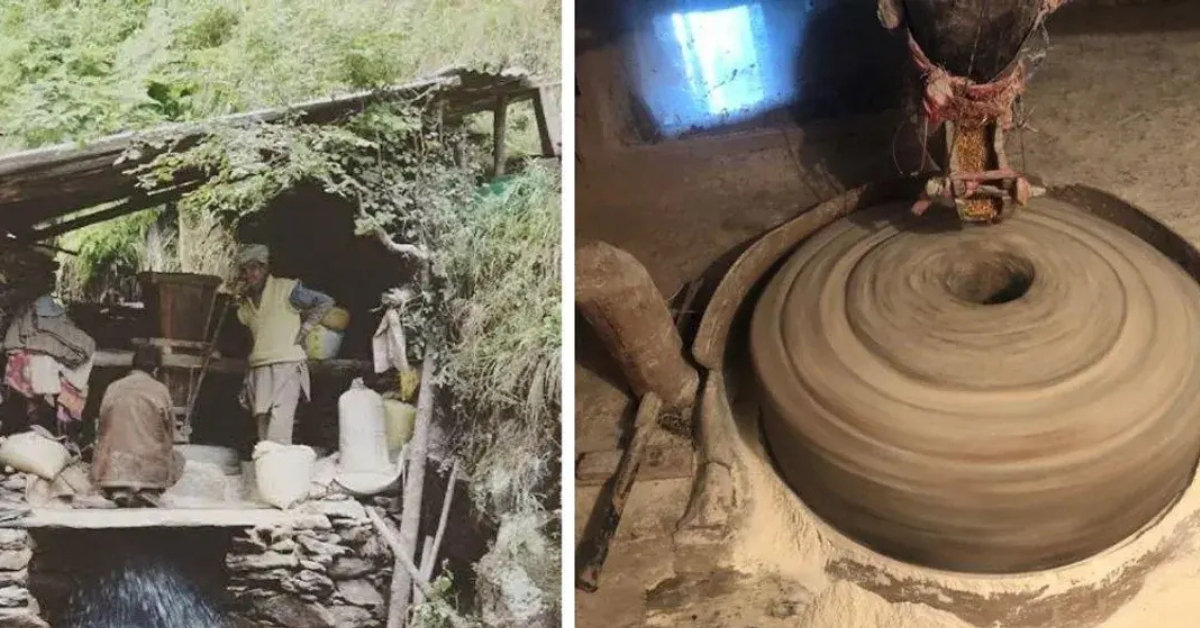
In the remote villages of the Himalayas, where mountain streams rush down rugged slopes, an age-old technology continues to serve local communities. Known as Gharats, these traditional water-powered flour mills have been a part of mountain life for centuries, long before electricity found its way into the region.
Built beside natural streams, Gharats use the force of flowing water to turn large stone grinders. As water strikes a wooden turbine, the movement is transferred to the millstones, which slowly grind grains such as wheat and maize into flour.
For generations, these mills were much more than places where grain was processed. They formed an important part of the local economy and community life. “Earlier, there was no system of money. People paid in flour, based on how much they got ground. That was enough to survive,” recalls Madhavanan Pandey from Chorgaliya.
The flour produced in a Gharat is mostly valued for its taste and quality. Because the stones rotate slowly, the grain is ground at a lower temperature, helping preserve its natural flavour, aroma and nutritional value. Many villagers continue to prefer this flour over that produced by modern machines.
What makes them impressive is their simplicity. Powered entirely by water, they require no electricity and produce no pollution. For centuries, they have provided a sustainable way for mountain communities to meet a basic daily need while making use of a resource that flows abundantly through the landscape.
Today, even as modern technology reaches the most remote corners of the Himalayas, these humble mills stand as a reminder of the ingenuity of mountain communities and their understanding of how to live in harmony with nature.
Disclaimer : This story is auto aggregated by a computer programme and has not been created or edited by DOWNTHENEWS. Publisher: thebetterindia.com