For 20 years, dementia researchers were stuck in a frustrating quagmire. Promising drug trials repeatedly collapsed. A practical diagnostic test remained elusive. Billions of dollars were spent – but nothing worked. Pharmaceutical companies began to pull out. And dementia surged to become Australia’s No.1 killer.
Now, however, that impasse has lifted. At clinics and labs around the world, staff are cautiously embracing a new word: “Breakthrough.”
The first two drugs to successfully modify Alzheimer’s disease, the most common form of dementia, were approved by Australia’s medicine regulator, the Therapeutic Goods Administration, last year. A blood test that can detect biomarkers up to 20 years before a patient’s first forgotten word with 92 per cent accuracy was approved two months ago.
These developments are game changers. The disease is “no longer universally described as untreatable”, according to the World Alzheimer Report 2026 released late last month, and we’re entering a period of “remarkable scientific momentum”.
That’s evident in a busy global pipeline of 158 drugs being tested in 192 trials, from new brain-penetrating agents to mRNA vaccines and repurposed medications, including weight loss jabs and erectile dysfunction drugs.
“It’s like an explosion in developments across the board,” said University of NSW Professor Kaarin Anstey, who sits on the World Health Organisation’s dementia panel.
“We are also becoming more aware of the risk factors. It’s a very exciting time.”
Associate Professor Emma Devenney, a neurologist, recalls being urged to reconsider entering the field of dementia when she started out because it was considered so futile.
“This is changing the trajectory, which we haven’t been able to do until now,” she said. “It’s lovely for patients and their families to have some hope.”

An estimated 460,000 Australians are living with dementia: a figure that’s forecast to blow out to half a million in the next three years and double to a million by 2061.
Our prevalence rate sits behind countries with older populations such as Japan, Germany and Italy. But the Asia-Pacific region has been singled out as a timebomb, with rates expected to triple in line with ageing populations and lifestyle factors by 2050 – at which point it will be home to half of the world’s cases.
This isn’t a foregone conclusion, though. New testing and treatments – combined with a growing body of evidence for prevention – aim to detect, and slow or stop dementia before symptoms appear.
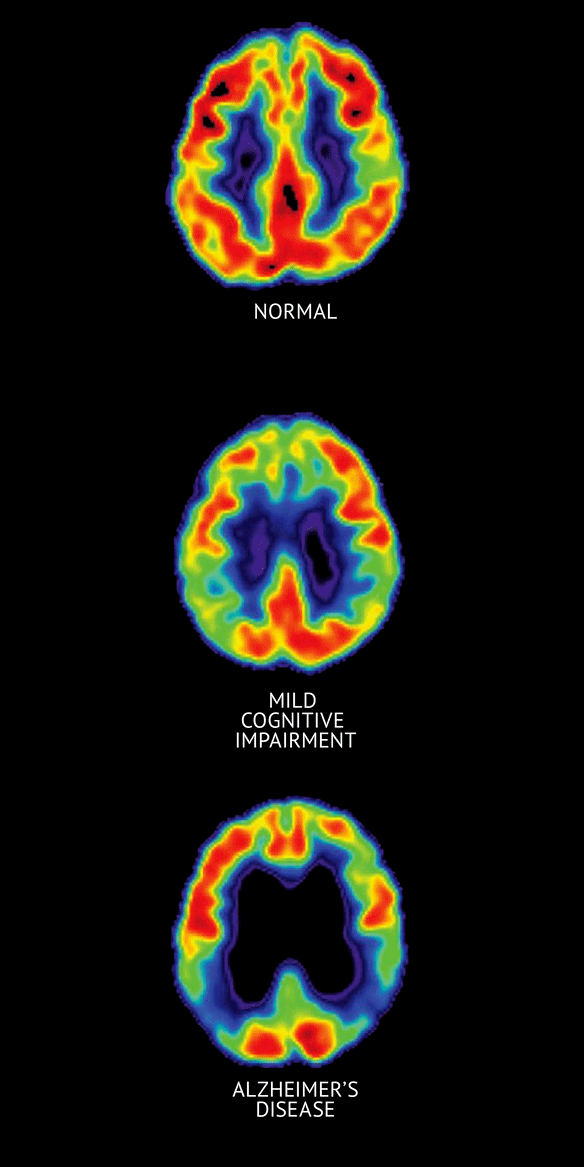
Until now, the only way to get an accurate diagnosis for Alzheimer’s was to undergo a lumbar puncture or positron emission tomography (PET) scan, both of which are expensive, invasive and impossible to scale to meet demand.
An influx of new blood tests is set to simplify and democratise the process. Described as the “holy grail”, the newly approved pTau217 blood test is just as accurate as the two current gold standard tests but returns a result in minutes for a fraction of the cost, about $400. It isn’t yet subsidised.
Neuroscience Research Australia (NeuRA) chief executive Professor Matthew Kiernan said the test, which detects levels of abnormal tau proteins – a key biomarker for Alzheimer’s – empowers doctors and patients in determining treatment. It also accelerates research. “Eventually, it will be a test you can get at your local blood lab,” Kiernan said.
Similarly, until new drugs were approved last year, people living with Alzheimer’s disease had limited medical options. Medication could provide relief from symptoms, but there was nothing that would tackle the disease itself.
The new drugs are monoclonal antibodies, donanemab and lecanemab, which work by harnessing a recipients’ own immune system to break down sticky amyloid-beta plaques that accumulate around the brain and are known as hallmarks of Alzheimer’s disease.
While they have each been proven to remove plaque and slow progression, they’ve also faced criticism for offering limited real-world benefits to only some patients at high cost and a risk of side effects, including swelling and bleeds in the brain.
“[Donanemab and lecanemab] work in that they are really good at removing amyloid in the brain, even if the clinical benefit isn’t as much as we would hope for,” Devenney said. “We’ve shown the approach can work. Hundreds of drugs haven’t worked.”
There’s clearly an appetite. Kiernan reports some patients are digging into their superannuation to fund the unsubsidised therapies, which can add up to $100,000 a year with medical fees and required brain scans.
“It’s turning the disease back,” he said. “The first [generation of drugs] are never the best, but they are starting the whole area of treatment.”
The next generation of monoclonal antibodies are designed to be more targeted with fewer side effects. They include trontinemab, which penetrates the blood-brain barrier more efficiently and works three times faster, according to early data. Its manufacturer calls this technology its “brainshuttle” delivery system.
“I think that’s going to be a real breakthrough,” Devenney said.
An international trial on 1600 middle-aged to older people with no memory problems but whom blood tests show are likely to develop Alzheimer’s disease in the future is under way. Like a “statin for the brain”, the hope is that trontinemab could prevent the disease from getting a foothold in the first place.
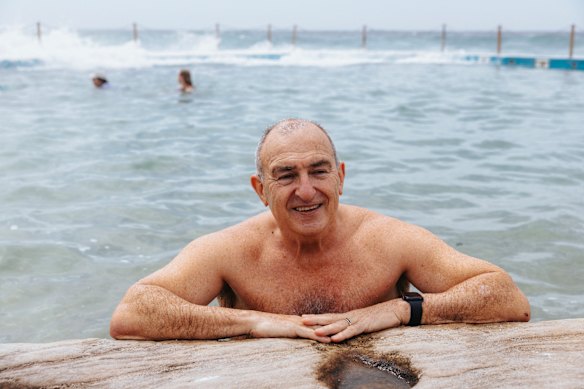
Former deputy principal Bill Yeates, from Sydney’s northern beaches, was blindsided by a young onset Alzheimer’s diagnosis at 59. He’d cared for his father through dementia years earlier and knew what lay ahead.
“It was devastating,” he said. “To be honest, I didn’t cope. I went into depression. It was really dark. I stayed at home, drank too much, and put on over 26 kilograms. I was concerned with losing my identity.”
Seven years later, it’s a different picture. The father-of-three changed his mindset, overhauled his lifestyle, enrolled in a clinical trial and established his own holistic approach to fight the disease.
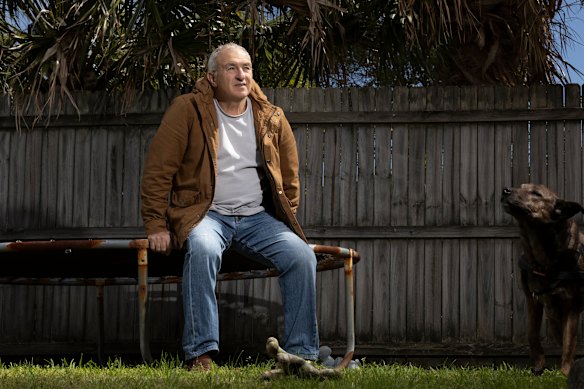
“There are things I can invest in, things that I can choose to do, to show I am fighting this disease as best I can,” he said.
As well as a healthy diet, taking physical exercise, socialising, training his brain and ensuring he gets enough sleep, he secured extended access to an experimental drug XPro1595 that targets inflammation in the brain, another driver in Alzheimer’s.
“Good things were happening [on the drug] so I think I was one of the outliers,” he said. “Sadly, it failed, so I lost access in July 2025.”
A PET scan a year later showed the amount of amyloid-beta in his brain had increased significantly since his diagnosis, despite the fact he appeared to be functioning well. This was a blow – “I thought everything I’d done had been a waste of time” – until his doctor convinced him it wasn’t the whole picture.
A lot of research focuses on the “amyloid hypothesis”, in which the accumulation of plaque around brain cells is believed to be the underlying driver for Alzheimer’s disease. It makes sense: this process begins decades before symptoms appear and stabilises about 10 years before onset.
However, there’s another important hallmark: the tau protein that becomes abnormal and tangles into stringy clumps inside brain cells, leading to disrupted pathways and cell death. This process strongly correlates with the progression of symptoms.
Under the amyloid theory, stopping the plaque attack would prevent the disease from cascading into inflammation, tau tangles and cell death.
But given the complexity and differing pathways of dementia, it may not be that simple. Queensland Brain Institute researchers are working to develop new antibodies to clear tau tangles, while a gene-silencing drug called diranersen, which lowers the body’s production of tau, has recorded a 26 per cent slowing of decline in clinical trials.
Yeates is on the frontline: he learnt just two weeks ago that he had been accepted into a new trial of a promising monoclonal antibody called MK-2214 that targets abnormal tau. After that, he hopes to get in an amyloid-beta therapy trial.
“Even if it’s false, it gives me hope,” he said. “I think that’s the most important thing: having hope.”
His multi-targeted approach make sense: amyloid and tau therapies are being trialled simultaneously on patients in the long-running Dominantly Inherited Alzheimer Network (DIAN) trials.
“The reality is for people who are symptomatic, it probably will be a combination therapy [that is most effective],” said Devenney, who is NSW’s principal investigator for the international DIAN at NeuRA.
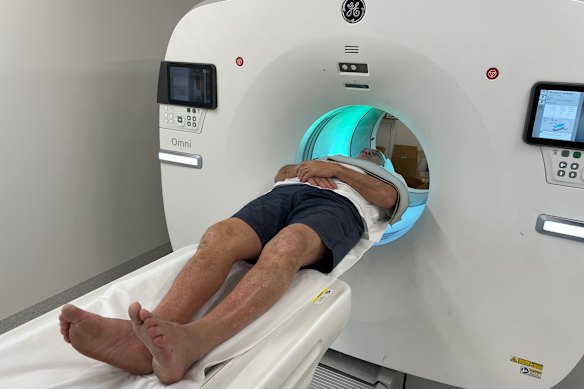
But penetrating the brain presents a significant challenge in treatment. The blood-brain barrier is notoriously difficult to cross, meaning large doses can be required to have an effect. This is why mRNA technology – which could leapfrog the barrier and send an instruction book to cells to direct your immune system to target specific proteins – is so appealing.
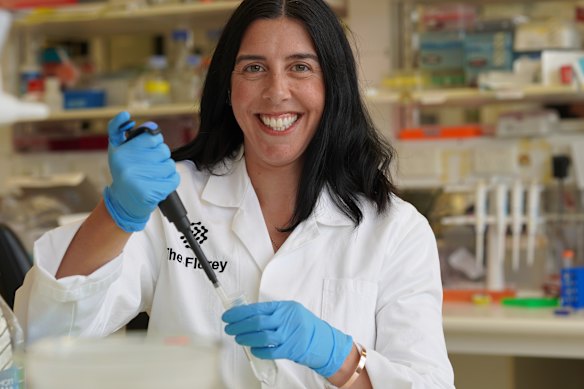
At The Florey in Melbourne, Associate Professor Rebecca Nisbet is working to develop Alzheimer’s vaccines with her team. They’re drawing on the city’s trove of mRNA technology, developed during the race for a COVID vaccine.
Nisbet acknowledges monoclonal antibodies are “a massive step forward” but hearing from people living with dementia who couldn’t access clinics nor afford treatment inspired her to seek out a more accessible option.
“[A vaccine] could cost as little as $50 a dose,” she said. “Ideally, we would be aiming for self-administration but it could also be done by a GP.”
A vaccine targeting amyloid-beta has progressed most quickly and is ready to go into the next phase of clinical development.
“We were able to show all mice that were vaccinated stimulated an immune response against amyloid peptides and had reduced amyloid build-up in the brain,” Nisbet said. Despite these promising results and potential cost benefits, she is less optimistic about the next phase of funding – a concern universally shared in the field.
Clinical trials are expensive and many pharmaceutical companies are reluctant to invest, particularly after a development drought and in an environment in which US President Donald Trump speaks unfavourably about vaccines. It’s a scenario grimly known as the “Valley of Death” between promising research and commercial viability. Exacerbating the financial stress, a string of medical development grants have recently been discontinued.
Vaccines for a condition such as Alzheimer’s may seem outlandish, but there’s already evidence they may have a role. Receiving the shingles vaccine has been shown to lower the risk of older people developing dementia by 29 per cent. Intriguingly, it seems to be about more than simply dodging the virus itself: the older version of the vaccine didn’t record the same benefit. An additive that is used to boost immune response may be the hero ingredient.
“There are components of the shingles vaccine that are protective against dementia, and it’s an exciting area to explore further,” Nisbet said.
In the meantime, Kiernan suggests the age at which Australians become eligible for a free dose of the vaccine should be lowered from 65 to 50 to secure benefits before significant brain changes occur.
“You’d get your vaccine, do your bowel test and a brain check at the age of 50,” he said. “That’s what we need to work towards as a community because our economy isn’t going to be able to sustain the cost [of dementia].”
Other vaccines – including flu, pneumococcal, RSV and diphtheria, tetanus and pertussis – are also associated with a lower risk of dementia.
Repurposed drugs – developed to treat one condition but which turn out to offer benefits for other conditions – may also be part of the puzzle in dementia, in the same way aspirin use extended from painkiller to prevention of heart attacks and blood clots.
It makes sense as it is unlikely that there will be one treatment for everyone: dementia is an umbrella term for various conditions that cause loss of cognitive function, including memory.
Others include vascular dementia and Lewy body dementias, which can cause hallucinations, delusions, paranoia and anxiety. Actor Bruce Willis is among those living with frontotemporal dementia, which targets the part of the brain involved in language and behaviour.
While most research centres on Alzheimer’s, it’s common for people to have more than one type of dementia. Devenney says work is being undertaken to tackle all forms of the disease.
“We do know what the pathology is with other types of dementia,” she said. “[One] approach is more broadly to look at the overlap, look at them together and also what’s different.”
The erectile dysfunction drug Viagra has been linked to a lower risk of vascular dementia in University of Oxford research, though more research is needed. There’s a plausible mechanism: it works by improving blood flow, which is impaired in this form of the disease.
Researchers are investigating whether Riluzole, a drug used to treat motor neurone disease, could improve cognition in people with Alzheimer’s and reduce build-up of amyloid in the brain.
Hope turned to disappointment for GLP-1 drugs as a potential treatment last year after large trials found they did not slow progression of early-stage Alzheimer’s. But the drugs, which include Ozempic, Wegovy and Mounjaro, are linked to a lower risk of developing dementia among people taking them for diabetes and weight loss.
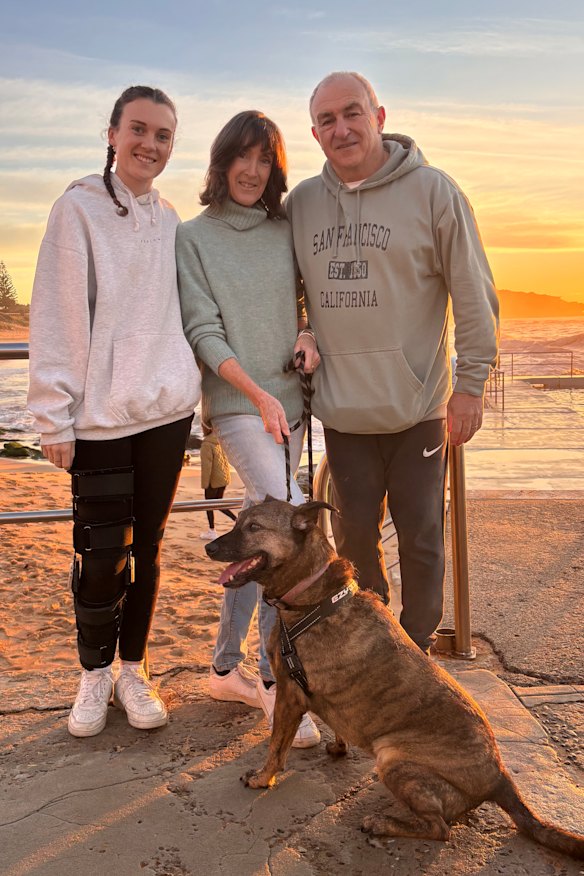
With the support of his wife, family and friends, Yeates is determined to “keep swimming” through good and bad days.
A Dementia Australia advocate, he presents at international conferences, champions the needs of people living with dementia and shares his story to reduce stigma.
“There might not be a cure,” he said. “But there can be a ray of hope that you can use to live a good life, doing the things you want to do.
“I’m optimistic for the future.”
Start the day with a summary of the day’s most important and interesting stories, analysis and insights. Sign up for our Morning Edition newsletter.
Disclaimer : This story is auto aggregated by a computer programme and has not been created or edited by DOWNTHENEWS. Publisher: www.smh.com.au