Barry Jones
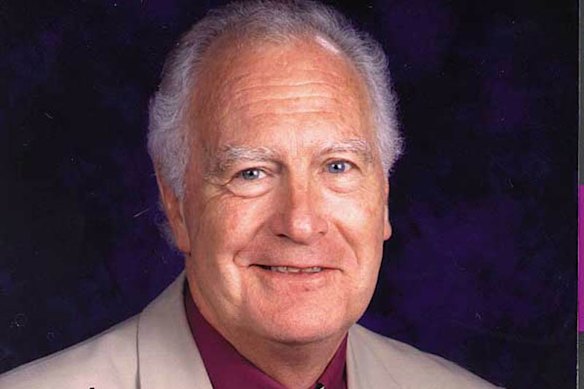
The Right Reverend Dr Peter Hollingworth AC OBE was a man I knew and admired. We were friends for many decades until his death, aged 91, this month. I will miss him, and I was touched when his daughters asked me to write this obituary.
Peter’s life was characterised by compassion, seriousness of purpose and an unwavering concern for those Australians who found themselves on the margins. For much of the 1970s and 1980s, he was one of the nation’s most influential advocates for social justice – a clergyman who believed deeply that Christian faith demanded practical action.
In the 1990s and early 2000s Peter served at the highest levels of the Anglican Church and as governor-general, a role he ultimately resigned from amid controversy over the church’s response to child sexual abuse. The events of those years overshadowed much of what had gone before.
Peter was born in Adelaide on April 10, 1935. In 1942, during World War II, he moved to Melbourne with his parents and brother, Roger.
During national service at the RAAF base at Point Cook in the 1950s, Peter – then something of a rascal by his own account – was assigned to the Padre’s office. To the surprise of many who knew him, he developed a deep interest in theology and decided to enter the priesthood. He studied at Trinity College at the University of Melbourne, where he formed many lifelong friendships, graduating with a Bachelor of Theology in 1960 before being ordained as an Anglican priest.
In 1960, Peter married (Kathleen) Ann Turner, a Melbourne physiotherapist. Roger Hollingworth married Ann’s sister, Susan, strengthening a close family bond.
Ann and Peter were married for 61 years until Ann died in 2021. They had three daughters, Deborah, Fiona and Sarah, and seven grandchildren. Ann was a constant source of strength throughout Peter’s life. Remarkably, Peter died on May 19, on what would have been Ann’s 90th birthday.
In 1987 Peter was named Victorian Father of the Year. For all the demands of public life, his family remained at the centre of his world until the end. His daughters have said the award reflected the warmth and attentiveness they experienced throughout their lives.
Peter joined the Brotherhood of St Laurence in 1964 as chaplain and director of Fitzroy services for families, youth and the aged. Founded by Father Gerard Kennedy Tucker during the Depression years, the Brotherhood was already becoming one of Victoria’s most influential welfare organisations. Peter spent more than two decades there, became executive director and helped shape the national debate around poverty, unemployment, housing and inequality.
At a time when poverty was often treated as a personal failing, Peter argued that social disadvantage arose from structural inequality and demanded collective solutions. The Brotherhood became deeply engaged in employment programs, housing advocacy and support for vulnerable families, while also challenging governments to think more ambitiously about social welfare.
Peter wrote extensively on social policy and ethics, including Australians in Poverty (first published in 1979 and for several years on the VCE reading list) and The Powerless Poor (published in 1972 in the lead-up to the federal election to highlight the need for reform). His written work became important texts for students, clergy and community workers.
It was during his years at the Brotherhood that Peter came to know my mother. In her later years she worked in the Brotherhood’s salvage division (recycling clothing) alongside Hazel Hawke; they both got to know Peter well and developed a great affection for him. Oddly enough, I met Hazel Hawke through that connection before I properly knew Bob Hawke. When my mother died in 1983, Peter immediately offered to conduct the funeral service. In later years, whenever we met, he would always speak warmly of my mother and the influence she had had on him. That was very characteristic of Peter: he remembered people carefully and valued them deeply.
While at the Brotherhood, Peter’s work during the United Nations’ International Year of Shelter for the Homeless in 1987 helped focus national attention on homelessness and inadequate housing, particularly in remote and Indigenous communities. Long before these issues entered mainstream debate, he understood the damage caused by insecurity and neglect. The momentum generated through the campaign helped establish programs that continue to operate across Australia.
Peter was prepared to challenge governments directly when he believed conscience demanded it. During Hawke’s prime ministership (1983-91), Peter wrote a widely discussed public letter, published in The Age in 1984, criticising Australia’s failure to adequately address child poverty and disadvantage. Peter combined civility with moral firmness and was prepared to speak plainly when needed.
In 1985, Peter became bishop of the Inner City of Melbourne, a diocese especially concerned with hardship and the social problems that arose from entrenched disadvantage.
Then in 1989, Peter was appointed Archbishop of Brisbane, a position he held until 2001. In 1991, he was named Australian of the Year in recognition of his contribution to social welfare and public life.
Peter had a lifelong engagement in civic life. In 1998, he participated in the Constitutional Convention on the Republic. I was appointed by then-prime minister John Howard as the deputy chair and had a great deal to do with Peter. At one stage, we had what appeared to be a sharp exchange about a preamble to the Constitution, which included the phrase “other gods”. In the context of what we were talking about, I thought this was irrelevant. And, while we disagreed, it was never personal.
When Howard appointed Peter governor-general in 2001, some regarded it as a breach of the convention separating church and state. But there were precedents. In South Australia in 1976, Sir Douglas Nicholls was appointed governor on the nomination of then-premier Don Dunstan, while in Victoria in 1986 the Reverend Davis McCaughey became governor under the Cain government.
McCaughey, whom I knew well, was born in Belfast and was a man of extraordinary sensitivity and insight. He trained in theology and joined the World Council of Churches as a Presbyterian minister. He came to Australia in the 1953 and was later appointed the master of Ormond College, part of the University of Melbourne.
When Peter was appointed governor-general, he sought McCaughey’s advice on navigating the tensions between religious vocation and constitutional office. He also consulted Sir Ninian Stephen, another former governor-general of immense wisdom and judgment.
Peter had his own ideas about how he wanted to run the office of governor-general, and approached the role with great seriousness. One of his striking attributes was his respect for the Australian honours system and for the achievements of others. He had an extraordinary capacity to absorb detail about people’s lives and contributions. At investitures, he would speak without notes, acknowledging people’s significant contributions and the detail of their roles and activities. It was never mechanical or perfunctory; he genuinely cared about recognising service and contribution.
However, there were failures which, in the end, overshadowed Peter’s public life. While Archbishop of Brisbane, Peter made a serious mistake in not recognising the consequences of sexual abuse. The public criticism that ensued was profound and proved devastating for the church and its community. It ultimately led to his resignation as governor-general in 2003.
Any fair account of Peter’s life must acknowledge those failures and the pain experienced by survivors. In later years, he reflected deeply on the decisions made during his time as Archbishop of Brisbane. As he acknowledged, “I’ve lived with my failures every day since.” He offered multiple apologies.
I believe one of Peter’s great flaws was inseparable from one of his defining qualities: he was profoundly trusting of people and inclined to give the benefit of the doubt. He possessed a kind of nobility of spirit and a genuine generosity towards others. In many parts of his life those qualities served him well; in confronting the matters of misconduct within the church, they proved gravely inadequate.
After stepping away from public office, Peter formally laid aside the ceremonial vestments and symbols of episcopal office in a moving service at St George’s Anglican Church in Malvern. He did so with dignity and humility.
In retirement, Peter remained intellectually curious and deeply engaged with the world. Only days before he died, he had been in touch with me and asked whether I thought I had “another book in me”. We were planning to meet, then the news came through that he had died.
Peter’s life resists easy judgment or simple summary. It contained both remarkable achievement and serious failure. He was a person of great personal integrity, and sincerity; but like all of us, he was flawed. And a serious error of judgment in public life can have tragic consequences. That said, I hope that, in time, he will be remembered as a priest and social reformer who devoted decades of his life to confronting poverty, exclusion and injustice, and who helped shape a more compassionate Australian conscience.
Dr Barry Jones AC is an author, academic and former federal MP.
Start the day with a summary of the day’s most important and interesting stories, analysis and insights. Sign up for our Morning Edition newsletter.
From our partners
Disclaimer : This story is auto aggregated by a computer programme and has not been created or edited by DOWNTHENEWS. Publisher: www.smh.com.au