
Updated ,first published
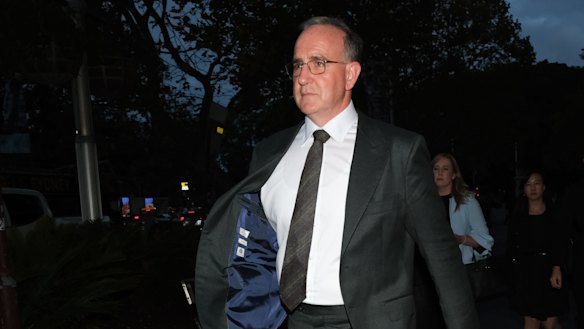
A former senior Woolworths executive has denied that internal rules around promotional pricing were altered due to concerns that its existing policy was deceiving shoppers.
In the second day of the Australian Competition and Consumer Commission’s (ACCC) landmark case about allegedly fake discounts, the watchdog’s lead barrister, Michael Hodge KC, asked Woolworths’ former chief commercial officer Paul Harker why the grocery giant had issued new internal guidelines on its “price establishment period” in September 2022.
“Was the thing that prompted the review of the policy a concern that the existing policy meant that the things being said to consumers were not accurate?” Hodge put to Harker.
Harker denied the assertion. “There was a comprehensive review done of everything,” he responded, saying the review included yellow-ticket specials, red-ticket specials, multi-buys and Everyday Rewards. “That whole policy document was put up for review and discussion.”
Harker is the first witness to be called to the stand in the fortnight-long case playing out in Sydney’s Federal Court that examines the price movements of a basket of 12 pantry staples such as Tim Tams, Oreos, Kleenex tissues, and house brand penne pasta.
The ACCC has accused Woolworths and Coles of making “false or misleading representations” by promoting the discounts as helping shoppers make long-term savings on groceries at a time of rapidly climbing cost-of-living pressures.
During the second day of proceedings, Harker at times appeared to grow impatient with Hodge’s slow questioning as the barrister nicknamed the “baby-faced assassin” sought to unpick why Woolworths had relaxed its internal guidelines for its “Prices Dropped” promotional program at the heart of the landmark court case.
The program, launched in 2015, used red and white “was/is” tickets and promised to lock prices in for at least 12 weeks, and was discontinued in December 2024 – two months after the ACCC lobbed the bombshell allegations.
The court heard how the program had initially imposed a “resting period” of six months to discourage suppliers from hiking prices and cycling on and off the program at will.
“The rules operated as a disincentive for people to try and move things on and off the program without a legitimate commercial justification. If you were, you couldn’t game the system,” Harker told the court.
“You need to have a really good reason to want to take [a product] off because there is tremendous downside in taking it off [the Prices Dropped program]. It’s very hard to get it back on again.”
However, this resting period had to be contracted to three to six weeks due to an “absolute tsunami” of price increase requests from suppliers across 2021, Harker told the court. “It becomes a tipping point. That was effectively unsustainable,” he said.
When questioned by ACCC lead barrister Michael Hodge, KC, about which specific guidelines were designed to prevent “gaming the system”, Harker pointed to the price establishment window, which was initially set at eight to 12 weeks, but later tightened.
“You understand that the principal reason for a price establishment is so that the drop that is being promoted is a legitimate drop,” Hodge put to Harker.
Harker responded: “The law requires we don’t mislead consumers. The guidance that we have, which is not very particular, other than saying you needed to hold a price for a reasonable period of time and sell reasonable quantities.”
However, as inflation continued to move through the Australian economy, Woolworths’ internal “price trust policy” was tightened from eight to 12 weeks to about half that length. This was not set out in a document, but had been decided through active conversations with the commercial leadership team, the court heard.
“We moved away from a set of policies that are about managing team and supply dynamics to ‘what does it actually mean at the shelf for a customer’, and that’s how we arrived at our final price trust policy of three to six weeks,” said Harker.
Harker spent more than three decades at Woolworths and was most recently chief commercial officer in charge of the buying and merchandising teams for five years before stepping down last year.
In Tuesday’s opening remarks, Hodge told the court that there was a “subtle magic” in the red-and-white tickets of the “Prices Dropped” program.
After the consumer watchdog launched the lawsuit against Coles and Woolworths in September 2024, Woolworths quietly discontinued the “Prices Dropped” program in December 2024 and has focused instead on its “Lower Shelf Price” commitment that promises lower prices for at least 12 weeks. Coles’ “Down Down” program still exists.
Justice Michael O’Bryan is overseeing both cases against Woolworths and Coles, the judgment for which is reserved.
During the Coles proceeding in February, internal emails read to the court revealed how Coles shortened its own price-establishment window of 12 weeks to match Woolworths’.
The Business Briefing newsletter delivers major stories, exclusive coverage and expert opinion. Sign up to get it every weekday morning.
 Jessica Yun is a business reporter covering retail and food for The Sydney Morning Herald and The Age.Connect via X or email.
From our partners
Disclaimer : This story is auto aggregated by a computer programme and has not been created or edited by DOWNTHENEWS. Publisher: www.smh.com.au