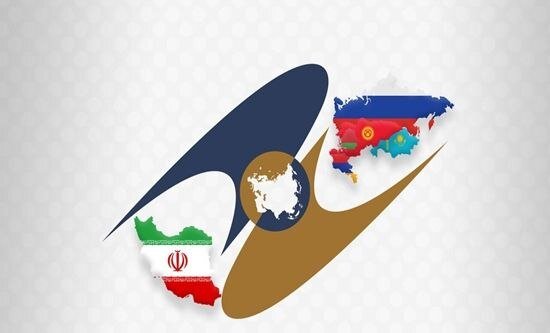
TEHRAN – The implementation of a free trade agreement between Iran and the five member states of the Eurasian Economic Union has opened new opportunities for Iranian exporters, with officials highlighting the potential for export growth, market diversification and the formation of specialized export consortia.
The agreement was discussed at a meeting of the Eurasia working group held at Tehran’s permanent international exhibition center, attended by officials from the Trade Promotion Organization of Iran (TPO), business representatives and leading manufacturers. Participants examined ways to expand trade, move beyond traditional markets and increase value-added exports.
Seyed Mohammad Sadegh Ghanadzadeh, TPO deputy for trade services, said the government was pursuing targeted support for trade with the Eurasian region.
He stressed the need to make full use of the free trade agreement, the capabilities of commercial counsellors and the region’s active trade centers to facilitate and increase bilateral exchanges. He also announced an agreement to establish a joint working group to identify investment opportunities and develop trade infrastructure.
Elham Haji-Karimi, director of the TPO’s Office of Trade Agreements and International Organizations, said the free trade agreement had taken effect in May 2025.
Under the deal, 87 percent of tariff lines between Iran and the five-member bloc — Russia, Belarus, Kazakhstan, Kyrgyzstan and Armenia — have been eliminated. The agreement also includes 11 specialized chapters covering standards, customs, rules of origin and government procurement, helping reduce non-tariff barriers, she said.
Haji-Karimi added that Iran’s exports to the Eurasian region grew by 80 percent in the first year of implementing the preferential trade agreement and increased 2.5-fold over the period, demonstrating the market’s potential.
Mehdi Babaei, director general of the TPO’s Office of Central Asia, Russia and the Caucasus, said Iranian exports to the Caucasus had risen 19 percent despite logistical challenges.
He called for greater geographical diversification and efforts to move beyond traditional markets, saying specialized consortia and export holding companies could prevent destructive competition and price undercutting while significantly strengthening Iranian exporters’ bargaining power in target markets.
The meeting also highlighted the importance of producing higher-value goods, adopting modern marketing tools and artificial intelligence, and completing production and distribution chains to strengthen the country’s export capacity.
EF/
Disclaimer : This story is auto aggregated by a computer programme and has not been created or edited by DOWNTHENEWS. Publisher: tehrantimes.com