
For its annual 100 Essential Cafes and Bakeries guide, Good Food asks what going out for brunch looks like in 2026, from new-wave coffee orders to the rise of the queue.
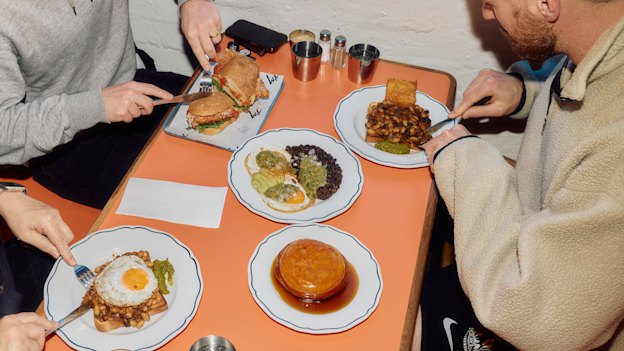
Melbourne’s coffee – and by extension, its cafe scene – is often declared among the best in the world. After spending the past 12 months hitting up hundreds of cafes to compile the 100 Essential Cafes and Bakeries of Melbourne Guide, I find it hard to disagree. From Frankston to Caroline Springs, we’re spoiled by our choice of specialty brews, brunch plates, foamy signature drinks, matcha and pastries.
It’s why Australians spent nearly as much in cafes last year ($99 on average a month) as they did in restaurants ($111 a month), as shown in Lightspeed’s 2026 State of Hospitality Industry Report.
But what is the hallmark of a good cafe in 2026? Do Gen Z and other groups want different things from a cafe? And what does it take to survive as a cafe in today’s economy?
The answers – at least to the first question – are found in Good Food’s second annual Essential Melbourne Cafes and Bakeries Guide. It’s a creme de la creme collection of 100 businesses, baristas, servers, roasters and chefs that make our days (and even our nights) that little bit better.
Narrowing it down to just 100 anonymously reviewed venues wasn’t easy in such a cafe and bakery-dense city that continues to grow. But visit any of the spots on this list, and we guarantee you’ll be happy, whether you’re a long-black drinker or a banana cream matcha obsessive.
Fifteen years ago, cafes stood out by crafting an impressive menu catering to vegans and paleo diets, typically featuring some kind of avocado toast, an OTT “freakshake” and edible flowers – things designed to capture views on Instagram in its embryonic stages.
Restaurant reviews, news and the hottest openings served to your inbox.
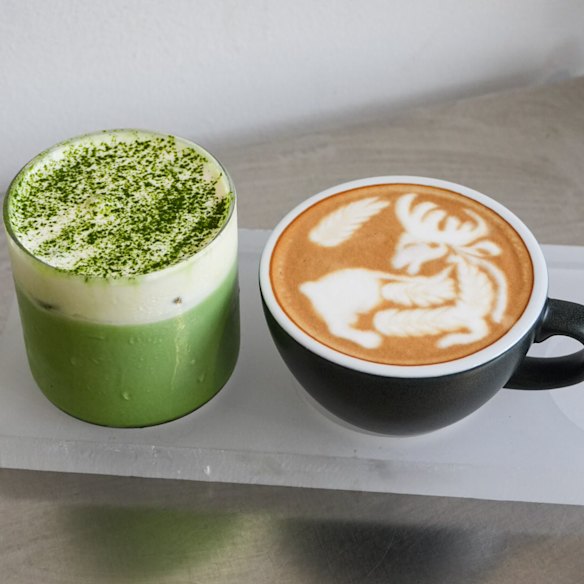
Today, cafes pour their creativity into tall, foam-capped signature drinks. These wildly inventive creations reveal a generational divide in how Melbourne likes its coffee.
“The older generations are still coming in for a classic coffee – a latte, cappuccino, long black or espresso – but the younger generation looks at coffee as a cultural product,” says Byoung-Woo Kang, founder of Acoffee in Collingwood.
Matcha is still ubiquitous, but it’s the cream-capped, einspanner-style coffee that has taken over nearly every breakfast, brunch and coffee menu in our city. Inspired by the two-tone Viennese coffee drink combining espresso and fresh cream, variations are many and madcap: tiramisu, banana pudding, Biscoff and Earl Grey creams and foams are blended with cold brew coffee all over Melbourne, even in the dead of winter.
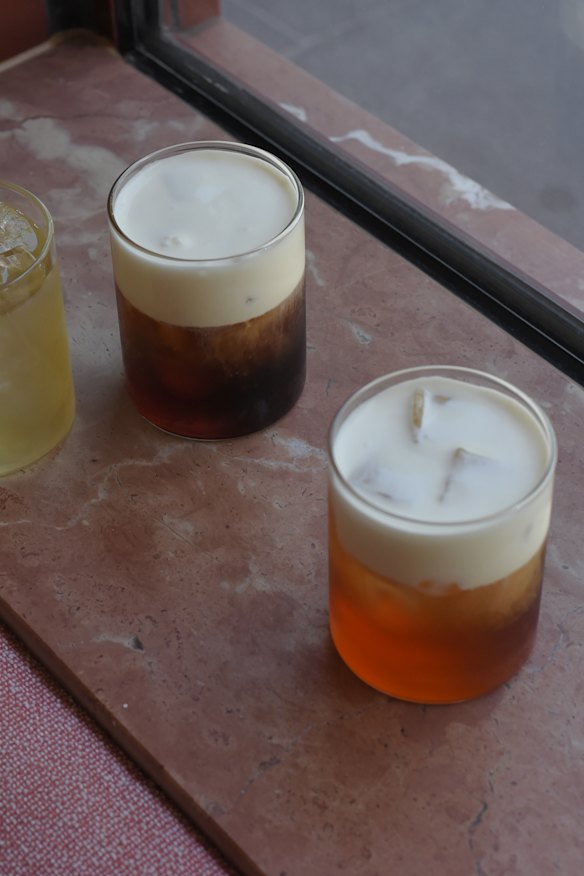
Acoffee is joining in, too. Despite serving a minimalist line-up of single origin filter and drip coffees for nearly 10 years, it now also offers a range of einspanners, matchas and creamy teas.
“I actually didn’t want to have signature drinks because of my passion for specialty coffee,” Kang says. “But people are very sensitive to the price of coffee.”
Tiramisu, banana pudding, Biscoff and Earl Grey creams and foams are blended with cold brew coffee all over Melbourne, even in the dead of winter.
With supply chain costs leading to a rise in green coffee expenses, he says something had to give.
“It’s difficult to increase the price of a latte or a long black, but if we have signature drinks, younger generations are willing to spend a bit more.”
At the chic inner-north cafe, a flat white will set you back $6.30, while an einspanner is priced at a premium of $9.50.
It’s unsurprising that trends driven by younger generations are showing up on cafe menus. Gen Z are dining out more than any other generation, according to Lightspeed’s report. Those in their 20s might not be able to afford a three-course degustation, but a weekly fun drink and a sweet treat isn’t out of the question.
“They aren’t going to be loyal customers; they’re moving around and looking for something new all the time,” says Kang.
For now, it keeps new customers coming through the doors.
Award-winning barista Junnie Phyu recently opened her first cafe, More Coffee in Hawthorn, with a two-speed menu that speaks to old- and new-school coffee drinkers. Sticking to her passion for quality brews, Phyu offers an entire menu of specialty pourovers and continues to run her coffee workshops in Burwood East. But catering to a broader audience allows her to have a bit of fun, offering signature drinks in all colours of the rainbow: sparkling orange and grapefruit coffee; taro matcha; pandan cloud coffee, to name a few.
“Even if we add extra sugar or foam, we really try not to overwhelm or take away the coffee flavour,” Phyu says.
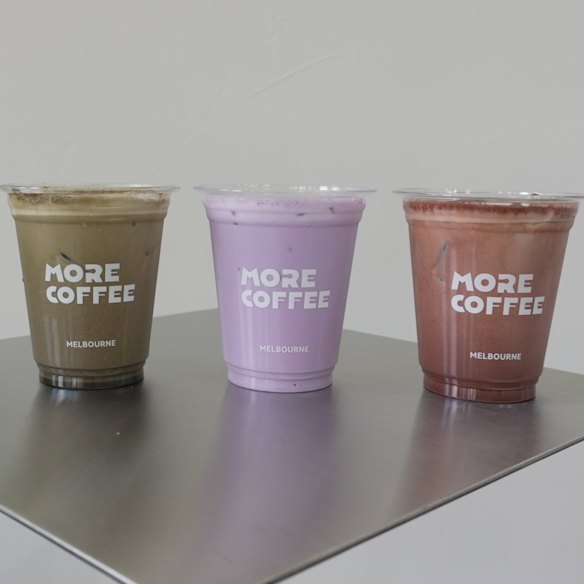
More’s signature drinks might contain lots of flashy extras, but they’re actually cheaper to make than a good quality pourover coffee due to the cost of ingredients, equipment and labour. Despite this, Phyu prices them all around $10. “Some people really don’t want to drink coffee as much any more,” Phyu says. “It’s more about the experience.”
How much that experience should cost is a hot topic (just read this controversial opinion piece published by The Age). While the 100 Essential Cafes list celebrates the venues we know and love today, it’s difficult to ignore those that are shutting their doors each week in the face of rising costs, wages and other overheads. Meanwhile, customers battling the enduring cost-of-living crisis can no longer afford to splash out regularly on dining. It’s a catch-22.
There’s a reason why you’re less likely to sit down for a leisurely breakfast, and more likely to see queues for takeaway pastries and sandwiches.
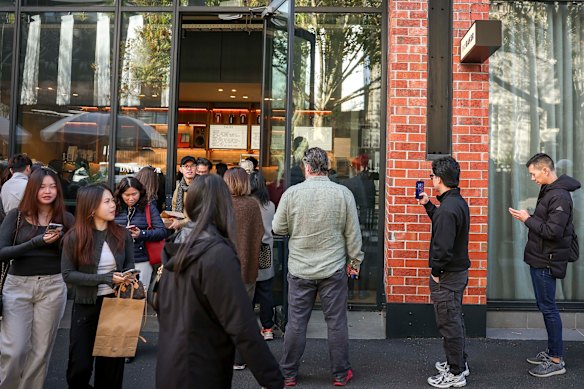
Earlier this year, Mordor Intelligence found takeaway was driving the fastest growth in the foodservice market – projected to expand at nearly 12 per cent a year until 2031. It might seem like a death sentence for the average hospitality business, but most cafe and bakery owners across Melbourne are already adapting. Grab-and-go is the new daytime business model.
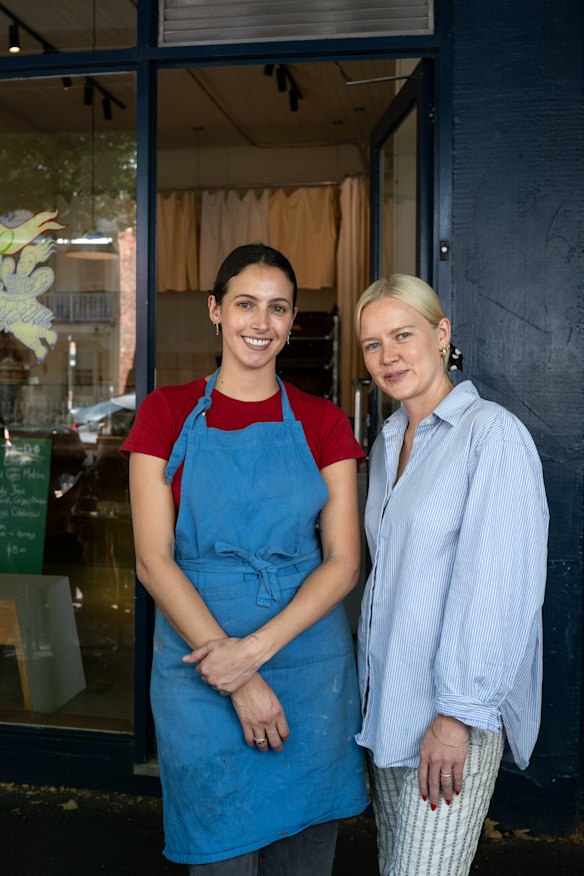
In Carlton North, ever-popular cafe Florian this year added a takeaway-only shop next door for its bestselling sandwiches, salads and cakes.
“The takeaway element honestly really saved us,” Florian owner Dom Gattermayr says. “We’ve noticed now we can actually afford to do things rather than breaking even.”
Removing the limitation of finding space for customers has also meant welcoming a new demographic – those who might have been daunted by the crowded doorways or disappointed by the lack of grab-and-go options by lunchtime. And of course, those that don’t want to spend too much.
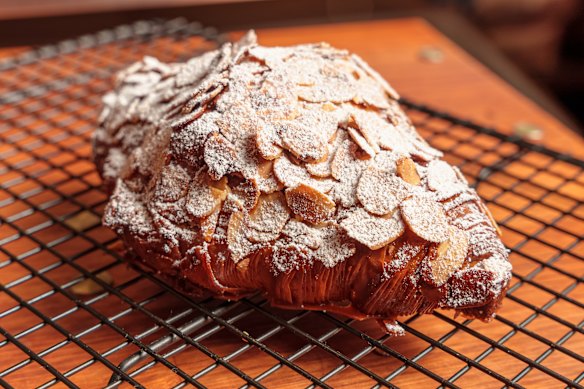
New bakeries such as Vandels in Brunswick and Abbotsford’s Daybaker have opened to instant crowds, while Chinese breakfast spot Wow Crepes on Bourke Street has expanded to a second, hole-in-the-wall shopfront opposite Flinders Street Station – this time without seating available. Could a sit-down breakfast or brunch soon become a premium product with a pricetag to match?
“I think people are going to see … way less dine-in and table service. It will be QR codes and counter service,” says Gattermayr.
When diners do head out for their once-a-month breakfast, many are stepping away from the familiar in favour of trying new dishes, new cultures, new menus.
Have you ever had youtiao, Chinese savoury doughnuts, dunked in doujiang, a bowl of warm soy milk for breakfast? Breakfast Hola has introduced that and other morning fare from China’s northern regions to the CBD.
Or what about flipping the full English and making it Sri Lankan, with curry, sausages and egg hoppers, the crisp, bowl-shaped rice pancakes? You’ll want to head to Lankan Tucker’s new Lygon Street location.
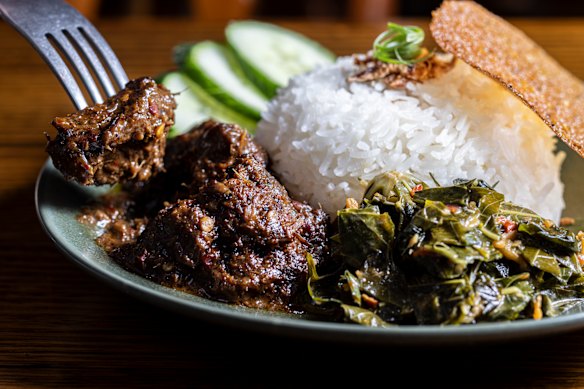
At Indonesian cafe Roemah, spicy beef cheek rendang is fired up from 9am daily and dark-roasted coffee is served in a glass with coconut milk and a toasted coconut-crusted rim. Nasi goreng and stuffed tofu have become crowd favourites and plantain, the tropical fruit, is wrapped in green rice pancakes for a sweet breakfast.
“The more diversified the options are for brunch, the more interesting Melbourne will become,” says Winarto. “Ethnic brunch items are sort of like phase two in the cuisine introduction journey … it means that the main meals from that cuisine have started becoming mainstream.”
The 100 Essential Cafes and Bakeries of Melbourne 2026 launches on Friday, July 24. All venues are reviewed anonymously. The best way to experience the guide is the Good Food app, where you can search via a map or collections. It’s available as a standalone subscription and is included in premium digital Age subscriptions. Download it from the Apple App Store or the Google Play Store.
The guide is published in the Good Food lift-outs in The Age on Friday, July 24, and Sunday, July 26, and the following week on Friday, July 31, and Sunday, August 2.
Disclaimer : This story is auto aggregated by a computer programme and has not been created or edited by DOWNTHENEWS. Publisher: www.smh.com.au


