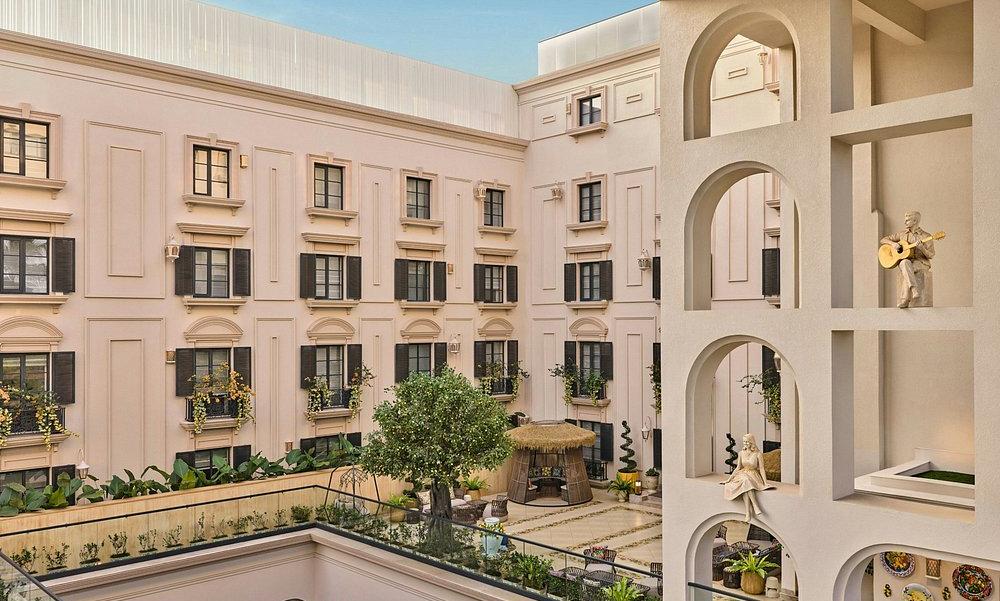
A hotel can be in Goa without necessarily feeling Goan. It can have the location, the views and the familiar holiday comforts, but what makes a stay feel connected to a destination is often found in the details. At Renaissance Goa, that connection is being built into several aspects of the guest experience, from the design and food to the beverage programme and the experiences curated beyond the property.
The thinking is rooted in what the brand describes as neighbourhood connections. The idea is fairly simple: a Renaissance hotel should reflect the city or destination it is in. The expression of the brand in Paris would naturally be different from the one in Goa. At the Goa property, this translates into a design language that draws from the state’s colours, natural forms and Portuguese influences, while giving guests opportunities to engage with the neighbourhood.
The hotel is not a resort in the conventional sense. It is a city-style hotel, but the interiors have been designed to give the building a distinct personality. There are orchids repeated across different spaces, botanical details, mosaics and a striking cherry blossom installation that has become one of the property’s photo spots. The lobby welcome drink takes its cue from this installation. Made with jamun and seasonal local fruit, the drink is clarified and given a soft pink colour to echo the tree. The chefs have also created a chocolate version of the tree, which is placed in guest rooms.
The Portuguese influence appears in other details too. Some of the design elements recreate the shape of traditional balconies associated with Goan homes, while the hotel uses patterns and visual references that acknowledge the region’s history. The uniforms, cushions, mats and restaurant linen at Casa Limone were designed by fashion designer Rajdeep Ranawat. The prints eventually inspired a couture collection called Threads of Renaissance, which was launched with a fashion show at the hotel around its opening.
Even the all-day dining restaurant has its own visual narrative. The Bloom Kitchen draws on the idea of a farmer’s market, with decorative rabbits carrying spices and farm produce, while miniature versions of these figures are used around the breakfast buffet. The details may be playful, but they are part of a larger effort to make the experience feel considered rather than generic.
The food programme follows a similar approach. The Bloom Kitchen is a global cuisine restaurant, but Goan food has a regular place on the menu. The Goan thali is available through the day, alongside a selection of à la carte regional dishes. Poi and red rice are among the local staples that feature in the hotel’s Goan food experiences. At the same time, the restaurant caters to an international clientele and offers familiar choices such as dosas, aloo puri and Amritsari kulcha, along with Asian and continental options.
Casa Limone, meanwhile, takes a different direction with its coastal Italian menu, led by Chef Alessio Cosma Amodio. The two restaurants give guests a choice between local flavours and a cuisine that draws from another coastal food culture. It is a balance that allows the hotel to have a strong sense of place without limiting the dining experience to one regional menu.
The beverage programme is perhaps where the local influence becomes particularly interesting. The hotel describes itself as beverage-forward, with different concepts across its bars. The lobby bar works with indigenous ingredients and modern mixology, using local spirits and flavours such as feni and mahua. The poolside bar has a different cocktail identity, with recipes and styles developed specifically for that setting. A dedicated mixology space gives the team room to experiment and develop new drinks.
There is also an attempt to make the programme more thoughtful in its use of ingredients. The team uses fruit trimmings and peels left over from breakfast preparation to make syrups. Pineapple skins, banana peels and cucumber skins, which would otherwise be discarded, find their way into beverage recipes. One of the drinks, the Green Fix, brings together basil cordial, cucumber syrup, chard, pineapple, citrus and banana peel, with Goan spices, cardamom and clove adding another layer. The intention is to create drinks that are lighter, lower in sugar and make better use of ingredients.
Another cocktail, Curry 101, takes its inspiration from Goan fish curry. It is a clarified cocktail made with fenugreek, including a variety known as Dukshiri. The programme also works with Cazulo, a Goan feni producer, to introduce guests to different expressions of the spirit. The point is not simply to put a local liquor on the menu, but to give it a context and make it part of the experience.
Beyond the hotel, the Navigator programme extends this neighbourhood-led approach. Rather than relying only on conventional concierge recommendations, the team curates experiences that introduce guests to local people and places. These include visits to Divar Island, heritage walks through Fontainhas and a tour of an old Goan home hosted by a local family. The hotel is also exploring additions such as the Museum of Goa. The experiences are reviewed and refreshed over time, giving the team room to respond to guest interests.
The larger thought is that a hotel stay need not be limited to the room, the restaurant and the pool. A guest might begin the day with local food, spend an afternoon learning about a traditional craft, head out to meet a local host and return for a drink made with ingredients associated with the region. Each touchpoint adds another layer to the stay.
That is what Renaissance Goa is attempting to build: a property where the destination is not merely the backdrop, but part of the hospitality itself. The success of that approach will depend on how naturally these elements come together in everyday guest experiences. But the intent is clear. From the breakfast buffet to the bar, and from the design details to the neighbourhood experiences, the hotel is trying to give guests more reasons to look beyond the usual Goa itinerary.
Disclaimer : This story is auto aggregated by a computer programme and has not been created or edited by DOWNTHENEWS. Publisher: deccanchronicle.com