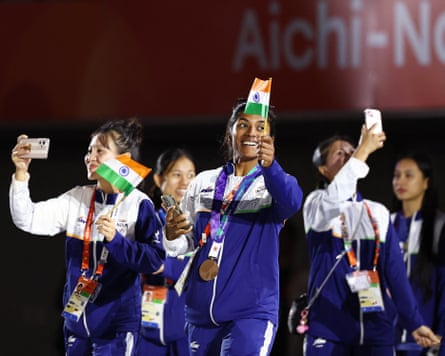
In a country where cricket eclipses every other sport, the recently concluded Asian Games offered a much-needed reminder of India’s breadth of sporting talent. In this edition of the games, in Japan, India won 85 medals: 21 golds, 27 silver and 37 bronze medals. I admit I did not know many of the players competing, or even some of the sports they play before putting this piece together. Learning about the stories, I wonder why not.
There were individual breakthroughs, records broken and history made. There were also hard-fought team victories, including the Indian women’s hockey team gold medal after a 44-year wait.
Sports broadcaster Siddharth Pandey cited an old saying in the world of sport: “You cannot be what you cannot see.” For Pandey, one of the most heartening sights was families and communities rallying around the four female players from the north-eastern states. (The region has endured decades of conflict and is often overlooked in the national conversation.) “We simply cannot underestimate the impact these games and medals have on future generations taking up non-cricketing sport and wanting to excel in it,” he told me.
Recognition is also important. Vidya Pillai, the first Indian woman to win a snooker world championship has spoken about her sport not getting the attention or respect it deserves. She felt unacknowledged following her 2023 feat, despite the fact that it came after six unsuccessful world finals and she beat two former world champions along the way.
Behind India’s medal glory are dozens of athletes and families who have struggled financially, trained with limited facilities, and often without much institutional support.
So this week, I am sharing a sample of the many extraordinary stories from different parts of the country. These are only a fraction of the champions to emerge from the games, yet they provide a glimpse of the possibilities that can open up when a country sees and celebrates sporting talent across the spectrum.
Neeru Dhanda (gold in trap shooting): Dhanda’s family in Haryana’s Jind relies on the government’s food subsidy programme and she began her sporting journey using a borrowed shotgun with tin cans as targets. Right before the games began, the 26-year-old spent a few days in a hospital recovering from an illness instead of training. But last week, as rain lashed the shooting range in Urenocho, she became the first Indian woman to win an individual gold in trap shooting at Asian games. She won a second gold in mixed team trap event as well as a silver in the women’s team trap event.
Vithya Ramraj (gold in 4x400m): Ramraj was one of the breakout stars of the event with a three-medal haul. NDTV reported that her father had to borrow money to support Ramraj and her twin sister’s athletic careers. Alongside the team gold in 4x400m, she won a silver in the mixed 4x400m relay. She also broke Indian legend PT Usha’s long-held national record in 400m hurdles which won her a bronze medal.
Sahil Jadhav (gold in compound mixed archery team and men’s compound team): Not long ago, Jadhav contemplated quitting archery, frustrated by not making the progress he had hoped for. He had been forced to compete with borrowed arrows for selection trials, the New Indian Express reported, adding that his mother sold her jewellery to buy him professional compound bows. Now, the 25-year-old has two gold medals and an automatic entry to the 2028 LA Olympics.
Lalremsiami Hmarzote (member of the gold-winning women’s hockey team): The women’s hockey team forward once had to travel about 100 miles from her home to reach the only hockey academy in Mizoram. When she was growing up, her parents had no idea about what hockey and she played barefoot on dirt pitches. This month, playing her 200th international appearance, the 26-year-old struck gold. She scored the lone goal of the final against China, which Hockey India described as a “stunning reverse-stick strike”.
Ancy Sojan (silver in long jump): With colourful beads glistening in her hair, Sojan flung herself 6.53 metres in long jump, to win the silver medal. Earlier this year, the 25-year-old broke the national record set in 2004. Her journey, from a village in Kerala’s Thrissur district to the international stage, has not been straightforward. Last year, she was diagnosed with polycystic ovarian syndrome, forcing her to drastically change her diet and manage the medication-related weight gain she had before the tournament.
Aslam Inamdar (a member of the gold-winning men’s kabaddi team): Inamdar came to kabaddi, a south Asian contact sport combining elements of tag and wrestling, from humble beginnings – he was partly drawn to it because it was affordable and didn’t require expensive equipment. Coming from a village in Maharashtra’s Ahilyanagar, he worked odd jobs – from cleaning washrooms to working in the fields – so he could spend evenings training. “It still feels like a dream to me,” Inamdar told the Indian Express. “I often think about how someone who didn’t even have food at home now holds two international medals.” The 26-year-old was instrumental in helping India win their gold-medal match against Iran.
I would love to hear from you: which sportsperson from the Asian Games did you find most inspiring and why?
What else we’re reading about
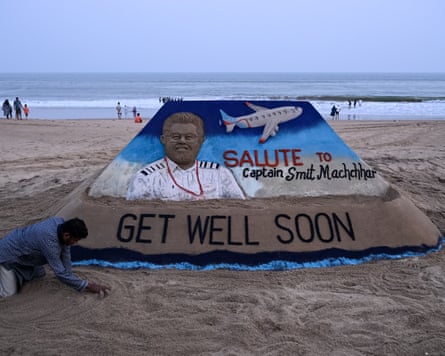
Flydubai incident | Indian pilot Smit Machchar is being hailed as a hero for helping to save 174 passengers on the flydubai flight to Israel last week, after his co-pilot made an apparent effort to crash the plane. After being stabbed, Machchar opened the cockpit door, allowing passengers and crew to enter and overpower the attacker. He is recovering in a hospital in Saudi Arabia, where the plane eventually landed.
Datacentres | Protests against water-guzzling datacentres erupting from the US to Australia are gathering momentum in India. South Asia correspondent Hannah Ellis-Petersen travelled to the small village of Tarluvada, in Andhra Pradesh, where the state government has been accused of fast-tracking plans for a $15bn AI datacentre for Google, allegedly to avoid stringent environmental scrutiny.
Art and design | Designer Vikram Goyal, celebrated for his signature repoussé brass work, brings his installation Wings and Tales to a Georgian townhouse in London’s Mayfair from 12 to 16 October. The exhibition includes furniture designs inspired by landscapes from the Indian epic Ramayana.
Guest shelf
A recommendation from someone with great taste
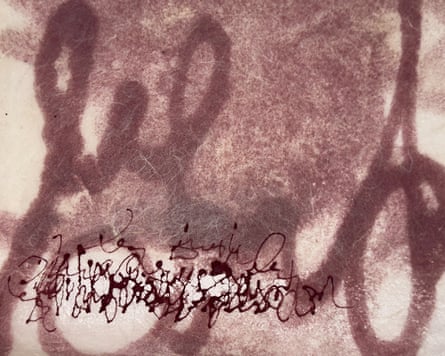
Shireen Gandhy, director of Mumbai’s pioneering Chemould Prescott Road Gallery, founded in 1963, recommends the work of artist Al-Qawi Nanavati. “[She] is a young artist from Bombay whose practice is rooted in printmaking and making her own paper. Her mother’s passing left her with a void,” says Gandhy. Nanavati created Letters to My Mother, an epistolary artwork crafted in, as Gandhy puts it, “a deeply personal language that is not known to anybody but her. Using fabrics and saris that belonged to her mother, she creates this tactile imagery for these letters. I find it very moving and like alchemy.”
Count it
A number worth knowing
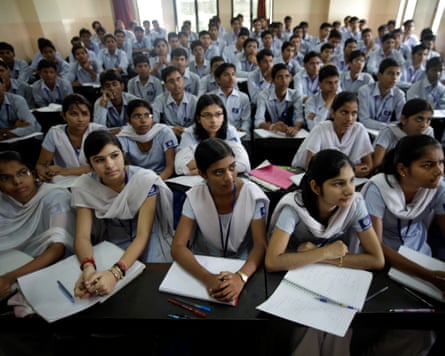
13,626
This is the number of students from disadvantaged communities who dropped out of some of India’s most prestigious institutions: central universities, Indian Institutes of Technology and Indian Institutes of Management between 2018 and 2023, according to Anubhuti Vishnoi of the Economic Times. The figure comes from an interim report by a committee set up by the supreme court last year to examine mental health and suicide prevention in higher education.
Vibe check
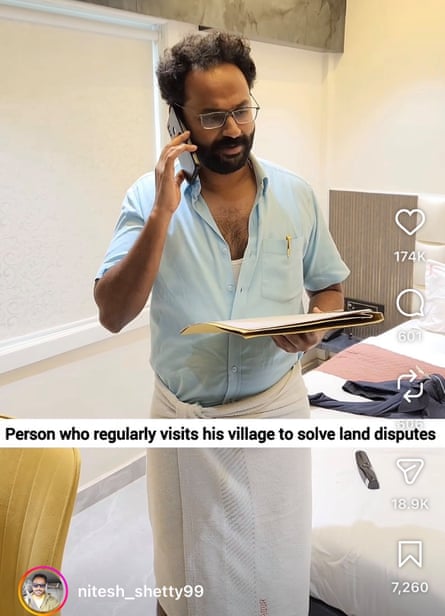
Nitesh Shetty’s sketches find absurdity in everyday life, turning familiar characters and social interactions into unexpected punchlines. This is what makes his work powerful: you’re laughing one moment and moved the next. There is a reel for every character imaginable: the person perpetually trapped in the limbo of land disputes, the man who is strangely knowledgeable about funerals, or the friend who has a unique dressing sense.
The 35-year-old from Mumbai didn’t plan on a career in comedy. “When you don’t know what to do, you try anything,” he told me. Now, Shetty rejects more conventional formats such as television in favour of challenging himself creatively. His advice for those who look up to him? “It’s a great time to build something. The [online] audience is ready-made for you. Be original and don’t follow trends.”
Get in touch
Do you have any thoughts or responses to this week’s newsletter? Is there anything you’d like us to cover in the future? Share your feedback by replying to this, or emailing us at thisisindia@theguardian.com and we may include your response in a future issue.
Disclaimer : This story is auto aggregated by a computer programme and has not been created or edited by DOWNTHENEWS. Publisher: theguardian.com