
Bhubaneswar : For years, the tribal residents of Lekadpaju, a remote village tucked away in the forests of Odisha’s Boudh district, lived under the constant shadow of gunfire. Once branded a Maoist stronghold, or Lalgarh, the village was synonymous with fear, where exchanges of fire between Maoists and security forces often determined the rhythm of daily life.
Today, the bullets have fallen silent.
Roads have reached the village, and the spectre of insurgency has largely faded. Yet, for the nearly 50 tribal families who call Lekadpaju home, peace has brought little relief. Their greatest threat now is not armed conflict but an acute shortage of safe drinking water.
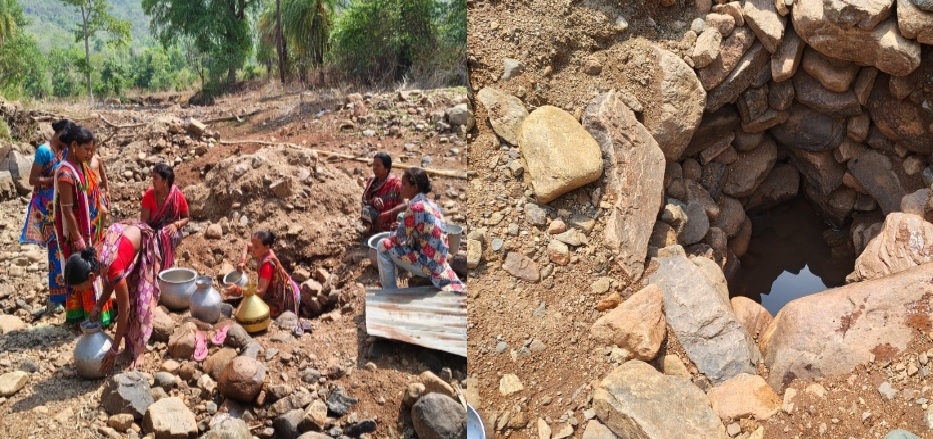
Every morning before sunrise, women carrying earthen pots, buckets and aluminium vessels make their way to a narrow mountain stream on the outskirts of the village. The water flowing through the stream is muddy and unsafe for direct consumption. To collect relatively cleaner water, villagers dig small pits—locally known as chuas—into the sandy bed of the stream and wait patiently as groundwater slowly filters into them.
The process is painstakingly slow.
With only a trickle of water emerging from each pit, villagers often spend hours standing in queues for their turn. Fearing that the fragile pits may collapse, they have reinforced them with large stones. During summer or the monsoon, the routine remains unchanged.
“This is the only source of water we have. We cook with it, drink it and use it for every household need. Sometimes we have to wait for hours because the water seeps out so slowly,” said a local woman, describing the daily ordeal.
Ironically, this struggle continues despite government efforts to improve infrastructure in the village after it became free from Maoist influence. A road now connects Lekadpaju with the outside world, raising hopes among residents that basic amenities would soon follow.
Those hopes, however, remain largely unfulfilled.
A solar-powered drinking water project was installed in the village at a cost of several lakh rupees to provide safe water to residents. But the system has remained defunct for months due to poor maintenance, forcing villagers back to the primitive practice of drawing water from the stream.
The consequences are visible.
Residents say contaminated water has led to frequent outbreaks of diarrhoea, gastrointestinal ailments and skin diseases, particularly among children and the elderly. With no alternative source available, families continue to consume the untreated water despite the health risks.
The villagers have repeatedly appealed to the authorities to restore the solar water supply system or install a deep borewell to ensure a reliable source of potable water before the situation worsens further.
Officials acknowledge the problem.
Narendra Nayak, an engineer with the rural water supply and sanitation department, said the department is aware of the drinking water crisis in Lekadpaju.
“We have taken note of the issue. Necessary steps are being taken to repair the non-functional solar drinking water project at the earliest. Once restored, the villagers will receive safe drinking water,” he said.
For the people of Lekadpaju, however, assurances alone cannot quench their thirst.
“The village’s journey mirrors a broader paradox of development in many remote tribal regions. While roads, security and connectivity have improved, access to essential public services such as drinking water, healthcare and sanitation continues to lag behind,” says Kambu Dhar Kheti, a local social activist.
Lekadpaju may no longer be known as a Maoist stronghold, but until safe drinking water flows into every household, its residents remain trapped in another relentless struggle—one fought not against insurgency, but against thirst, disease and neglect.
Disclaimer : This story is auto aggregated by a computer programme and has not been created or edited by DOWNTHENEWS. Publisher: deccanchronicle.com




