
The ongoing war in the Middle East has had a dramatic impact on the price of fuel across the nation, with diesel prices specifically climbing to never-before-seen heights, adding significant costs to WA’s mining and agriculture industries.
Now an Australian company is looking to bring technology successfully utilised in the United States to Western Australia in a bid to transform waste oil and agricultural residues into hydrotreated vegetable oil – a form of renewable diesel.
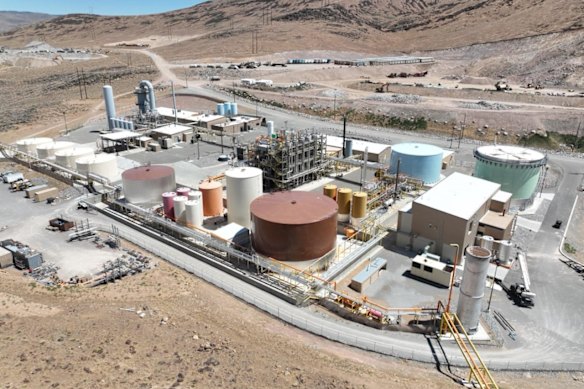
New Rise Renewables, a subsidiary of XCF Global, operates a fuel facility in Reno, Nevada, using waste oil, agricultural residues and distillers corn oil to produce both hydrotreated vegetable oil and sustainable aviation fuel.
Australian company Continual Renewable Ventures currently has a joint commercialisation and development agreement with XCF Global that covers not just the technology, but technical, development and project support.
CRV managing director Renzo Petersen said the company is planning to replicate the Reno facility at three separate locations in Australia, turning waste oil, tallow and eventually non-food grade crops into fuel for the mining, agricultural and aviation sectors.
CRV is currently in the process of securing land for three production facilities in Australia, in New South Wales, Queensland and WA, and is actively working with governments in each state to find a place to set up the venture.
Petersen said the company has Kwinana in mind as the ideal location within the state, with key infrastructure already in place and close to major aviation hubs.
“We’ve submitted our applications and believe we will be assessed on that early next year,” he said.
“We could be fully operational and producing fuel in under two years.
“We are taking the blueprint from what is an operational facility in the US and reproducing it here for Australian conditions and standards.
“It means we can expedite the process of establishing local production of renewable diesel and sustainable aviation fuel, because we’re not focused on the research and development.
“We already know this works.”
Petersen said the modular design of the facility, known as a bio-refinery, means the operation would have a relatively small footprint compared to traditional refineries.
“We’d be able to produce 175 million litres,” he said.
“So because it’s modular, we can scale it up, and the size doesn’t mean you’re replicating.
“After multiple scale-ups, we’d be able to produce 600 million litres on about nine-and-a-half hectares of land.”
The company is looking to facilitate the mining industry as the sector moves away from diesel-powered machinery and transitions to an electric workforce.
Once miners become reliant on electric vehicles, Petersen said CRV will then focus on other heavy industries including the agricultural and aviation sector.
“You don’t need any modifications to any vehicle at all,” he said.
“You could go from a full tank of diesel to a full tank of renewable diesel and back and forth with no issues. The benefit of the renewable diesel is you have a reduction of greenhouse gas by about 80 per cent, or between 70 and 90 per cent.”
Petersen said the company had already locked in contracts to sell around 70 per cent of the fuel it will produce, while for mining companies the fuel could potentially be used to claim scope three emission reductions.
“We’re also working with a few grain providers that are some of the largest in Australia that we’re getting a lot of support from,” the said.
“That’s one of the offerings we have for farmers to be able to benefit from the fuel that they are helping to create.
“We’d be creating quite a few jobs, and not only in manufacturing the facility itself, but actual full-time employment when the facility is up and running, we’re talking about at least 100 to 120 full-time staff at each plant around the country.”
From our partners
Disclaimer : This story is auto aggregated by a computer programme and has not been created or edited by DOWNTHENEWS. Publisher: www.smh.com.au