FUKUOKA –
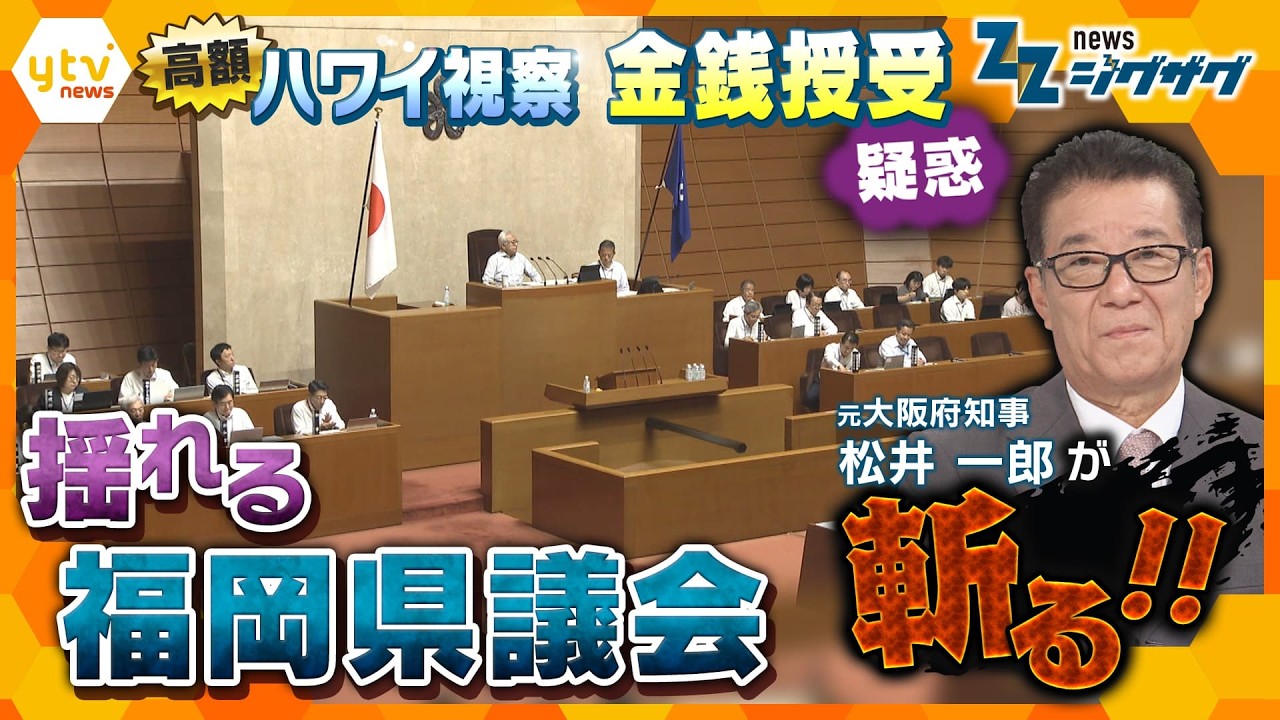
The Fukuoka Prefectural Assembly is facing mounting scrutiny over its use of public funds after revelations that assembly members spent about 45 million yen in one year on overseas inspection trips, including a Hawaii visit that cost nearly 12 million yen for four members.
The controversy centers on a series of overseas inspections to seven countries, with questions raised over high travel costs, contract procedures, delayed reports, proposed restrictions on media coverage, political fundraising practices and allegations of cash payments linked to assembly posts.
In January last year, four prefectural assembly members traveled to Hawaii for a three-night, five-day inspection trip at a public cost of about 11.92 million yen, or roughly 3 million yen per person. The round-trip airfare alone was about 1 million yen per person in business class, while the group stayed at a resort hotel costing about 120,000 yen per night per person. The amount was far above the 75,000 yen upper limit set for a prime minister’s hotel stay.
The outsourcing cost for the Hawaii trip also drew criticism. An initial estimate of about 980,000 yen rose to 6.51 million yen after additional local guides and interpreters were added. Critics have questioned why the contract was handled through a negotiated arrangement with a specific travel agency and why costs repeatedly increased severalfold from the original estimates.
Former Osaka Governor and Osaka Mayor Ichiro Matsui said the case suggested a “Showa-era” style of assembly management steeped in money and old customs. Matsui, who also served as an Osaka prefectural assembly member, said it was difficult to understand how such spending had continued for years without being challenged by watchdog groups or auditors.
Matsui said Osaka Prefecture had experienced a slush fund scandal about 30 years ago, involving improper spending by officials and some assembly members on meals and travel. The issue was exposed after complaints from private citizens, and remaining officials later repaid the money that had been improperly used. He said the Fukuoka case appeared strikingly outdated by comparison.
Fukuoka assembly members made seven overseas inspection trips in one year, including visits to Cairo in Egypt and Hanoi in Vietnam. Assembly Chairman Yasumasa Kurauchi took part in six of the seven trips. Total public spending for the overseas inspections came to about 45 million yen.
The assembly has also been criticized because only two reports on the overseas trips had been made public as of the time the issue emerged. Matsui said the absence of timely reports made it natural for residents to view the trips as little more than publicly funded overseas travel.
The contract method has since been revised. After prefectural audit officials said the procedures needed correction, new guidelines took effect on June 1 requiring competitive bidding in principle.
Matsui also questioned why the prefectural government had continued to approve the spending. He said such travel budgets are proposed by the governor’s side after review by financial officials, and argued that the negotiated contracts should clearly have been subject to bidding.
The issue has spread beyond travel spending. Fukuoka Prefecture’s association of department and section chiefs, made up of prefectural employees, was found to have bought tickets in bulk for political fundraising parties held by the assembly chairman and others. Prefectural employees have described the practice as a long-standing custom dating back more than 10 years, saying they attended out of deference to the assembly.
Another dispute involves allegations by prefectural assembly member Takashi Yoshimatsu, who says he paid about 20 million yen to senior members of the Liberal Democratic Party assembly group, including prefectural assembly member Haruguchi and Vice Chairman Nakao. Those named have denied the claims, creating a direct confrontation between the two sides.
According to Yoshimatsu’s claims, the money covered expenses such as goodwill golf outings with senior members, New Year gatherings at high-end Japanese restaurants, meals with LDP executives and celebratory payments. One item alone listed 5.5 million yen for golf-related expenses. Matsui said ordinary golf in Osaka might cost around 20,000 yen per person even at an expensive course, and described the amount cited as abnormal.
Matsui said the post of assembly chairman carries privileges that make it desirable. He said a chairman typically receives an additional monthly allowance of about 100,000 to 200,000 yen compared with ordinary members, as well as an official car and secretary. He added that Osaka Prefecture once had an annual chairman’s discretionary fund of about 10 million yen, though that system was abolished after Toru Hashimoto became governor and moved to scrap similar discretionary funds.
Yoshimatsu has said he was told by then-LDP assembly group chairman Haraguchi that there was a need to “work hard” in connection with assembly management. He has also said that anyone who hears an audio recording would recognize the voice as that of Vice Chairman Nakao. Haraguchi has said the phrase “work hard” arose in the context of political effort, while Nakao has said the voice sounds similar to his but that he would not have made such remarks if no money was involved.
A lawyer consulted on the case said bribery could be an issue if a person receiving money made a specific request such as asking for support in a vote, with a possible penalty of up to seven years in prison. The person offering the money could also face punishment even for making the offer, with a possible fine of up to 2.5 million yen. However, the statute of limitations would be five years for the recipient side and three years for the giver side.
The lawyer also pointed to a possible violation of the Political Funds Control Act, which prohibits individuals from giving money or other benefits to an individual politician for political activities. Meals and golf could be included as political activities. In such a case, the penalty could be up to one year in prison or a fine of up to 500,000 yen, though the statute of limitations would also be three years.
Matsui said voters should judge the matter at the next unified local elections. He said both those accused of giving money and those accused of receiving it were elected by Fukuoka residents, leaving the final political judgment to the electorate.
The Fukuoka Prefectural Assembly plans to have external experts conduct interviews with all assembly members as early as next week.
Source: YOMIURI
Disclaimer : This story is auto aggregated by a computer programme and has not been created or edited by DOWNTHENEWS. Publisher: newsonjapan.com