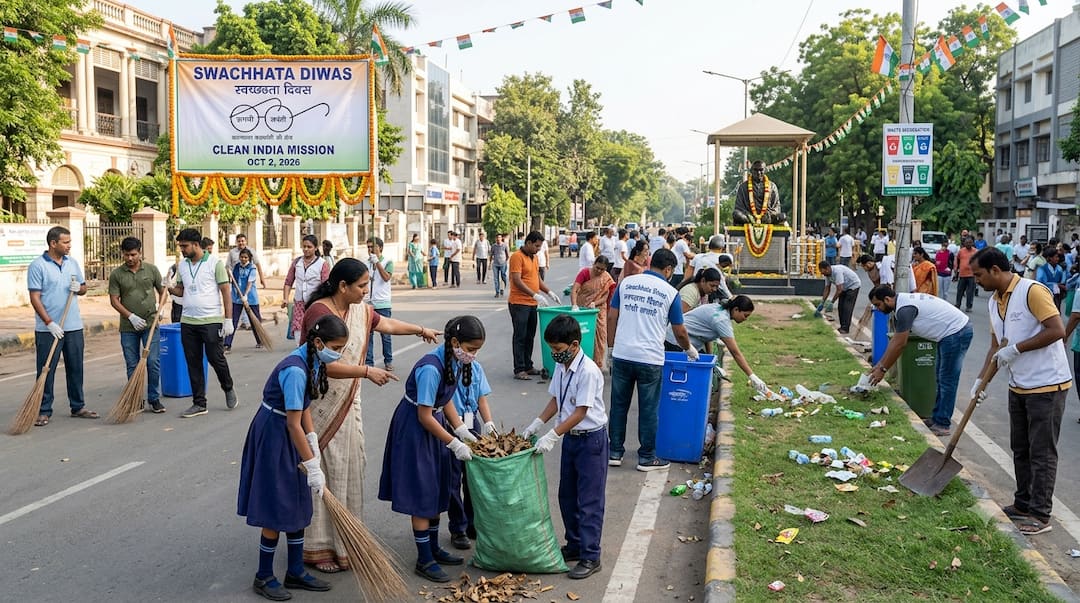
- Gandhi Jayanti, October 2, also marks Swachhata Diwas.
- This day promotes cleanliness, sanitation, and hygiene nationwide.
- Activities include drives, awareness programs, and waste management.
- It encourages regular public participation for healthier communities.
Gandhi Jayanti 2026 will be observed on October 2, marking Mahatma Gandhi’s birth anniversary. The day is also associated with cleanliness and public participation through Swachhata Diwas activities across India. Gandhi often emphasised cleanliness, personal hygiene and the importance of keeping surroundings clean. Over the years, October 2 has therefore become an occasion for communities, schools, government institutions and organisations to organise cleanliness drives and awareness programmes. From neighbourhood clean-ups to sanitation campaigns, the day encourages people to turn cleanliness into a regular habit rather than treating it as a one-day activity.
What Is Swachhata Diwas?
Swachhata Diwas is observed on October 2 as part of efforts to promote cleanliness, sanitation and hygiene. The day is closely associated with the Swachh Bharat Mission, which was launched on October 2, 2014, on Gandhi’s birth anniversary.
The initiative focuses on improving sanitation, eliminating open defecation, promoting responsible waste management and encouraging citizens to participate in keeping public spaces clean. Gandhi’s emphasis on cleanliness provides the broader social context for observing the day.
ALSO READ | Gandhi Jayanti Special: 10 Lesser-Known Facts About Mahatma Gandhi You May Not Know
Swachhata Diwas Events And Activities
Several activities can be organised on Gandhi Jayanti to spread awareness about cleanliness and sanitation. Cleanliness drives are among the most common activities, with volunteers cleaning roads, parks, public spaces, schools and residential areas.
Schools and colleges can conduct Swachhata awareness programmes, including poster-making competitions, essay-writing activities, cleanliness pledges and discussions on waste management. Students may also participate in campaigns encouraging people to avoid littering and use dustbins.
Communities and resident welfare groups can organise waste segregation drives, explaining the importance of separating wet and dry waste. Plantation activities, recycling campaigns and neighbourhood sanitation programmes can also form part of the observance.
Government offices and institutions may organise cleanliness campaigns in and around their premises, while social organisations can conduct awareness programmes focusing on hygiene, sanitation and responsible disposal of waste.
ALSO READ | Happy Gandhi Jayanti 2026 Wishes: 500 Messages, And Quotes To Share For Friends, Family And Loved Ones
Significance Of Swachhata Diwas
The significance of Swachhata Diwas goes beyond cleaning a particular place for a day. It aims to encourage people to understand their role in maintaining clean and hygienic surroundings. Proper waste disposal, sanitation and personal hygiene can contribute to healthier communities and cleaner public spaces.
On Gandhi Jayanti 2026, Swachhata Diwas activities can therefore serve as a reminder that cleanliness requires regular participation. The observance combines Gandhi’s emphasis on cleanliness with wider efforts to build awareness about sanitation, waste management and civic responsibility.
Disclaimer : This story is auto aggregated by a computer programme and has not been created or edited by DOWNTHENEWS. Publisher: abplive.com