
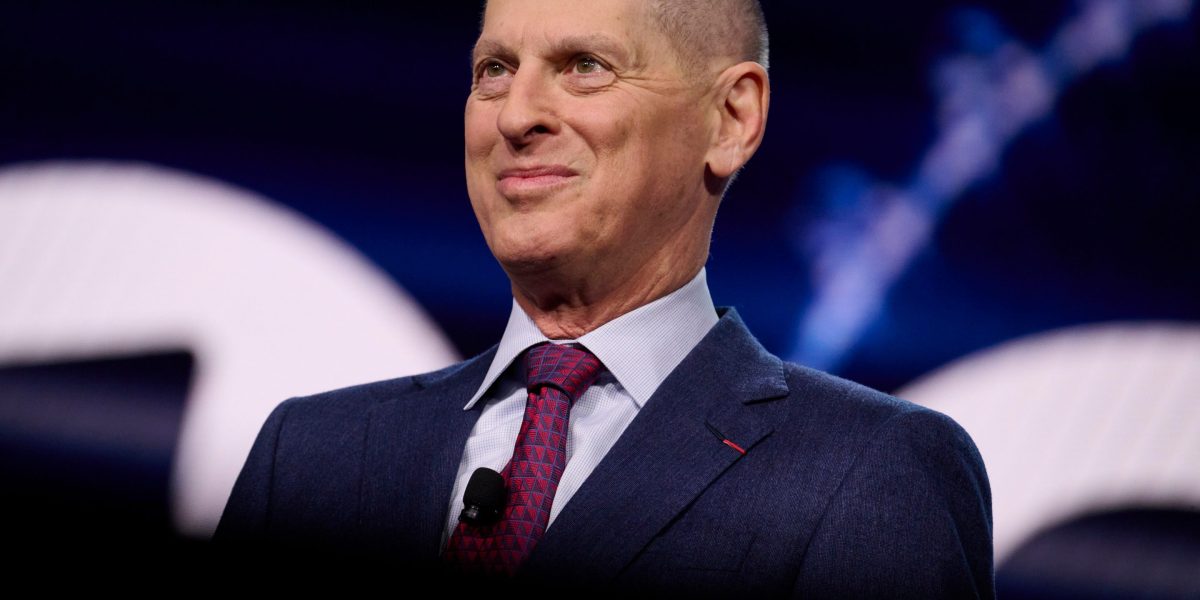
I have spent 35 years watching companies invest in preparing for a trade show. For many, the return is huge. But some squander the opportunity by failing to plan or execute.
The success stories are legendary. Bill Gates told me that trade shows were key to the rapid growth of Microsoft. Intel turned a chip component into a reason people buy products with “Intel Inside.” Ring, AMD, Nvidia and almost every brand-name tech company used trade shows to transform their businesses.
I ran CES, the world’s most powerful trade show, for more than three decades. Held each January in Las Vegas, recent editions have attracted more than 150,000 business attendees, including more than 55,000 international visitors representing around 140 countries regions and territories, 6,000 members of the media and 4,000 exhibitors. Attendees report an average of 29 meetings, and 68% make new clients or business contacts – an average of nine new contacts per attendee.
At that scale, you learn that a trade show is much more than a collection of booths. It is also several vertical events, a temporary marketplace, media platform, conference, product launch, networking event and competitive intelligence operation all taking place simultaneously.
And it can be one of the most powerful forms of business-to-business marketing.
Given the scale of the industry, the relative lack of attention paid to trade shows is somewhat astonishing. An estimated 13,000 B2B trade shows are held annually in the U.S., drawing millions of business professionals and bringing together thousands of exhibitors. The top 100 trade shows in 2025 had over 100,000 exhibitors across 41 million net square feet of exhibit space. That same year, the trade show and exhibition industry generated $16.5 billion in direct spending.
Companies invest money, executive attention and employee time in exhibiting at trade shows. Yet trade shows receive a fraction of the attention given to advertising, digital marketing and social media. Sure, advertising is easier to measure and, for agencies, often more lucrative. The return on a trade show can be harder to measure.
But the rise of the internet has not eliminated the value of face-to-face marketing. In some respects, it has increased it.
Digital marketing has made marketing more measurable and scientific. But these algorithms cannot fully capture one vital ingredient in the revenue recipe: human connection. A prospective customer can click on an advertisement in seconds. At a trade show, that same customer can see a product demo, ask questions, meet the people behind it, compare it with competitors and begin a relationship. Humans not only discover new products and services; they also determine whether they want to do business with the people running them.
COVID-19 made that distinction even clearer. During COVID, people created and maintained relationships through screens and video platforms, creating what often felt like a cellophane barrier between them. CEOs and executives emerged from that experience with a renewed appreciation for being together in the same room.
Trade shows offer that five-senses experience at enormous scale with great efficiency. But exhibitors won’t reap benefits by simply showing up.
One of the central lessons of Robyn Davis’ new book, “Exhibit Smarter,” is that companies often approach trade shows tactically when they should approach them strategically. They rent space, design or reuse an old booth, send employees and wait for people to walk in. That can produce activity without producing results.
The smartest exhibitors begin much earlier. They determine what they want to accomplish. They select the right shows. They identify the customers and prospects they want to meet. They train their people. They design the exhibit and the experience around specific objectives. And they measure what happened afterward. That distinction can mean millions of dollars for a large company and survival for a small one.
In her book, Davis offers practical advice on choosing shows, establishing objectives, designing exhibits, training staff, generating traffic, managing teams and dealing with problems. She covers the process from selecting the right shows through strategy, planning, staffing, training and execution. She also deals with the inevitable problems that occur when hundreds or thousands of people, vendors and moving parts converge in one place.
But she also makes the book personal. Her passion for trade shows comes through on virtually every page.
I know something about that passion.
I have seen virtually every kind of exhibitor: companies that spend millions and accomplish little, companies that spend modestly and generate extraordinary results, and companies that initially dismiss trade shows and later discover that they have become one of their most important marketing channels. The difference is rarely the cost of the booth.
At the same time, Trade shows are media platforms and marketplaces, and there are opportunities to make them more transparent and accountable as marketing channels. Exhibitors should be able to evaluate their audiences with the same rigor they apply when buying other forms of media.
The same is true of event programming. The growing practice of charging executives for speaking opportunities deserves greater transparency. There may be legitimate reasons for these arrangements, but attendees should know whether a speaker was independently selected for expertise or whether the opportunity was purchased. Paid content should be clearly distinguished from curated editorial programming.
Trade shows are too large an investment to be treated as simply an expense. And the millions of business professionals attending them and companies spending billions to participate, CEOs, marketers and exhibitors need a clearer framework for evaluating what these events deliver.
Like Davis states, trade shows must be approached strategically and tactfully. And after spending 35 years on the other side of the exhibit hall, I think she is onto something.
The opinions expressed in Fortune.com commentary pieces are solely the views of their authors and do not necessarily reflect the opinions and beliefs of Fortune.
Disclaimer : This story is auto aggregated by a computer programme and has not been created or edited by DOWNTHENEWS. Publisher: fortune.com




