Young people have been called to protest in dozens of cities across Germany on Friday, as part of ongoing Europe-wide, Gen Z demonstrations.
Protesters in Germany are taking a stand over various issues, including education, climate change, the rising cost of living and the prospect of compulsory military service being introduced in future.
Events on Friday, November 20th, were scheduled to take place in 73 cities nationwide with several different youth movements involved in organising.
The action comes after demonstrations led by an alliance called Gen Z regelt (translated as ‘Gen Z rules’ or ‘Gen Z stands up’) initially took place across the country on October 31st.
While most protests were peaceful, violence and disorder erupted in some cases, particularly in Frankfurt, Cologne, Hamburg, Berlin and Stuttgart.
PODCAST🎧: What really happened at the Gen Z protests, new parcel fees and November events
The Gen Z regelt movement previously stated they were inspired by youth protests across Europe, including France, Belgium and Spain.
On Friday, protesters across Europe were set to take to the streets as part of a coordinated cross-border action.
Broadly speaking, people born in and around the years 1997 to 2012 are part of Generation Z.
Where are the demonstrations taking place in Germany?
Gen Z regelt said they expected around 21,000 people to take part in demonstrations across 73 German cities.
Among the cities where protests were planned were Berlin, Hamburg, Munich, Hanover, Cologne, Düsseldorf, Leipzig and Stuttgart.
This map shows where more of the demonstrations are around the country were scheduled.
Several other groups were also involved, with varying demands. These include the Schulstreik gegen Wehrpflicht (School Strike Against Conscription), which has previously held several nationwide demos.
The Federal Student Conference (BSK), Germany’s national student representative body, organised a separate protest in Berlin. This rally was planned to take place at Brandenburg Gate, with up to 5,000 participants expected.
The BSK has focused its campaign on education and climate protection. This call to action was supported by the environmental movement Fridays for Future and the Federal Parents’ Council, as well as by the education union GEW and various other educational associations.
Protests were set to begin in the morning and continue to late afternoon. Expect a heavy police presence in larger cities and some restrictions on the roads.
Are the protests expected to be peaceful?
During the October 31st demonstrations, tens of thousands took to the streets across the country in a peaceful manner.
As we previously mentioned, isolated incidents of rioting occurred in several cities in the evening, though these were mostly not directly linked to the registered demonstrations.
READ ALSO: Germany’s Gen Z demos explained
The organisers have distanced themselves from these incidents. “Our protest is peaceful, without exception,” Gen Z regelt have said.
The political response to the demonstrations has included talk of tougher policing and possible restrictions.
The chairman of the Police Union (GdP), Jochen Kopelke, said he fears further incidents.
“This is now about the resilience of the entire German police force,” he told German media this week. “They are continuing to test us and our resolve, and doing so more intensively.”
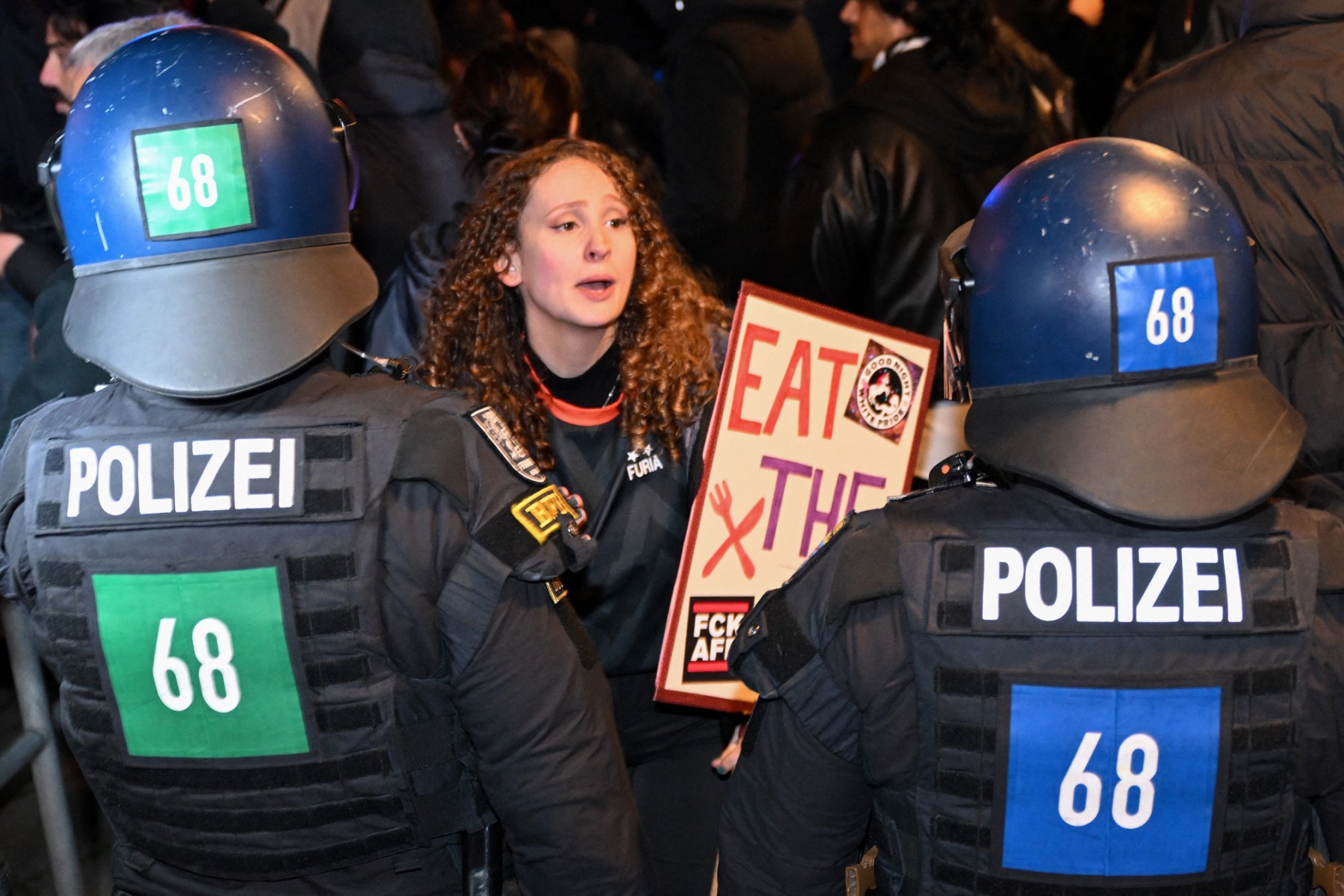
A woman holds a “Eat the Rich” placard as Riot Police clear a street blockade after a demonstration organised by GenZ regelt. (Photo by Kirill KUDRYAVTSEV / AFP)
Kopelke hopes “that even more police security measures will be put in place”. However, most police authorities that have received notifications of assemblies expect the demonstrations to proceed peacefully.
Some politicians have previously pointed fingers at certain groups. For instance, Hesse’s interior minister Roman Poseck, of the centre-right CDU, described troublemakers as predominantly from a “migrant background”, while Federal Interior Minister Alexander Dobrindt (CSU) blamed “violent left-wing groups” and “troublemakers from the migrant community”.
Ahead of Fridays’ action, there has been a focus on young people’s demands.
Education Minister Karin Prien (CDU) said she vowed to address young people’s concerns.
Prien said she wants to “involve young people in political decision-making”. She said: “Our most urgent task is intergenerational justice, and education must be a priority in this regard.”
However, she added that federal and state governments are already investing heavily in education.
Chancellor Friedrich Merz has stated via his spokesperson that young people were voicing “legitimate concerns” which he took “very seriously”.
The Confederation of German Employers’ Associations called for a spotlight on education in Germany.
“A joint effort by the federal government, the states and local authorities is needed to restore the quality of education,” Chief Executive Steffen Kampeter told the Rheinische Post.
Disclaimer : This story is auto aggregated by a computer programme and has not been created or edited by DOWNTHENEWS. Publisher: thelocal.de