One month after a catastrophic flash flood swept through a Himalayan river valley, a Suwanee couple is safely back home. The people they were traveling with are not.
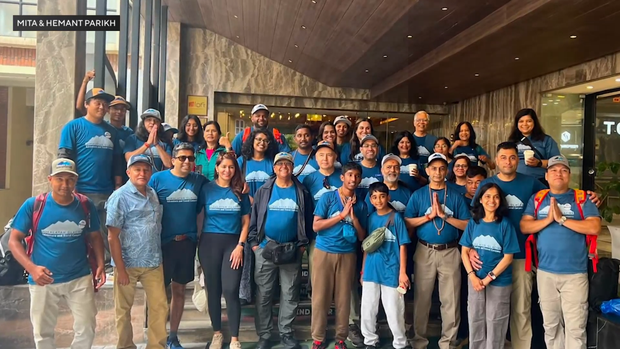
Mita and Hemant Parikh were part of a group of 47 people on a long-planned spiritual pilgrimage to Mount Kailash in Tibet. Nearly a month after the flood, the tour company that organized their trip tells CBS News Atlanta that none of the missing families from their group have been found either alive or deceased. Seven guides are also missing. All remain unaccounted for.
For the Parikhs, the past month has been spent trying to understand how an ordinary decision — a side trip they almost didn’t make — put them on a different road.
“That’s what we talk to each other every single day,” Mita said. “Why did we decide this way?”
For the couple, the pilgrimage had been 15 years in the making.
“Everybody has a bucket list, but this bucket list, you don’t choose it,” Mita said. “God chooses for you.”
Mount Kailash, a remote peak high in the Himalayas, is one of Hinduism’s holiest pilgrimage sites. For Mita and Hemant, reaching it was an opportunity to find peace, meditate, and surrender themselves to their faith.
They joined a group of 47 people and soon found themselves surrounded by families from around the world. Some had gotten to know one another through WhatsApp before the trip. Others met for the first time after arriving. Strangers became friends, ate together, prayed, and made plans together.
Among the group were families from the United States and Australia, a mother and daughter, and several children. Mita and Hemant said they had even made plans to continue traveling with some of their new friends after the pilgrimage was over.
Then came an unexpected opportunity. With extra time built into their itinerary, Mita and Hemant decided to squeeze in a trip to Lhasa and Everest Base Camp before rejoining the rest of their group in Saga.
It was not the kind of spontaneous decision they typically made.
“Usually we argue, or tickets are expensive — no, let’s not go,” Mita recalled. “But I don’t know why we both agreed.”
For Hemant, part of the appeal was simply getting close to a place he never expected to climb.
“Mount Everest is the highest peak in the world,” he said. “And I said, at least, I cannot climb, but I can go and see from a distance.”
The couple traveled on with a guide and driver. Despite forecasts of heavy snow, they said the weather cleared enough for them to see Everest.
Afterward, they expected to meet their fellow pilgrims in Saga and continue the journey together. They never got the chance.
While the Parikhs were away from the group, a massive flash flood swept through the river valley where their fellow travelers were staying. At first, Hemant said, the news did not sound perilous.
“Our guide said that, you know, there was a flood,” he recalled. “And so I thought … it’s not a big deal. There’s always floods.”
They had no idea how bad it was.
At Everest Base Camp, their phone had been on silent. When they checked it, they found repeated calls and messages from family and friends asking whether they were safe.
The Parikhs initially thought the rest of their group had simply been delayed. They had limited access to news and faced a language barrier as they tried to understand what was happening.
CBS News Atlanta 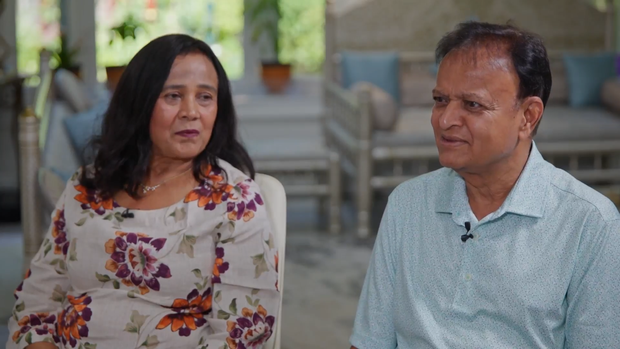
They waited for the group they were supposed to meet. It never arrived. They tried calling their fellow travelers. No one answered.
The couple said their tour operator eventually flew over the area by helicopter. What had been the group’s hotel was gone.
“The hotel is not there anymore,” Hemant said. “Not a single piece of concrete or pillar or anything. Nothing is there.”
Mita has found herself imagining what the morning may have been like for the people they had come to know — an ordinary morning before the flood arrived.
“They were drinking tea. They were eating their breakfast about 8:30,” she recalled.
One month later, the uncertainty remains.
Mita and Hemant eventually returned to Atlanta. However, coming home has brought complicated emotions.
“As soon as I close my eyes, I see Kailash, and I see the people,” Mita said. “I don’t know what happened.”
She said she still allows herself to hope that someone could be found. That perhaps someone reached higher ground or shelter and has been unable to make contact.
Hemant struggles with the same uncertainty.
“I ask myself why?” he said. “And I don’t have an answer.”
He also wonders whether there was something he could have done for the people they left behind.
For Mita, the experience has changed the way she thinks about the life she returned to. She talks about spending more time with people, caring more deeply for others, and finding some purpose in having made it home.
But she keeps returning to the decision that separated her and her husband from the rest of their group — a side trip, a different route, a choice that seemed entirely ordinary when they made it.
“That’s what keeps me awake,” Mita said. “Why? Why God chose us to live. So there has to be some purpose, right?”
One month later, Mita and Hemant still don’t have an answer.
Disclaimer : This story is auto aggregated by a computer programme and has not been created or edited by DOWNTHENEWS. Publisher: cbsnews.com