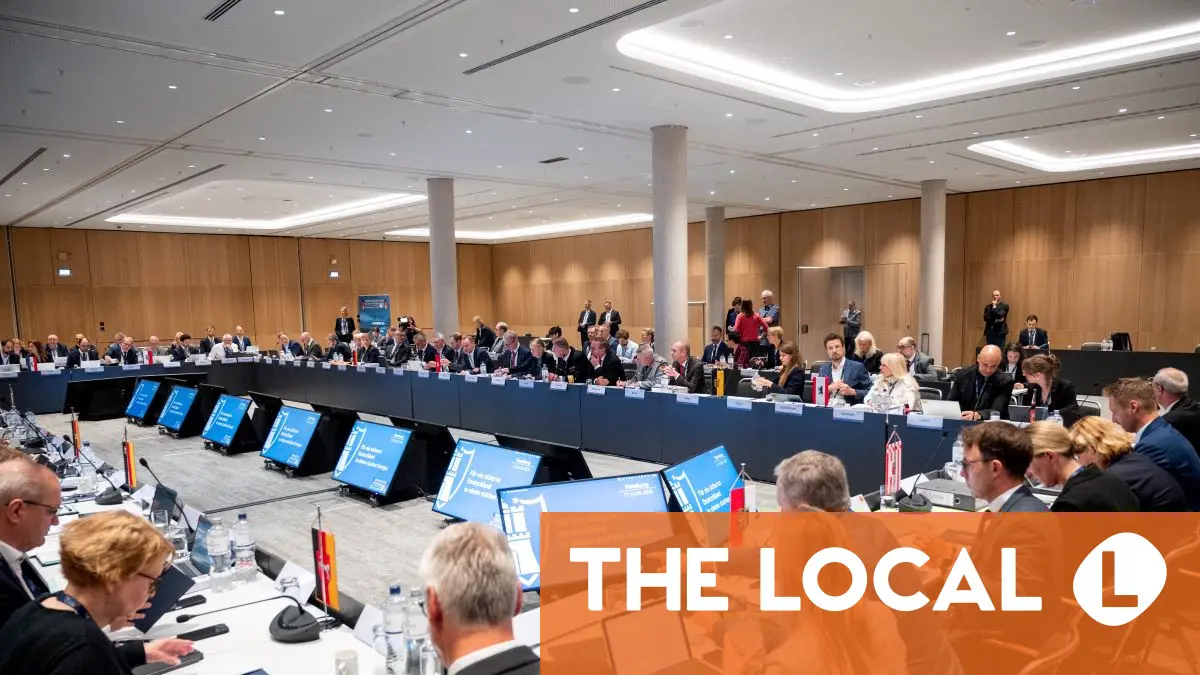
A decades-old unanimity rule concerning decisions by Germany’s Conference of Interior Ministers has been scrapped due to concerns that a state ministry controlled by the far-right could block joint decisions.
State interior ministers in Germany have agreed to abandon their long-standing practice of making decisions only by absolute consensus.
In future, resolutions at the Conference of State Interior Ministers (Innenministerkonferenz, or IMK) will pass if they receive at least 13 of the 16 state votes.
The change was approved through a written resolution and marks a significant shift in how one of Germany’s most important coordination bodies operates.
According to reports from German media, the main reason for the change is concern about political developments in Saxony-Anhalt, where the far-right Alternative for Germany (AfD) recently won the state election.
If the AfD were to join or lead a future state government and secure control of the Interior Ministry, it could gain a seat at the IMK and potentially block joint decisions under the previous unanimity rule.
What is the Conference of State Interior Ministers?
Germany’s federalist system comprises 16 states, known as Länder. Each state has its own interior minister, or an interior senator in the city-states.
These ministers are responsible for areas including policing, public security, immigration, disaster management and, in many cases, oversight of state domestic intelligence authorities.
The Conference of State Interior Ministers was founded in 1954 to coordinate cooperation between the states on security and law enforcement matters. It usually meets twice a year, in spring and autumn, although special sessions can also be held when necessary.
READ ALSO: ‘Like a MAGA campaign’ – Why is the AfD so popular in Saxony-Anhalt?
Until now, an unwritten convention meant that resolutions were only adopted if no state formally objected. Abstentions were allowed, but a single “no” vote could stop a proposal from being agreed.
What is the connection between the AfD and the decision to change the unanimity rule?
German media reports have linked the rule change to the possibility of the AfD gaining control of the Interior Ministry in Saxony-Anhalt.
The party won Saxony-Anhalt’s state election in September with 43.8 percent of the vote. While it fell short of an outright majority, AfD leader Ulrich Siegmund has said he aims to become minister-president in December.
An interior minister from the AfD would then participate in the IMK and, under the previous system, could block resolutions by withholding consent.
Security officials and politicians have also expressed concerns about the party’s plans for the domestic intelligence service in Saxony-Anhalt. Before the election, AfD representatives said they wanted to overhaul the state Office for the Protection of the Constitution and had even raised the possibility of abolishing it.
Against that backdrop, the interior ministers changed the voting rule so that future resolutions can be adopted with 13 of 16 votes rather than requiring unanimous agreement.
READ ALSO: Is German Chancellor Merz taking a harder line against the far-right after AfD win?
Disclaimer : This story is auto aggregated by a computer programme and has not been created or edited by DOWNTHENEWS. Publisher: thelocal.de