
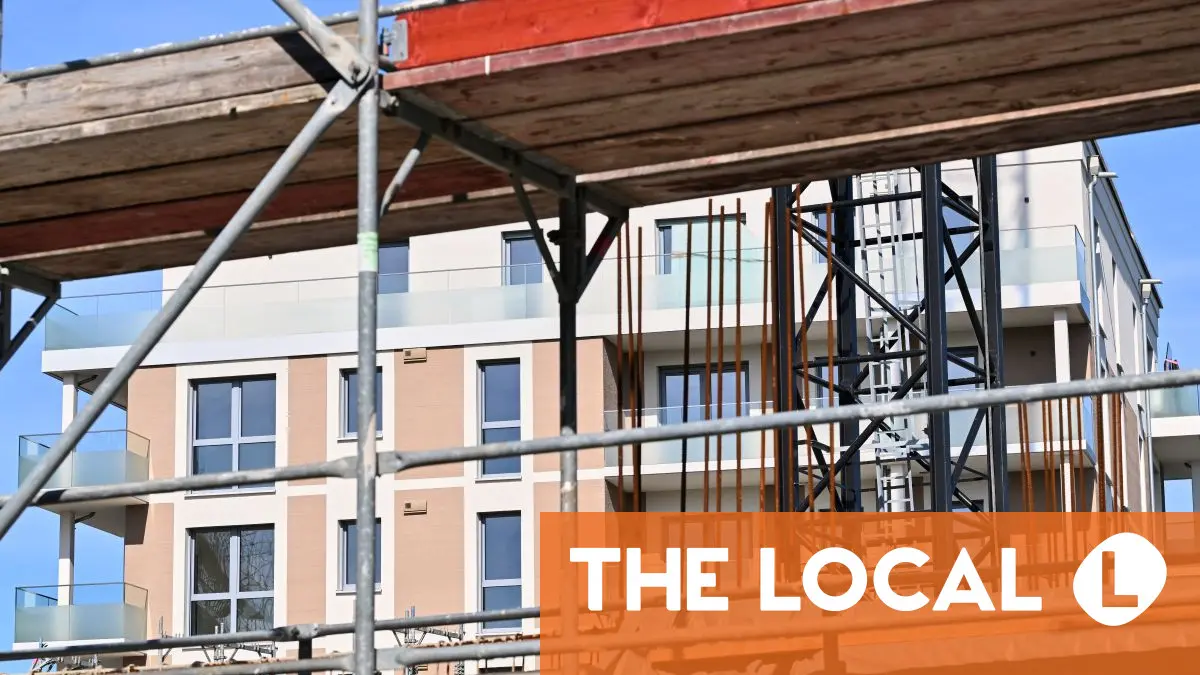
New homes could become cheaper to build under plans allowing fewer sockets, thinner walls and less soundproofing – but lower construction costs would not automatically mean lower rents.
Germany’s Justice Minister Stefanie Hubig and Construction Minister Verena Hubertz, both from the centre-left Social Democrats (SPD), presented draft legislation on Monday aimed at making housing cheaper to build by relaxing non-mandatory “comfort standards”.
The proposal comes as Germany struggles with a shortage of several hundred thousand homes – a problem that can make settling in the country particularly difficult for international residents.
It also arrives amid fierce debate in Berlin over a more radical response – an effort to bring 160,000 privately owned flats under public control.
Building Type E – short for einfach, or “simple” – was first proposed under Germany’s previous coalition. A previous draft appeared in November 2024 and key proposals followed in November 2025.
States and industry associations have until November 13th to comment. The draft must then be coordinated within the federal government and approved by the Cabinet before going to the Bundestag and Bundesrat.
The law could take effect in mid-2027 at the earliest.
READ ALSO: Could your next apartment in Germany be in a former office building?
What would Building Type E change?
The bill would amend construction contract law, allowing companies that build homes to do so faster and at cheaper costs.
Possible savings under the proposed system could include fewer electrical sockets, reduced soundproofing, thinner walls, lower ceilings, no bathroom towel warmer or an unheated stairwell.
But mandatory rules protecting safety and health would remain. Builders could not cut corners on areas including fire protection, structural stability, ventilation or lighting.
Based on pilot projects, the ministries estimate that simpler construction could reduce building costs by roughly 10 to 15 percent.
However, concerns have been raised about how these cost-saving measures would affect legal obligations and housing contracts.
Currently, buyers can generally expect a property to meet customary market standards unless their contract says otherwise. Builders reportedly worry that departing from those standards – even where they are not legally required – could lead to claims over defects.
Under the proposal, the parties could expressly agree to build according to Type E standards. Deviations from customary comfort standards could be recorded in writing, including by email.
Without such an agreement, the existing rules would continue to apply.
READ ALSO: How foreigners are facing discrimination on Germany’s rental market
What could it mean for tenants?
The bill is primarily designed to give developers, builders and buyers greater freedom when agreeing construction standards.
The proposal does not guarantee that landlords would pass their savings on. Any benefit for tenants is likely to be indirect, on the basis that lower construction costs could encourage more homes to be built and, over time, ease pressure on rents.
BR24 has reported on one example in Munich’s Schwabing district, where a cooperative project called “Das große kleine Haus” is among 19 local Type E pilots.
The broadcaster said that the project had achieved savings of around ten percent – partly through measures including fewer sockets and reduced soundproofing – and that this was reflected in rents of €12.20 to €13.50 per square metre.
What has the reaction been?
The German Housing Industry Association called the draft “disappointing and inadequate”, arguing that housing companies could still face tenants contesting Type E standards through their rental agreements.
The Greens said Type E could provide useful flexibility but warned it wouldn’t tackle other causes of high construction costs, including speculative land prices.
CDU housing spokesperson Jan-Marco Luczak questioned whether requiring developers and construction companies to agree explicitly would work. He favours making a legally defined basic standard the new norm instead.
READ ALSO: What Germany’s rising mortgage rates mean for home owners and buyers
Disclaimer : This story is auto aggregated by a computer programme and has not been created or edited by DOWNTHENEWS. Publisher: thelocal.de




