
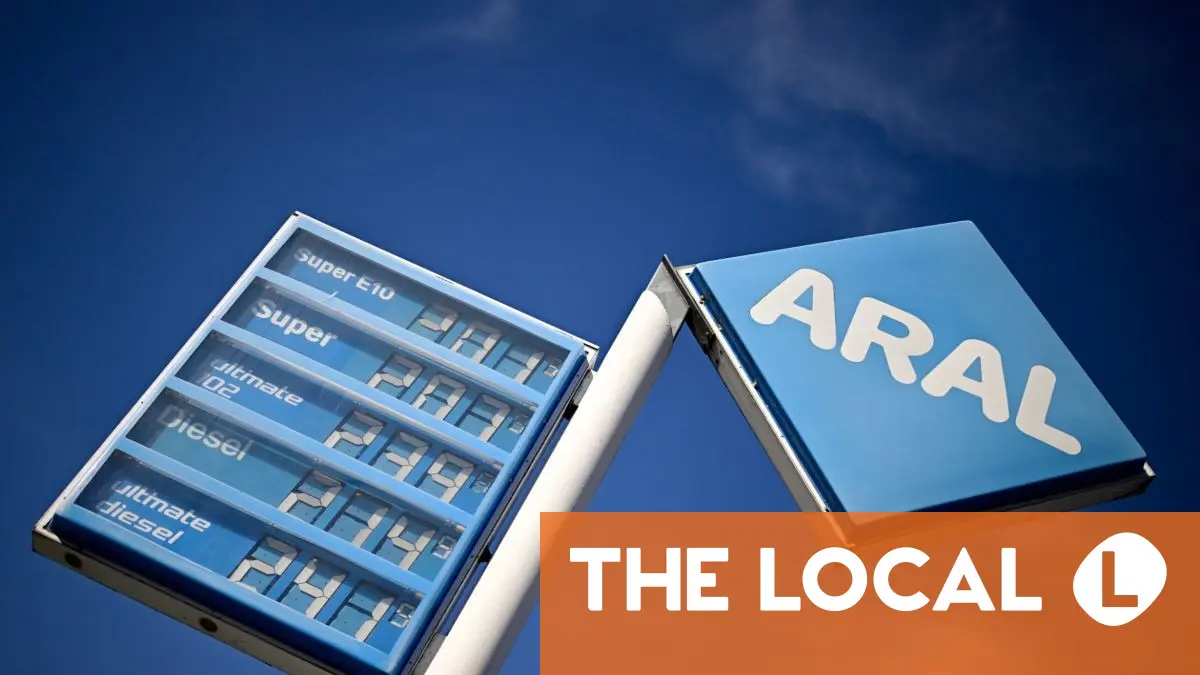
The price at the pump for petrol and diesel fell at the start of May when a fuel tax cut took effect, but watchdog groups say oil companies haven’t passed on the savings to consumers entirely.
Prices at the pump fell with the implementation of Germany’s ‘fuel discount’ tax cuts on May 1st, but they immediately began creeping upward again over the weekend.
According to a report by ADAC, Europe’s largest automobile club, recent fuel price developments suggest that the full amount of the tax cut is not being passed onto consumers.
Fuel prices rose significantly over the weekend across Germany to climb back above the two euro mark.
A litre of Super E10 cost €2.017 on a nationwide daily average on Sunday, according to data from the ADAC. That was 2.8 cents more than on Friday, May 1st, when Germany’s so-called ‘fuel discount’ took effect.
Diesel rose in price by 2.5 cents to €2.104 per litre within two days.
Compared with the daily average prices from one week prior (before the fuel discount was applied), E10 was 10.9 cents cheaper, and diesel 11.1 cents cheaper. So the price of both fuels was down, but down less than the tax reduction of 16.7 cents per litre that consumers might have expected.
According to the Federal Cartel Office, which has been investigating fuel price developments across Germany, prices initially fell by almost 13 cents from April 30th to May 1st – when the fuel discount took effect. But in the following days it crept up by several cents, despite global crude oil prices falling during the same period.
‘Discount not reaching customers’
The tax reduction has been in effect since May 1st and is set to remain in place until the end of June. As with a similar fuel discount that was applied in 2022, there had been discussions about whether the tax advantage would reach consumers.
The ADAC said that the energy tax reduction of just under 17 cents is still not being passed on to consumers in full, and that oil companies have raised prices again without it being justified by a rising crude oil price.
Fuel price developments are “once again going in the wrong direction,” noted the ADAC in a recent report.
The President of Germany’s Cartel Office, Andreas Mundt, spoke similarly: “The tax cut is intended to relieve consumers and the economy in a difficult phase…It’s not meant for [the oil companies]. It has to reach the customers.”
READ ALSO: How much money will Germany’s fuel price relief actually save you?
Current prices
With both diesel and petrol down around 10 cents since the end of April, nationwide fuel prices were hovering around the two euro mark on Monday — with some petrol stations offering diesel and E10 at prices just below that.
Price fluctuations at different fuel stations in Germany are especially varied at the moment, so drivers looking to save are advised to check prices with fuel price comparison apps.
READ ALSO:
Daily price rises at the pump are still being influenced by the recently adopted “12 o’clock rule” which limits petrol stations from adjusting prices upward more than once per day at noon. For this reason, it is also generally a bit cheaper to refuel in the mornings rather than in the afternoons.
Some experts have suggested that that limitation actually leads oil companies to push prices even higher pre-emptively, while a recent investigation found there may have been tens of thousands of violations of the price rise rule in April.
Disclaimer : This story is auto aggregated by a computer programme and has not been created or edited by DOWNTHENEWS. Publisher: thelocal.de



