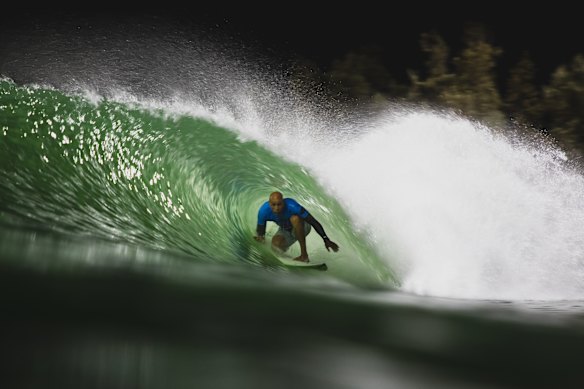

A shark behaviour expert says a $100,000 Gold Coast plan for night surfing by floodlights near the mouth of a river known for bull sharks might not be such a great idea.
Gold Coast City Council discussed trialling the concept – where three 24-metre-high lights would illuminate the water, so surfers can keep catching waves into the night – during next year’s World Surfing event at Snapper Rocks.
The trial is part of a wider “Surfing Infrastructure Masterplan” hatched to maximise profit off the coast’s famous beaches, with the council keen to see how night surfing would work in action.
Griffith University shark expert Vincent Raoult said bull sharks, which are known to be around the Tweed River outflow next to Snapper Rocks, are active at night, particularly between 4pm and 10pm.
Raoult said a one-off event would probably be fine, but more permanent or reoccurring night surfing at Snapper Rocks would be asking for trouble.
“Anyone who has done any fishing knows that if you have lights on the side of the boat into the water, you’re going to bring up a whole host of bait fish, and often with those bait fish, you’ll have sharks coming in as well,” he said.
“Those floodlights will have essentially the same effect.”
He said any plans should not be compared with France, where the WSL has held night surfing before.
“The key difference is in France there are no sharks,” he said.
The plan was discussed in a transport and infrastructure meeting at the council on Tuesday, and follows the swim leg of the popular Noosa Triathlon being called off over the weekend due to shark sightings.
Speaking with Nine News on Tuesday, councillor Gail O’Neill said precautions would be taken to make sure night surfing was safe.
“With all the surfing events and all the surf life-saving events we have, people are on jet skis making sure sharks aren’t in the area,” she said.
But Raoult said the most successful shark-spotting tactic on the Gold Coast would be unavailable after dusk.
“Drones can’t really work at night – you can’t really see through the water, and there are also some flight restrictions around operating drones at night,” he said.
Whether the plan goes ahead is up to the World Surfing League, with the council offering to pay for the lights.
Start the day with a summary of the day’s most important and interesting stories, analysis and insights. Sign up for our Morning Edition newsletter.
From our partners
Disclaimer : This story is auto aggregated by a computer programme and has not been created or edited by DOWNTHENEWS. Publisher: www.smh.com.au