Google Cloud says its newest AI product can help with one of Americans’ biggest complaints: the cost and redundancies of health care.
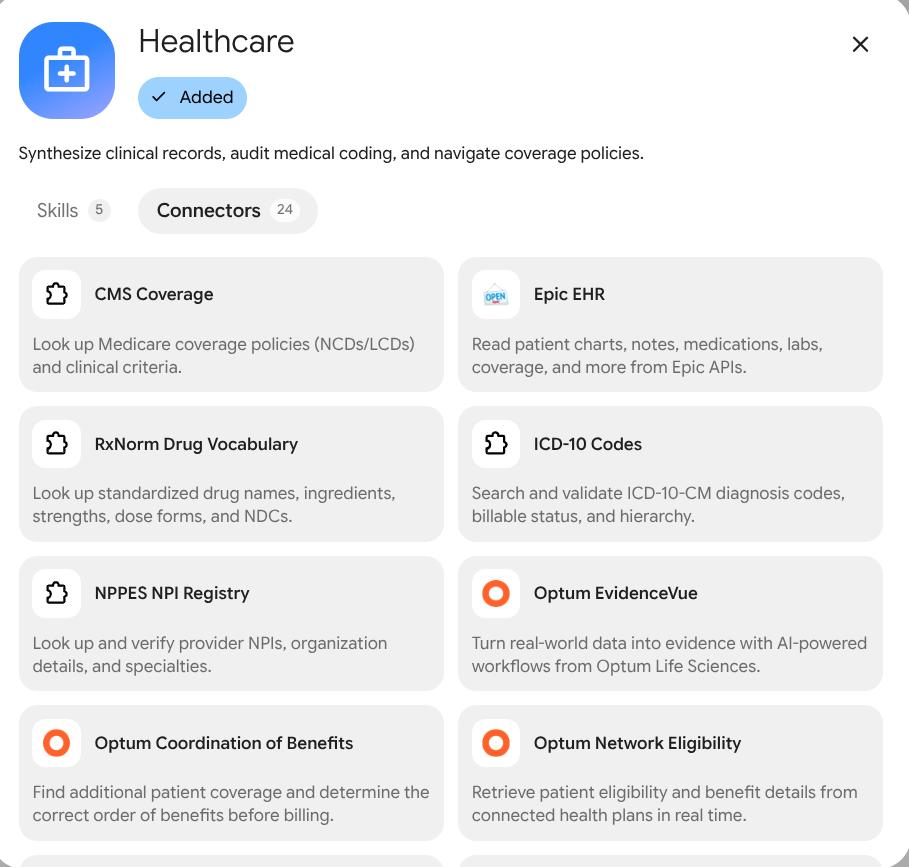
On Tuesday, the company launched Gemini for Healthcare, an AI product that connects to the records, billing and insurance systems that hospitals and insurers already use—and is able to act between those systems. Launch customers include Northwell Health, Highmark Health, HCA Healthcare, Optum, Blue Cross Blue Shield of Massachusetts, Hartford HealthCare and Stanford School of Medicine.
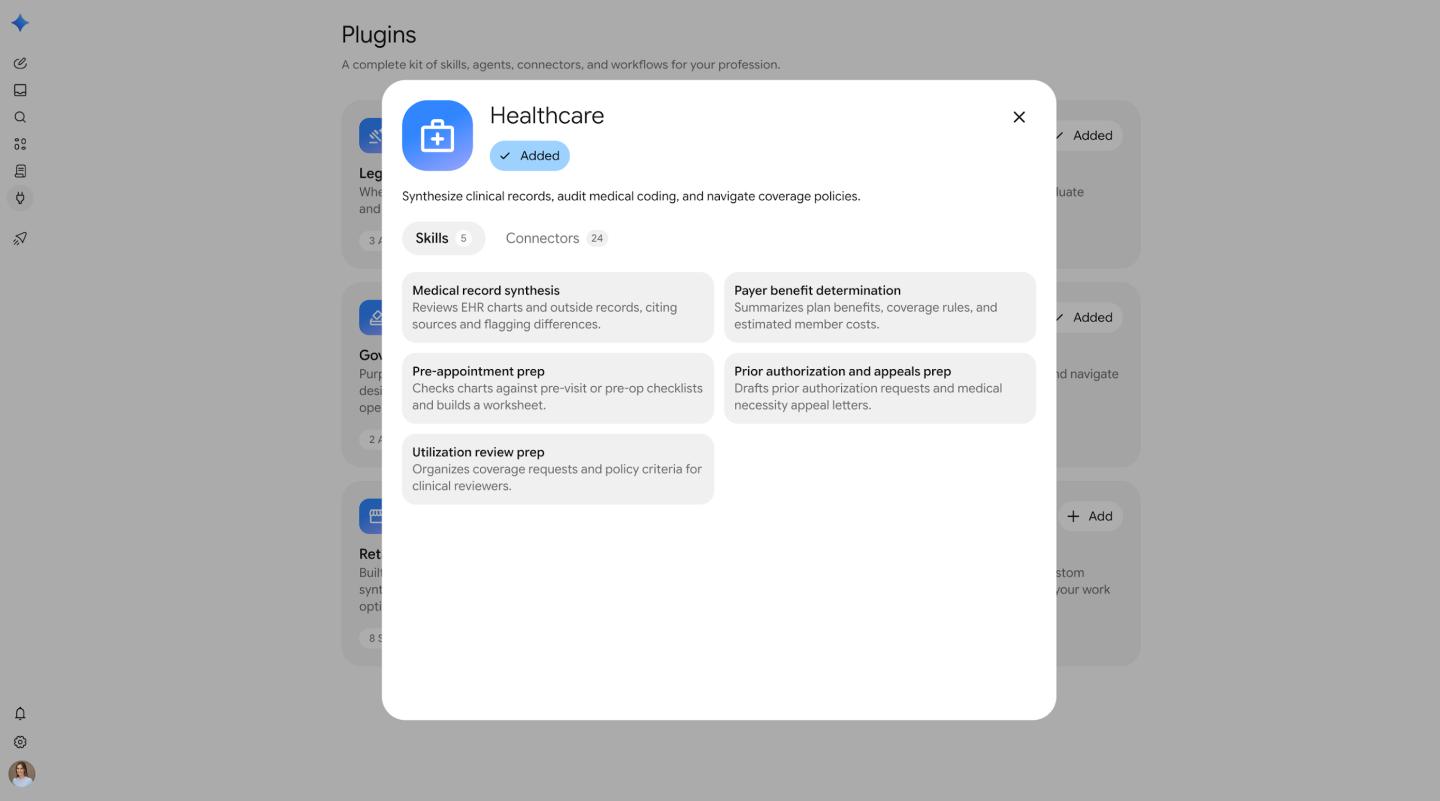
The new healthcare AI can pull a patient’s records from Epic and other systems into one single summary, flag gaps or conflicts between records, prepare and review prior authorizations, check what a patient’s insurance covers, estimate what they’ll owe, and search medical guidelines from groups like ASCO and the BMJ.
This comes as health costs keep climbing. Workers with employer coverage now pay $7,471 a year on average toward family premiums, up 9% from 2025, according to KFF’s annual employer survey released in October. When including what employers contribute, total family premiums rose 5% to $28,303, outpacing a 3.7% rise in wages and 2.7% inflation.
For the head of New York’s largest health system, part of that bill comes from records that don’t talk to each other.
“All the fragmentation of information in healthcare is what has led to, in my mind, some of the costs that have gotten away from us, and also overutilization,” John D’Angelo, who took over as CEO of Northwell in October 2025, told Fortune.
An emergency physician by training, he said he saw it in the ER. “I would treat people de novo, and the information is out there somewhere,” he said. “So I’m either playing detective or I just have to assume.” That could mean ordering a CT scan, he said, not knowing if they’ve had it four times already for the same condition.
Bringing bedside manners back to the bedside
When you walk into a doctor’s office, you inevitably are given a clipboard with papers you’re all but certain you’ve completed through the portal online. Then when you finally are whisked away to the doctor’s office, you’re asked the same questions you’re fairly certain were asked in the papers lining that very clipboard.
That constant asking and re-asking of questions leaves a poor taste in patients’ mouths, and that’s all before they were told to go “aaah.” Gemini for Healthcare is solving for that: it cites the source for each finding so clinicians can check it. For now, it can read patient records but not change them, so a doctor or nurse still makes any updates and decisions. In essence, it cuts down on the paperwork a doctor has to complete when they see a patient, bringing back that face-to-face consultation rather than letting paperwork pull doctors away from patients.
“Right now, for every 10 minutes a doctor spends with a patient, they’re 20 minutes on the computer documenting, capturing stuff, looking up the old data, tracking things down,” D’Angelo said.
Much of that time goes to insurers. Prior authorizations, the approvals insurers require before some treatments, are among the biggest burdens. Each physician completes about 40 prior authorizations a week, which takes around 13 hours of physician and staff time weekly, and 40% of practices have staff whose sole job is handling these requirements, according to the American Medical Association. The American Hospital Association estimates administrative costs make up 25% to 35% of U.S. health spending.
At Northwell, the fight with insurers takes a whole department. “I have like 400 employees whose sole job is fighting the insurance denials, and we overturn over 90% of them, but that’s a big labor cost,” D’Angelo said.
Karen Hanlon, president of Highmark Health, which owns both an insurer and the Allegheny Health Network hospitals, said doctors made clear what bothered them most. When Highmark asked its clinicians a few years ago what to fix after prior authorization, she said, “universally they said nothing else. Just keep focusing on prior authorization.”
Aashima Gupta, Google Cloud’s global director of healthcare strategy, said nurses and doctors now spend much of their day moving information between systems. “Humans are acting as an integration layer today,” she told Fortune. “They didn’t get into the profession to be glorified data-entry clerks. They want to be able to take care of the patients.”
AI is making things personal
Gemini for Healthcare launches with five ready-made “skills” — preset instructions for tasks like summarizing medical records, preparing for appointments and checking a patient’s insurance benefits — plus connectors to Epic, federal Medicare coverage data and medical guidelines from the American Society of Clinical Oncology and the BMJ.
In a demo with Fortune, Will Rosenfeld, Google Cloud’s healthcare data and AI lead, asked the system what was new in an outside specialist’s report that wasn’t in a patient’s Epic chart. In 35 seconds, it pulled the patient’s conditions, medications, allergies and labs, compared them with the outside report and flagged new lab results and an allergy the chart had missed, with each finding linked to its source. A clinician then decides whether to update the chart, since the system can read Epic records but not change them.
“A lot of the power of the product is just like simply one plus one equals three,” Rosenfeld told Fortune, describing how it puts a patient’s record next to coverage rules or medical research.
The same tool can answer cost questions during a visit. Gupta described a nurse asking whether a Medicare patient’s coverage pays for a skilled nursing facility, and what the copay would be, without making calls to find out. Rosenfeld said customers are especially interested in cost estimates. “It’s just something that’s really difficult for patients, to not know what their costs are going to look like,” he said.
Highmark already uses automation to cut waits. It says 78% of approved outpatient prior authorizations submitted digitally now go through automatically, so a patient can sometimes get approval before leaving the office. “They don’t have to take another day off work,” Hanlon told Fortune. She said a clinician reviews every case before Highmark issues a denial.
Potential savings?
D’Angelo called automating the denial fights “part of driving the affordability conversation the right way,” and said Northwell runs on “a 1% margin business at best.” Money saved on paperwork, he said, could go to community health workers who keep patients out of the hospital.
He said faster records and notes could also shorten wait times without overworking doctors, letting offices “squeeze two more patients a day” in practices with long waits. “Not because I made them stay open later or I told the doctor, ‘Suck it up, miss lunch,’ but because they’re able to be more efficient,” he said.
“It shouldn’t replace the doctor or the nurse, but it should give the doctor or the nurse back to the patient,” he said.
Both D’Angelo and Hanlon said the potential savings come from catching illnesses earlier, with Gemini acting as a pseudo-preventative care measure, while also allowing people to gain trust within their medical professionals.
D’Angelo, for example, described a system that notices a former smoker turning 50, confirms insurance has approved lung cancer screening, and offers nearby appointments, all without having a human pour through the records in the first place.
“That’s how you also address affordability over the long term, as we get much further upstream on wellness and driving down chronic disease,” he said.
Disclaimer : This story is auto aggregated by a computer programme and has not been created or edited by DOWNTHENEWS. Publisher: fortune.com