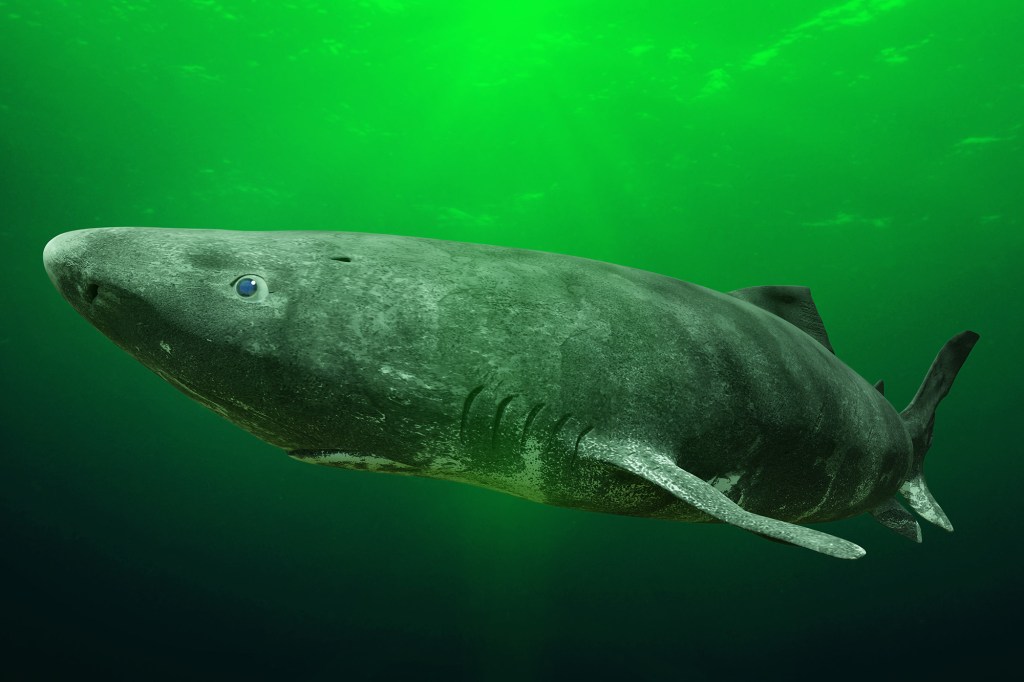
Greenland fishermen want to cull 1,000 Greenland sharks — which can live over 400 years, making them the longest-living vertebrates on Earth — with one municipality offering $45 per heart before the measure was blocked.
The mass-culling was approved by the Avannaata municipality on Greenland’s west coast in February, answering pleas from local fishermen who complained the lumbering 20-foot sharks frequently foul themselves in fishing lines at the cost of tens of thousands of dollars.
“This year I’ve lost around 6,000 hooks in total. Sometimes we lose 30,000 Danish krone a day,” 27-year-old fisherman Henrik Jensen told The Guardian.
Those 30,000 krone equate to about $4,500 worth of gear regularly lost in a single day — which prompted local leaders to bring the Greenland shark culling proposal to a vote earlier this year.
“We need to safeguard the income of fishers and the catch so that we can continue to eat the foods that we have relied on for generations,” said Avannaata Mayor Lars Erik Gabrielsen.
But the measure was soon blocked by critics who feared it would do irreversible damage to the extremely unique Greenland shark, which becomes sexually mature at the old age of 150 and is believed to gestate its young for over a decade — meaning populations can take an extremely long time to recover.
“They are probably — biologically — the most sensitive species in the ocean to overfishing,” said Nick Dulvy, a Simon Fraser University marine conservationist.

Greenland sharks were also listed as a “vulnerable” species in 2020 by the International Union for Conservation of Nature, PEOPLE reported.
The sharks largely live in the cold coastal waters around Greenland, northern Canada and Europe, and can travel about 1,240 miles per year — a fact the Oceans North Kalaallit Nunaat (ONKN) said would negate the culling, arguing new sharks would simply arrive to replace the old.
“Initiating a bounty system of this magnitude is a risky path,” ONKN said of the proposed culling plan — while cautioning that even though it was blocked this time, it could still arise in the future.
“The shark is the visible, tangible version of a problem whose real drivers are structural,” said ONKN director Jenseeraq Poulsen, arguing that overfishing and an excess of boats across Greenland fisheries were the real problems the shark culling was trying to address.
Disclaimer : This story is auto aggregated by a computer programme and has not been created or edited by DOWNTHENEWS. Publisher: nypost.com