T
his week’s reviews traverse everything from addiction to how to live a better, if not longer, life and how to leave behind your guidebooks and bucket lists when you travel to Japan.
FICTION PICK OF THE WEEK
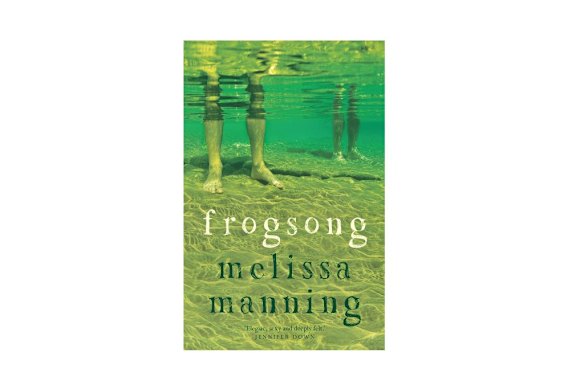
Frogsong
Melissa Manning
UQP, $34.99
Melissa Manning won the 2022 Victorian Premier’s Literary Award for Fiction with the suite of interconnected short stories, Smokehouse. Her novel Frogsong takes us into the intensities of a first love derailed by grief and addiction. Growing up together near a local waterhole, Caro and Danny are childhood friends turned high school sweethearts. They’re young and fervently in love, lazing through summer dreaming of university and careers, a life together. When Danny’s mother dies, he’s traumatised, spiralling into drug addiction, social withdrawal and self-sabotage. Then, he disappears and with no sign he’ll return, Caro is torn between loyalty to Danny and the need to preserve herself. From Helen Garner’s Monkey Grip to ’90s grunge lit, love and addiction feature prominently in Australian literature and Manning’s contribution captures with lyricism and nuance the emotional turmoil of loving an addict. It’s closer to Luke Davies’ Candy than Garner in its lyricism, though the reverse is true of its psychology, and the complex conflict of loyalties and desires that haunt Manning’s novel.
Self-Worth
Emma Tholozan
Scribe, $27.99
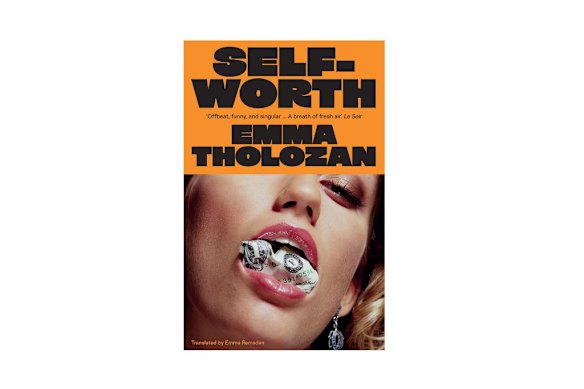
The trope of the goose that lays the golden egg gets a wacky, late-capitalist makeover in Emma Tholozan’s Self-Worth. Parisian twenty-something Anna has a philosophy degree and no job prospects. To get by, she takes a gig at a TV show warming up audiences. Anna lives a straitened lifestyle in a tiny flat and is soon joined by her new boyfriend Lulu, also a wage slave. Their fortunes change when, one day, Lulu vomits up a 20 euro note. He keeps spewing up cold hard cash on a regular basis. Anna soon begins to use him as a human ATM. She goes into a wild consumerist frenzy, now that money is no object, and everyone starts to treat her differently. Will their love survive if the ATM should run dry? Will Anna mistreat Lulu into leaving her? The execution of Tholozan’s absurd, parable-like premise isn’t as strong as the concept. There are plenty of witty passages and a flurry of shallow cuts, though the social satire could bite more deeply into the psychology of wealth (and poverty) and our world’s viral obsession with social status and success.
Dandelion is Dead
Rosie Storey
The Borough Press, $34.99
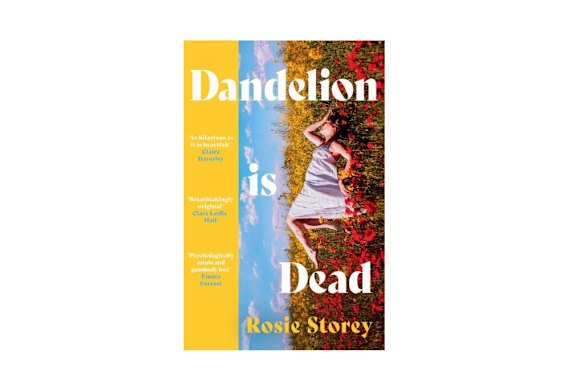
Poppy is still mourning her sister Dandelion seven months after her death, when she decides to look through Dandelion’s smartphone. There, she discovers a dating app message to her sister from a man called Jake, and – in honour of Dandelion’s devil-may-care attitude – she resolves to assume her sister’s identity and go on a date with him. The mad prank turns into something else when Poppy finds, to her dismay, a smouldering chemistry between them. That’s a problem for Poppy, given that she’s in a long-term relationship with another man, Sam. And goodness knows how Jake will react when he finds out that Poppy’s been impersonating a dead woman to seduce him. The lead character careens over the frozen grief she feels for her sister, loses herself in the excitement of new romance, and must confront the tangled web she’s woven with emotional honesty in the end. Some of the dialogue is almost Ozploitation-level in its overuse of retro-sounding Australian vernacular, adding offbeat humour to the quirky whirl of love and grief.
hello, world?
Anna Poletti
Puncher & Wattmann, $34.95
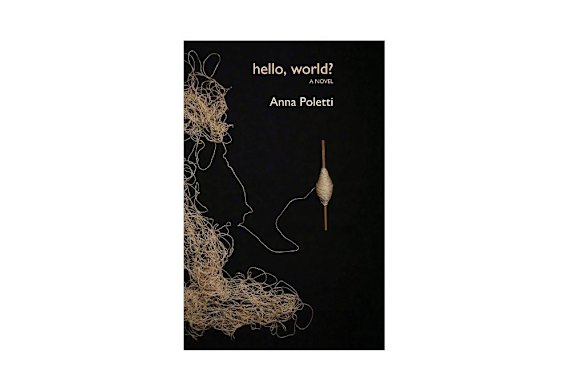
Digital kink both anchors and unmoors this feminist text. Anna Poletti’s hello, world? operates in the tradition of Pauline Réage and Anais Nin – exploring certain perversities, tensions, and contradictions surrounding gender and sexuality and power through sado-masochistic play. Our guide is the nonbinary Seasonal, originally from working-class Australia. After being abandoned by their Dutch partner in the Netherlands, Seasonal is at a loose end and embarks on a series of intensely erotic online exchanges with a male submissive, Laszlo. Seasonal must reckon with the misogyny and gendered violence of their own background, while Laszlo’s wild desire to be dominated coexists with a need to escape the authoritarian tide rising in Hungary under Viktor Orban. Can they forge an intimacy and freedom outside received ideas about gender? Using online messages in novels can be a turn-off, but they’re transfigured into poetry in this bold piece of subversive erotica, which explores dom femme dynamics and dives headlong into the myriad meanings and mysteries of the world of sexual fetish.
Rebirth
Antoun Issa
Hachette, $34.99
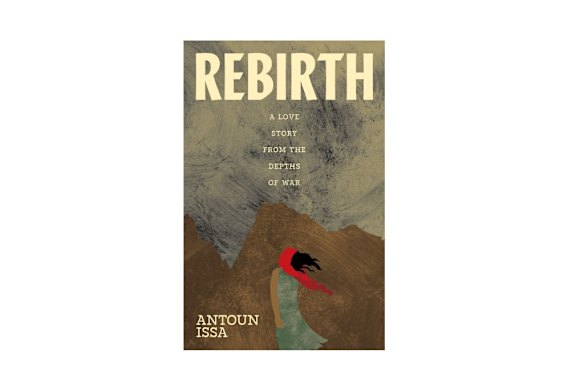
Antoun Issa’s Rebirth is a novelisation of his mother’s experiences of love and war and her flight from Lebanon to Australia in the 1970s. It follows Laila Khalil as she comes of age. Born to a poor Catholic family in Beirut, Laila is expected to marry as her parents wish, but it is a local hairdresser, Nicholas, who wins her heart. Their courtship is conducted in the shadows, with Laila’s domineering father certain to disapprove. Then, the Lebanese Civil War breaks out, with tragic loss of life, and Laila is confronted by the prospect of a momentous move to Australia. New hope, cultural adjustment and guilt at leaving a homeland which, it seems, will never be the same again all braid into a complicated knot of emotion in Issa’s novel. With odious dog-whistling about the “values” of migrants to Australia, and the continuing and terrible cost of war in Lebanon, Rebirth offers a compelling narrative of a Lebanese Australian family on an intimate domestic scale – one that honours the lost yet affirms and emphasises resilience and connection.
NON-FICTION PICK OF THE WEEK
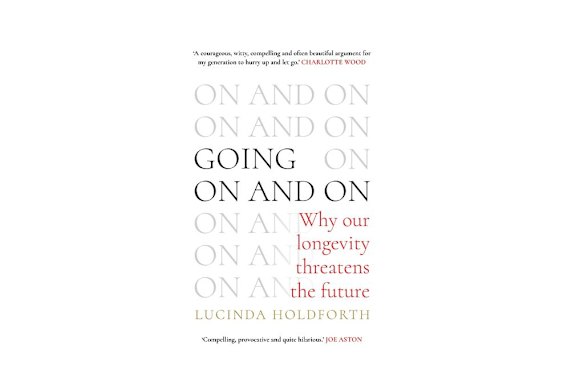
Going On and On
Lucinda Holdforth
Summit Books, $29.99
A Japanese fable tells of an elderly woodcutter who comes across a stream that reverses the ageing process. He tells his wife, who rushes off to drink from it. When she doesn’t return home, he goes in search of her only to find her transformed into a baby. In this essay, Lucinda Holdforth tackles the urgent question of who is left holding the ancient babies that we are turning ourselves into through lifespans extended far beyond our capacity to enjoy them. Instead of a health system bent on keeping people alive at all costs, we need to shift the emphasis to “helping people live well and die well”. As someone in her early 60s, Holdforth understands demographics have skewed society in favour of older people like herself at the expense of the young and of caregivers, the bulk of whom are women. In this eloquent, bold work, she urges us to reject the “narcissism of the dictators and longevity techbros” in favour of a society that recognises its duty to all.
When Words Fail Us
Stan Grant
NewSouth, $26.99
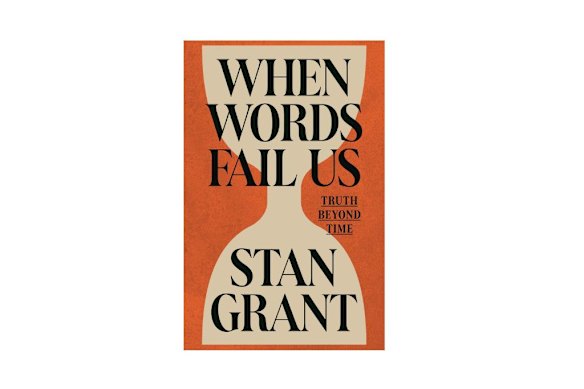
“A career in words left me nothing to say.” This is how Stan Grant felt when he stepped back from the coalface of journalism and the clamour of public life. In these meditations, he grapples with how to speak from a position of healing silence. Reflecting on the example of Christ on the cross, he says, “His truth was that we are each other… You could say that our tears are our common language.” Grant looks to his touchstones – philosopher Simone Weil, writer Albert Camus, Ngarinyin mystic Bungal David Mowaljarlai – to help him plumb what might lie beyond conventional notions of time, history, identity, politics and rights. He makes no concessions to the usual modes of public debate, pushing language to its limits to find new ways of making meaning. To hear what Grant is saying, we must leave our fondest shibboleths at the door and be open to what Weil called “mystical activism”. An activism which “asks not how can I fight for you, but simply – and this is so much harder – what are you going through?”
Periodic Bitch
Emma Hardy
Allen & Unwin, $29.99

Most women know something of the mood shifts that go with hormonal fluctuations. But what Emma Hardy experienced every month was off the scale. She felt manic, out of control, a stranger to herself. When she was first diagnosed with premenstrual dysphoric disorder, it was only vaguely understood. While it was a relief to discover the feelings of craziness had a biological origin, she was uneasy with how the illness seemed to confirm myths about women as hapless victims of their menstrual cycle. Melbourne’s COVID lockdowns – which form the backdrop to this crisply written, self-aware memoir – supercharge the already heightened intensity of Hardy’s emotional swings as she documents life and love in the thick of this condition. What might have been a claustrophobic tale is given air and a wider perspective through forays into the popular horror, crime and medical narratives that shape our understanding of the monstrous feminine.
Look After Your Feet
Rosalie Ham
Allen & Unwin, $34.99
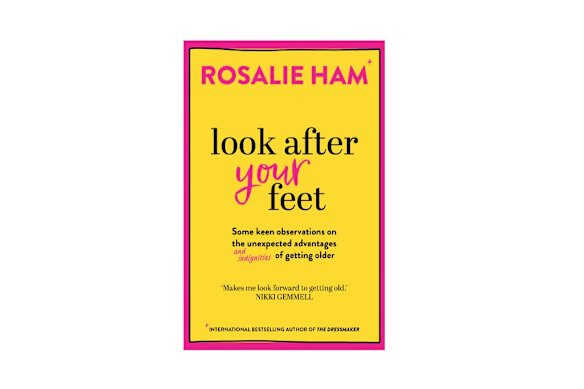
Working as a nurse in aged care impressed upon Rosalie Ham two things about growing old. Mobility makes all the difference – hence the importance of looking after your feet – and dementia can be amusing. Or not even dementia: “The old people were just plain honest after a lifetime of being polite, ladylike and well behaved.” The freedom to please yourself and speak your mind without caring what others think is rightly celebrated in this memoir about ageing, along with a clear-eyed preparedness to laugh at yourself and your peers. While part of me winced with recognition at the stories of hearing loss, memory lapses and sagging flesh, the joke is as much on the younger generations who can’t believe it will ever happen to them. After entertaining her grandchildren with stories of her friends’ bung knees and shingles on the bum, Ham adds with sly relish, “One day you’ll remember laughing about injuries of the aged, and it’ll be the day you fall over or get your ingrown toenail sliced out.”
Secret Japan
Jane Lawson
Affirm Press, $35
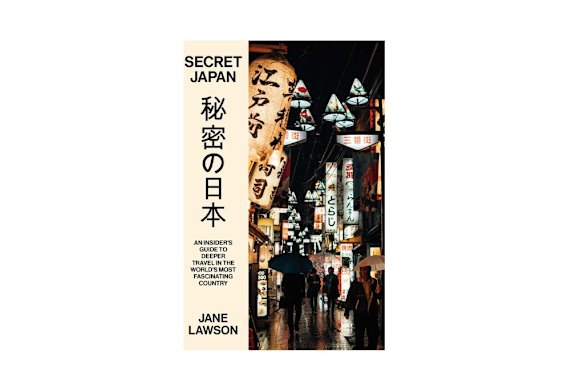
Taking inspiration from Zen Buddhism, Jane Lawson advises readers of this travel guide not to let expectations and bucket lists blind them to the incidental rewards that come from ”wandering without an agenda”. Instead, she urges “conscious travel”, providing the building blocks out of which readers can fashion itineraries suited to their particular interests at a pace that allows for serendipitous experiences. As well as chapters on the 47 prefectures of Japan’s main islands, Lawson includes meditative reflections drawn from her 40 years of travelling the country. Her inclination is to avoid peak seasons and to be mindful of weather variations between islands and the microclimates within them; knowledge that can make all the difference when pursuing cherry blossoms in spring or maples in their autumnal blaze. With its point-form detail on towns and villages, traditional crafts, food and drink and natural features, this guide is like a concentrate that one can dilute to taste. A solid foundation for crafting bespoke journeys that are open to happenstance.
The Booklist is a weekly newsletter for book lovers from Jason Steger. Get it delivered every Friday.
Disclaimer : This story is auto aggregated by a computer programme and has not been created or edited by DOWNTHENEWS. Publisher: www.smh.com.au