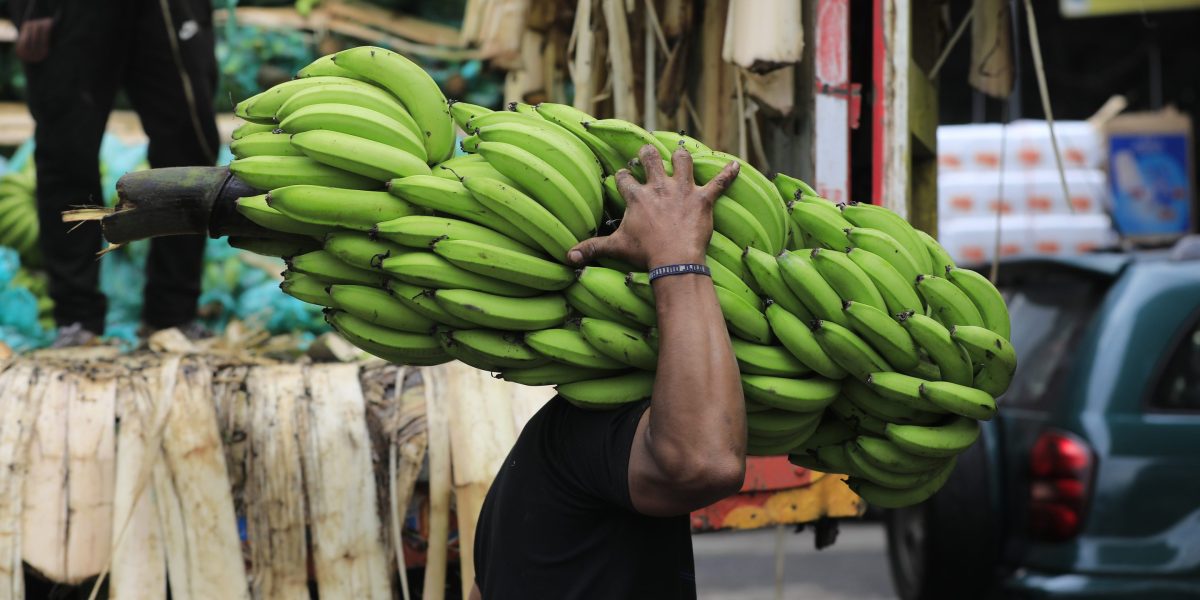
Bananas are one of the cheapest groceries at supermarkets. Americans paid just 66 cents per pound of the yellow fruit in October, compared to $2.10 for tomatoes and $2.14 for lemons, according to Bureau of Labor Statistics data. But they’re about to get more expensive thanks to El Niño, which causes either wetter-or-drier-than-usual conditions for banana growers thousands of miles away.
Less rainfall stunts bananas’ growth, which can yield harvest losses of up to 65%, and too much rainfall waterlogs the soil and incubates fungal and bacterial disease, which also reduces yields. And this year’s El Niño could be historically destructive, with about a 60% chance of the event exceeding previous El Niños dating back to 1950.
The threat is part of why growers are asking wholesalers for more money for the fruit—and getting it—which could test bananas’ status as a loss leader for grocery stores. Costa Rica’s National Banana Corporation has recommended increasing the minimum export price of bananas by nearly 10% for next year, citing climate-driven productivity losses, a stronger currency and higher costs after seven years of no changes. Fairtrade International also approved a 5.6% increase in its average minimum prices for banana growers starting in January, citing El Niño as one of the reasons.
Francisco Martin-Rayo, CEO and cofounder of agricultural commodity price and climate risk forecaster Helios AI, told Fortune the El Niño weather extremes are “dramatically higher” and could destroy harvests next year.
“A lot of harvests will be ruined, 1,000%,” Martin-Rayo said. “We worry about this dramatically for 2027.”
The world’s top banana exporter Ecuador has already recorded 851 floods between Aug. 29 and Nov. 13, with banana-growing provinces Guayas, Los Ríos, and El Oro among those affected, and has issued a red alert for El Niño. According to a report Helios shared with Fortune, Ecuador is experiencing climate stress that is four times its historical level for this time of year because of heavy rainfall, and other top banana exporters Costa Rica and the Philippines are facing similar stress.
“It is way too wet for bananas being grown in Ecuador and Costa Rica right now, and it is way too hot for bananas being grown in the Philippines right now, and so that means you’re going to have production and yield impacts,” Martin-Rayo said.
In the U.S., the cost of importing bananas has also climbed because of the Iran war pushing up diesel and fertilizer prices. During the first five months of 2026, banana imports rose 3% by volume but 12% by value compared with the same period last year, according to Department of Agriculture data.
Still, higher costs don’t necessarily mean higher prices for shoppers. Rob Weston, the founder of agricultural data analytics firm CropGPT, told Fortune that grocery stores have typically absorbed the costs when selling bananas.
“Bananas are interesting because grocery stores globally have traditionally treated them as loss leaders to attract shoppers, keeping retail margins extremely low and passing the financial burden directly down the supply chain to growers,” Weston said.
But Martin-Rayo said while price hikes are unlikely in the short term, he expects at least some in the long term because of El Niño, though he’s unsure exactly when they’ll manifest on store shelves.
“We’re already seeing this wholesale crisis, but the question is at what point does the retailer decide to pass those price increases through to the consumer,” Martin-Rayo said.
Disclaimer : This story is auto aggregated by a computer programme and has not been created or edited by DOWNTHENEWS. Publisher: fortune.com