Jonathan Levin
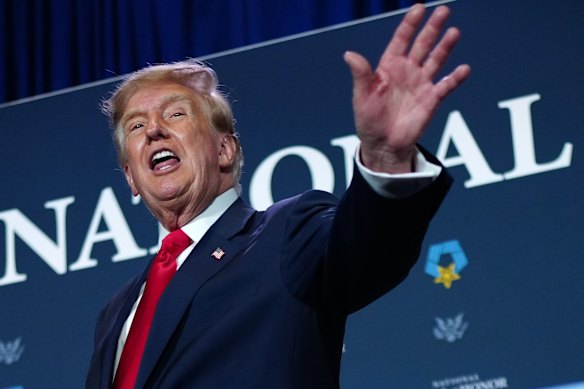
President Donald Trump has changed the geography of inflation. After years of consumer prices rising faster in big US cities, Trump’s war against Iran and global tariffs have made rural America ground zero for the fallout from the inflation bomb — and at a particularly tricky time for Republicans as they try to defend their House and Senate majorities in the midterm elections less than three weeks away.
The Bureau of Labor Statistics said that the consumer price index climbed 3.7 per cent in September from a year earlier, exceeding the median estimate of economists surveyed by Bloomberg and leading Wall Street traders to boost bets that the Federal Reserve will need to lift interest rates again before the month is over.
What’s notable about the report, besides the fact that it shows inflation is accelerating, is that it reveals consumer prices are rising faster for rural America, gaining 4 per cent over the past 12 months, than for city dwellers (up 3.6 per cent). This has been the case since right after the start of the Iran war in late February. Not only that, but the gap between rural and urban inflation this year is the widest since 2022, just after Russia’s invasion of Ukraine.
The reason why rural areas are getting hit harder is largely tied to the cost of motor vehicle fuels including diesel and gasoline (collectively up 35 per cent from a year earlier), which take up much larger shares of consumer budgets outside urban areas, according to the BLS’s Consumer Expenditure Survey. Also, rural America has a disproportionate dependence on household fuels (up 44 per cent), among them kerosene and propane, used for residential heating, hot water heaters and cooking in areas beyond the reach of traditional electric and natural gas grids, particularly parts of the Midwest, Plains and Appalachia.
Although Trump has touted what he said is a deal with Vladimir Putin to allow Russia to export diesel, the consensus is that the amount agreed upon is too little to lower prices. And not even Trump’s fellow Republicans approve of the arrangement. Rural voters are a big part of the GOP’s base. In 2024, 69 per cent of rural voters supported Trump, compared with 29 per cent who backed Democrat Kamala Harris, by far the widest margin of the three Trump general elections. Although rural communities make up just a fifth of the US population, they have an oversized role in determining the make-up of the Senate, in which each state gets two lawmakers irrespective of its size. In Kansas, for example, each voter has about 13 times as much influence in the Senate as a Californian.
The energy shock has ushered in a clear reversal of fortunes from recent years, when energy was relatively benign and rising shelter prices — a key expense for urban dwellers — drove much of the inflation. So too have Trump’s tariffs, which hit hardest in communities that rely on cars in the absence of public transportation. Vehicle purchases are 7.9 per cent of the rural budget, compared with 6.5 per cent of the city budget, according to the BLS. For example, tariffs put upward pressure on prices for car parts and ultimately helped drive up the cost of auto repair services, which have jumped 5.8 per cent from a year earlier. Maintenance and repairs are 1.5 per cent of the budget in rural communities and 1.2 per cent in cities. To be sure, Trump’s tariffs haven’t had as much of an impact on new vehicle prices, but that’s largely because manufacturers are eating the extra costs — for now.
It was perhaps inevitable that this inflation shift would show up in polls. Trump’s decision to join Israel in attacking Iran initially choked off energy shipments through the critically important Strait of Hormuz, raising the cost of items such as fertiliser and diesel, which hit farmers and trucking companies immediately and consumers subsequently. And even though more ships are now passing through the Strait, the risks involved have caused freight rates to soar, further adding to inflationary pressures.
A September 28-October 4 Pew Research Center Survey found that 35 per cent of Republicans and Republican-leaning respondents think Trump’s policies have hurt the US, up from 28 per cent in July and 18 per cent in January. Just a hair more Republicans – 39 per cent – thought Trump’s policies were helping. Sentiment among farmers in June fell to the lowest of the Trump administration and has hovered there, with input costs cited as their top concern, according to the Purdue University-CME Group Ag Economy Barometer. In a state that hasn’t elected a Democrat to the Senate since 1932, the Cook Political Report moved its assessment last week to list Kansas Senator Roger Marshall’s seat as a “toss-up,” from “lean Republican”. Also looking like toss-ups, according to Cook, are races in rural Alaska and Iowa.
The optimistic case is that underlying inflation dynamics aren’t really as bad as headline inflation would suggest. Core CPI rose 2.6 per cent from a year earlier — a bit more than economists were expecting, but far from a disaster.
But, famously, core inflation excludes what Americans arguably need to live on every day: food and energy. The Fed and Wall Street focus on that measure is premised on the idea that economic shocks tend to result in just temporary volatility in prices. But shocks have become a regular occurrence under Trump, with tariffs and the war with Iran at the top of a long list. Moreover, core inflation isn’t immune to the energy shock, which is now filtering into airfares and shipping costs that could prompt a second wave of catch-up price increases by companies early next year as they try to offset higher costs of doing business.
Higher interest rates wouldn’t make life any easier, but inflation hits the neediest the hardest and has to be contained. Futures markets now imply roughly one-in-three odds that the Fed will raise policy rates later this month. With the broad measure of inflation elevated for nearly six years above the Fed’s 2 per cent target, policymakers led by new chair Kevin Warsh would make excuses for the recent data at their own peril.
In rural communities, the latest shocks have exacerbated other pre-existing affordability challenges, including the cost of health care. Hospital services rose 5.6 per cent in September from a year earlier while nursing home costs were up 4.7 per cent. The rural population is older on average and has higher prevalence of chronic conditions such as heart disease and chronic obstructive pulmonary disease. And it stands to bear the brunt of the lapsing of the Affordable Care Act subsidies in place from 2021 to 2025.
Although there are still wide gaps in the way that Democrats and Republicans view the economy, inflation is impossible to ignore when it arrives in your own community. Adding insult to injury is the fact that this year’s consumer price surge is so obviously an inflation of choice, driven by White House policy. With the midterm elections rapidly approaching, Trump’s GOP may have run out of time to make life better for its struggling rural voters.
Bloomberg
The Business Briefing newsletter delivers major stories, exclusive coverage and expert opinion. Sign up to get it every weekday morning.
From our partners
Disclaimer : This story is auto aggregated by a computer programme and has not been created or edited by DOWNTHENEWS. Publisher: www.smh.com.au