As Marco Rubio ended his brief visit to the Middle East on Friday, he sought to cast in the best possible light his discussions with leaders of the Gulf states. Those leaders are deeply anxious that the deal agreed earlier this month between Iran and the US fails to address their worries about continued Iranian efforts to project power and influence throughout the region.
“They’ve shared with us some very concrete concerns,” the US secretary of state admitted, and insisted that any definitive agreement will require Tehran to not only restrict its nuclear programme but also halt its support of Hamas in Gaza, Hezbollah in Lebanon, militia in Iraq and the Houthis in Yemen.
But analysts and western security officials believe Iran is likely to increase its support for such groups after the conflict, which confirmed much of Tehran’s existing strategic thinking.
The activities of irregular fighters funded and armed by Israel and, to a lesser extent, the US too, is also likely to intensify, they say.
Hezbollah remains the mainstay of Iran’s coalition of allied groups and proxies around the Middle East, despite suffering badly in prolonged clashes with Israel in 2024 and 2025. The militant Islamist organisation also manifestly failed in its primary strategic role for Iran: to deter an Israeli direct strike.
But Tehran remains committed to Hezbollah, which was founded in Lebanon with the support of the Iranian Islamic Revolutionary Guard Corps more than 40 years ago.
“The Iranians see this as a temporary bad phase and believe Hezbollah will regenerate … It is absolutely vital for the Revolutionary Guards to rebuild their proxies around the region and to control their decisions,” said Hanin Ghaddar, senior fellow at the Washington Institute for Near East Policy.
By making the ceasefire between Iran and the US dependent on an end to fighting in Lebanon too, Iran has caused significant tensions between Israel, which wants to push forward with its offensive against Hezbollah, and Washington.
The Houthis in Yemen, which also have close ties to Tehran, only joined the recent conflict in its last days but demonstrated their ability to target Israel – though do little harm – and to threaten international shipping through the Red Sea. They remain more independent of their main sponsors, however.
“The [Houthis] are very hardcore and were useful during the war but … have their own decision-making processes that don’t involve the Iranians,” said Ghaddar.
In Iraq too, Shia militia nurtured and supported by Iran for more than two decades, flexed muscles during the conflict but never deployed their full offensive arsenal. Groups claimed responsibility for dozens of drone and rocket attacks against US assets in the country and targeted Kuwait, but did not mobilise en masse. Lethal retaliatory airstrikes and complex domestic Iraqi politics worked to make leaders of many factions wary of escalating any conflict with the US.
“They are more risk-averse than perhaps the Iranians would like,” said Michael Knights, an expert in Iraqi militias at Horizon Engage, a global political risk consultancy.
The Shia militia in Iraq were also used by Iran to target Kurdish groups to dissuade them from actively joining the war. In reality, the Kurds had their own reasons for steering clear of any commitment.
At the very beginning of the conflict with Iran in January, US and Israel had sought to mobilise armed groups among Iran’s ethnic minorities, including among Arabs from south-west Iran and among the Baloch in Iran’s south-east. The efforts proved abortive. “There were general contacts [with these communities] but they did not develop,” said Michael Milshtein, a former intelligence officer who is now an analyst at Tel Aviv University.
Likewise, neither was the US-Israeli strategy with Kurdish factions based in northern Iraq successful despite their historical ties with both countries.
Former senior Kurdish and US military officials said that a longstanding US plan in the event of war called for several thousands of lightly armed Kurdish fighters to cross into north-west Iran accompanied by US special forces. Protected by US and Israeli air power, these fighters would then advance as far and as fast as possible, aiming to destabilise the regime in Tehran and spark uprisings elsewhere. Iran’s conventional military and paramilitary forces were expected to defend against the advancing Kurds, which would expose them to devastating air raids.
Those with direct knowledge of the plan, which they described as being “on the shelf” for more than 20 years, differ on its chances of success. One former US special forces adviser with long experience in the region said a Kurdish force with embedded US special forces could have “gone through Iran like a buzz saw” but another said progress beyond Kurdish-dominated regions in the north-west would have been difficult, if not impossible.
In the event, there were only “a few hundred” fighters available for immediate deployment and Kurdish leaders were wary of the US after what they saw as a “betrayal” in Syria just weeks earlier when Washington backed an imposed deal which brought Kurdish civilian and military authorities under central government control.
The US and Kurdish former officials both said the plan called for a 12 to 24-month preparation period to get enough fighters trained, distribute weapons and create a unified command among the Kurds – whereas the White House appeared to think it could be implemented in days.
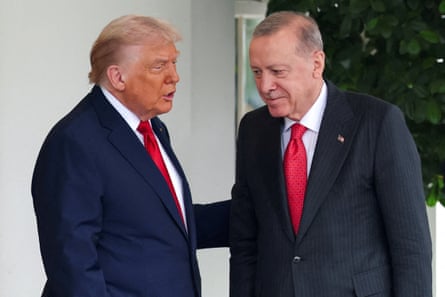
A final factor was strong personal opposition from Turkish president Recep Tayyip Erdoğan which persuaded Donald Trump to reconsider after several days during which Israeli warplanes attacked Iranian police stations, barracks and border posts to allow the Kurdish groups to launch an invasion.
In addition to their ties with the Kurds, Israeli intelligence services have reportedly supplied cash, intelligence and arms to a new Druze militia in Syria. The Military Council has been created to protect the beleaguered religious minority, Israeli military officials said last week, though experts point out it will also resist the consolidation of the new Syrian government’s authority in their regions, which serves Israel’s interests.
In Gaza, Israel has built up a series of Palestinian militia to fight Hamas, which has re-established its authority over the 2.3 million Palestinians who live outside the 60% or more of territory occupied by Israel.
These have launched raids against Hamas and undertaken other “very limited” tactical tasks but with very mixed results.
“They will in no way change the strategic situation in Gaza … They have zero popular support and … absolutely cannot be an alternative to Hamas,” said Milshtein.
Across the region there is a push to disarm militia and reinforce state authority to offset growing instability, but the temptation to use proxies remains despite the obvious risks. Recent and continuing conflicts in Syria, Libya, Sudan and elsewhere have all seen their extensive use.
“You can’t rely on proxies. They are not just useless,” said Milshtein. “They cause damage.”
Disclaimer : This story is auto aggregated by a computer programme and has not been created or edited by DOWNTHENEWS. Publisher: theguardian.com