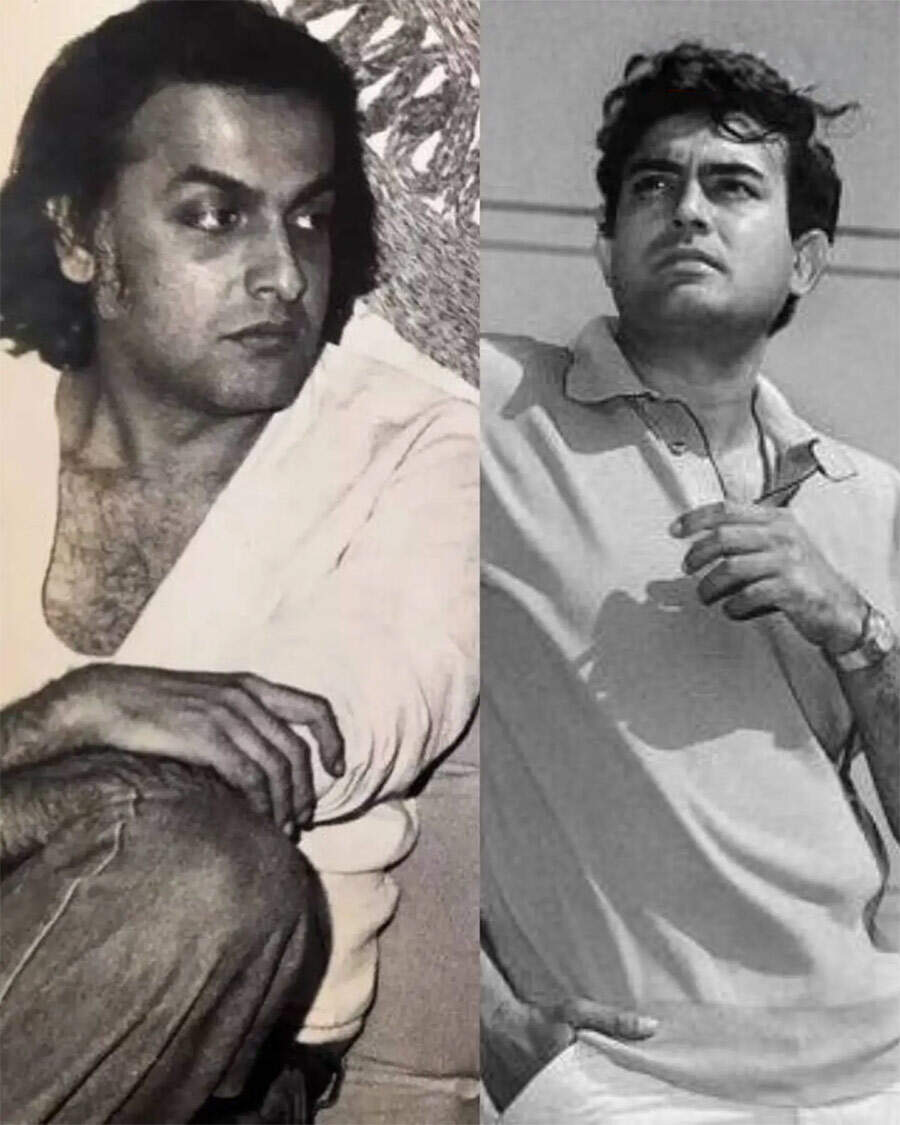
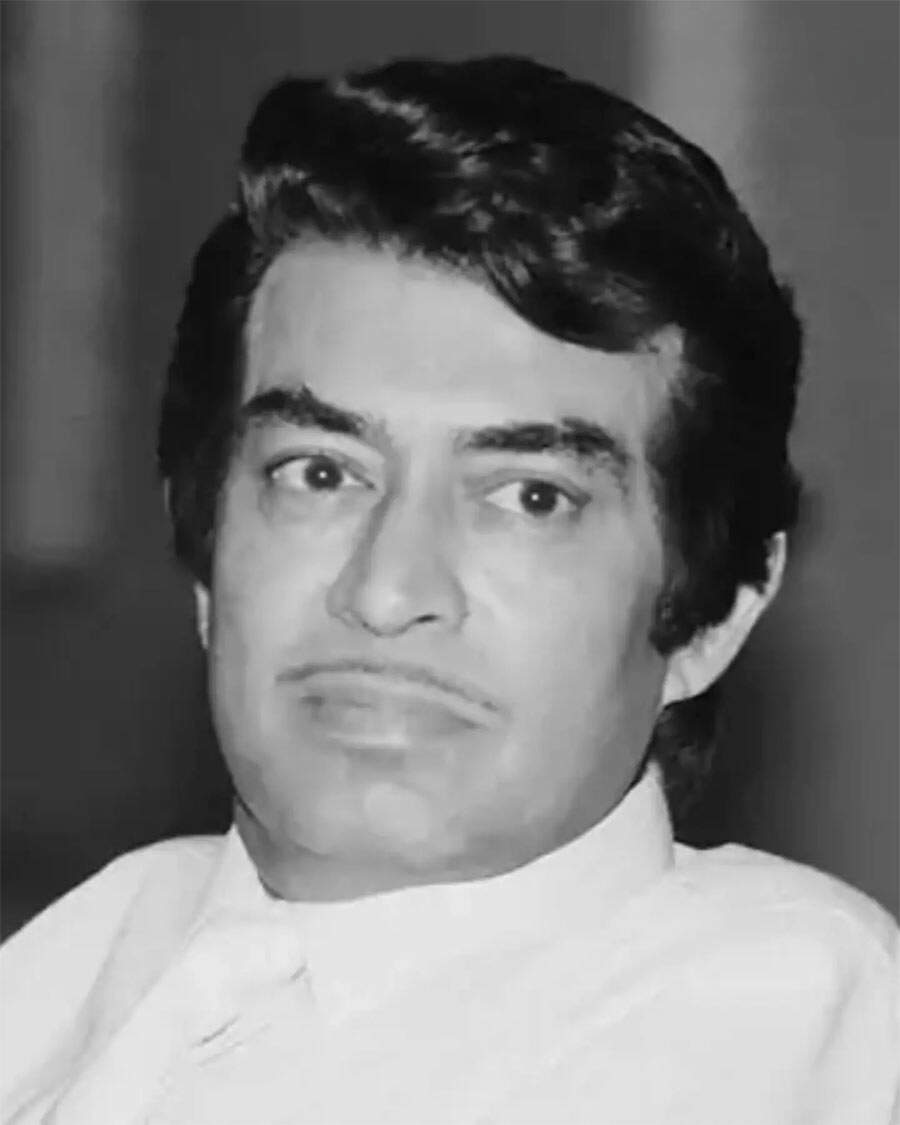
On the evening of 6 November 1985, I was in the editing room at Dimple Theatre with David Dhawan, cutting Naam. David was an editor then. His extraordinary success as a director lay ahead of him. That evening, we were simply two men sitting in the dark, joining one shot to another and trying to give a film its heartbeat.
Then the door opened. Rajendra Kumar came in. He told us that Sanjeev Kumar was no more. We stopped work. The trial shows were cancelled. The little preview theatre where film people gathered to watch their unreleased films went dark.
I remember the hush better than anything that was said. Then I went to his house.
I had climbed those stairs many times in the seventies, when I had no work, very little money, and more dreams than reasons to believe in them. There was a crowd outside. As I arrived, Shammi Kapoor got out of his car, visibly distraught, and hurried up the staircase. I followed him.
The living room was large, and part of it had been closed off by a glass partition. Shocked faces stared at one another across the glass. He had returned from heart treatment in America only weeks before. We had expected him to recover. Now we stood in his home, trying to understand a loss that had come without warning.
Somewhere behind me, someone asked for flowers. They had to be brought quickly. His body would remain there through the night. Flowers.
That one word took me back eleven years.
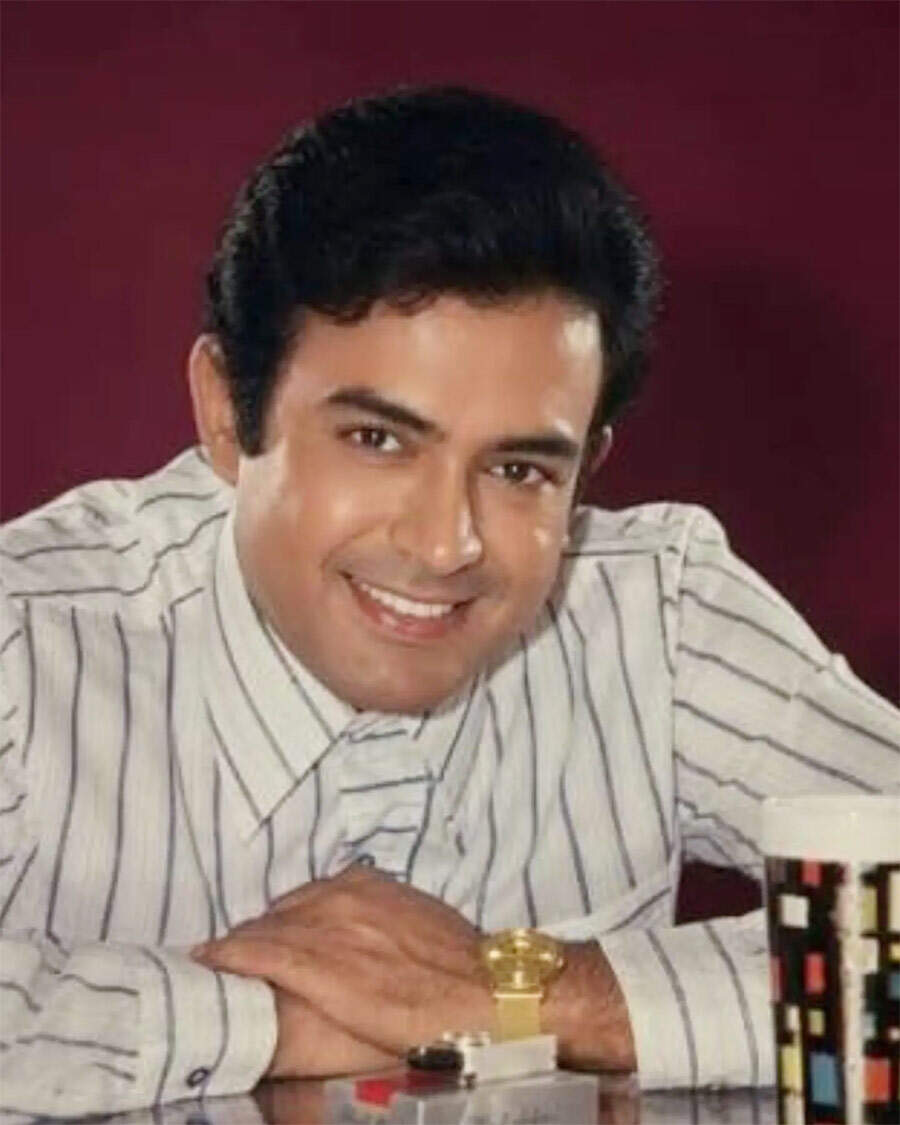
It was 1974. I was in my twenties, lying in my bedroom and waiting for my first film, Manzilein Aur Bhi Hain, to be released. The censors had held it up for almost a year. I was waiting as only a young man waits, believing that the whole of his life depends on one Friday. Then I heard my sister calling from the living room.
“Roses! Someone has sent Mahesh roses!” Who would send me roses?
She was placing a bouquet of red roses on top of the refrigerator. In a middle-class Bombay home of that time, the refrigerator was the jewel of the living room—a small altar to the family’s belief that life was moving upwards.
My roses sat on that altar. A little envelope was tucked into the bouquet.
Inside was a note:
“The takeoff may be delayed, but the flight is certain. Good luck. Sanjeev Kumar.” It was strange. I had known him only for a few months.
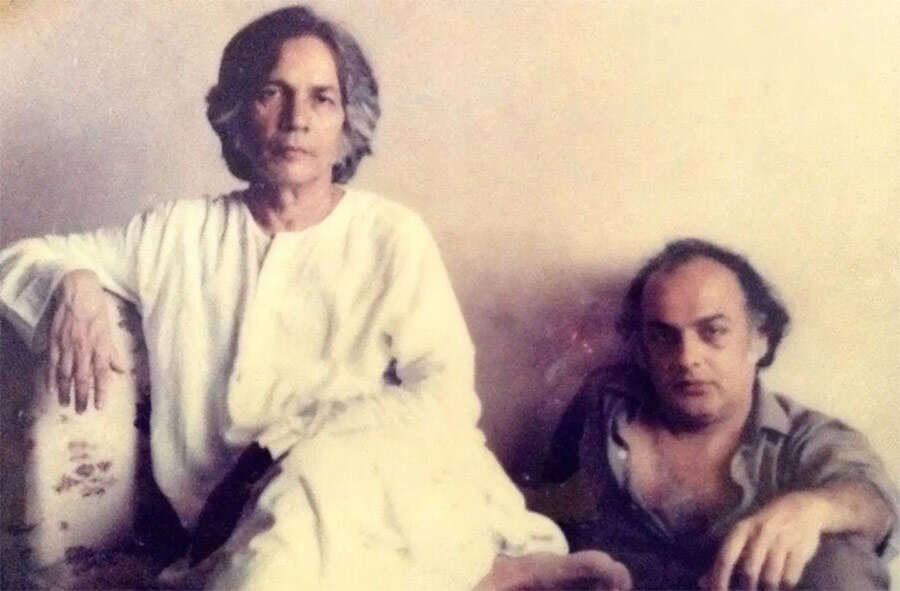
My friend Kuldeep Talwar lived with his wife in a middle-class Punjabi home. His wife was a background dancer in films. Sanjeev Bhai would come there in the evenings because Kuldeep could procure the alcohol he wanted and give him the good food he loved. But food and alcohol were not enough. Sanjeev Bhai needed someone to talk to.
Kuldeep understood this. He would telephone me and say, “Sanjeev is coming. Come over. This is your opportunity to forge a relationship with a star.” I would arrive before him. Then Sanjeev Bhai would come in, settle down with his drink and food, and we would begin talking.
I was a nobody with an unreleased film. What I possessed was an almost feverish love for cinema, particularly American cinema. Once I began talking about films, I could not stop.
He listened.
Perhaps he recognised the hunger in me. Perhaps he simply enjoyed talking to someone who wanted nothing from him except the conversation.
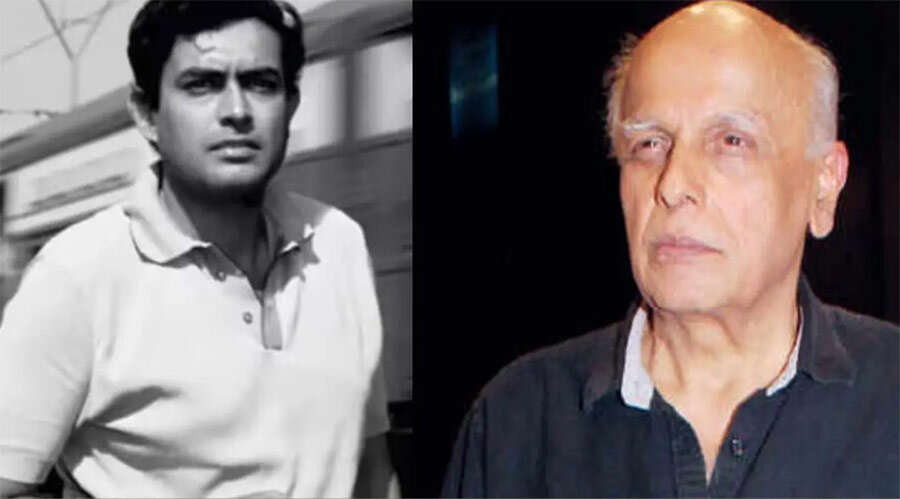
That was where our friendship began—in Kuldeep Talwar’s modest Punjabi home, over food, alcohol and cinema. Then the roses arrived. A few days later, Manzilein Aur Bhi Hain was released. It bombed at the box office. The takeoff had indeed been delayed. But something else had taken flight. My friendship with Sanjeev Kumar flowered. The roses withered. The film disappeared. He remained.
Not long afterwards, Johnny Bakshi came with me to ask Sanjeev Bhai to act in a film. Johnny had done more than anyone to make me a director. Now he was trying to help me remain one. Sanjeev Bhai said yes. There was no negotiation about money or stature. My first film had failed. I had nothing to offer him except another uncertain journey. He said yes because he liked me. He was shooting Sholay near Bangalore.
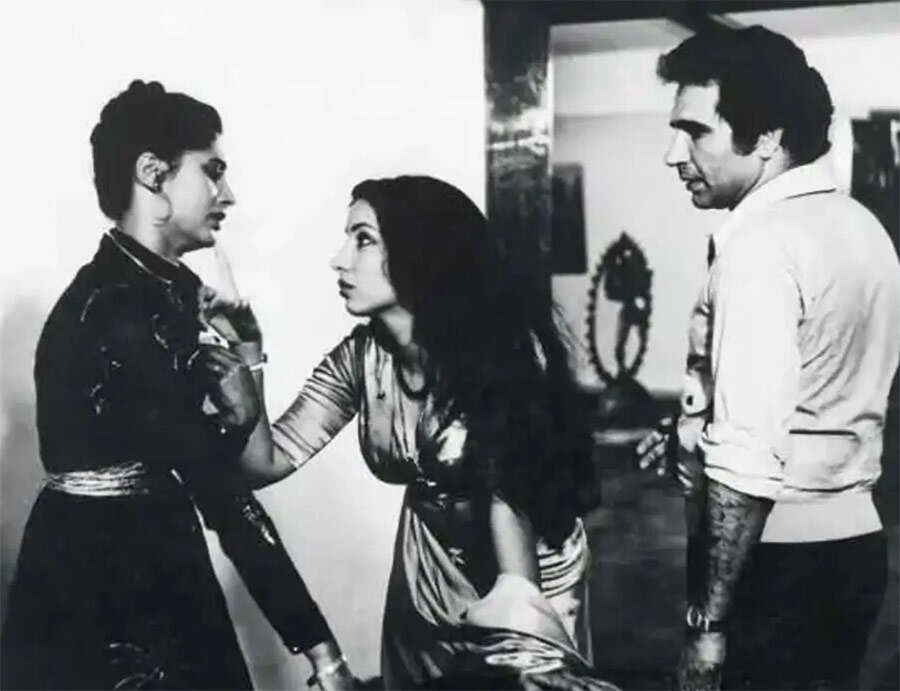
“Come to Bangalore,” he said. “I shoot Sholay in the day. After sunset, I’m free. I’ll shoot with you at night.” That film became Vishwasghaat. We shot at Bangalore Palace, often up to one or two in the morning. After a full day’s work on the most ambitious production of its time, he would arrive, sit for his make-up again and step into a double role—father and son—opposite Shabana Azmi and Kabir Bedi.
I knew why he was doing it. It was not for the money. It was not for the film. He was doing it so that I would have work.
I was a rank amateur, learning my craft at other people’s expense. But something happens between an actor and a director who begin to work on the same emotional frequency. The formal distance disappears. In those exhausted hours of the night, between one shot and the next, you discover each other.
The film failed. In this industry, a director whose film fails becomes a pariah overnight. Doors close quietly. Telephone calls are not returned. People who once recognised you begin to look through you.
His door never closed. I could still climb those stairs. I did not have to explain why the film had failed or defend the man I still hoped to become.
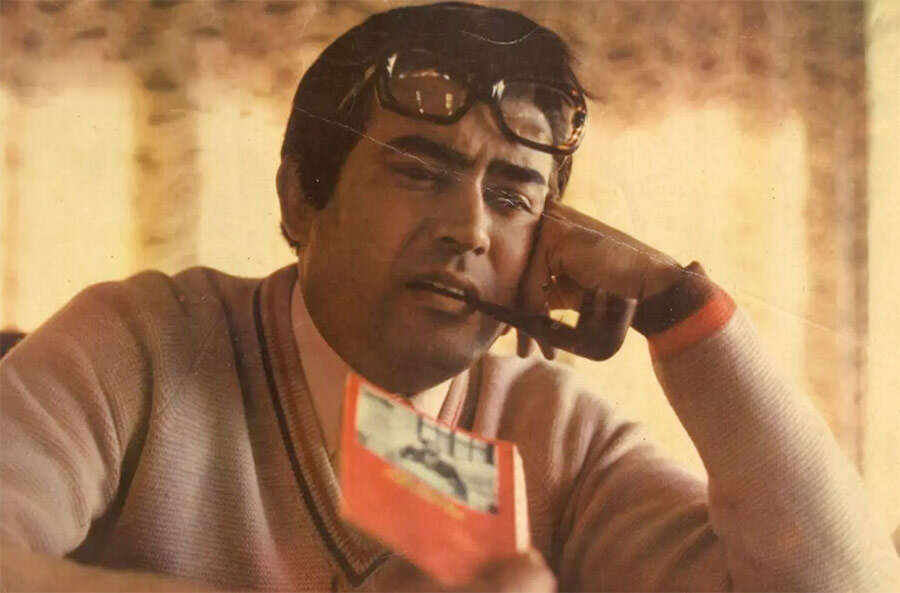
He knew I was hungry for cinema, and he fed that hunger. Off Cadell Road, near where I lived, stood Shree Cinema, a quaint little hall that showed rare films. We went there together. He always paid. He knew that sometimes I did not have enough money even for cigarettes. He never mentioned it.
His kindness never made the person receiving it feel small. One day he called me.
“Come with me to the USIS. They’re showing a documentary on Frank Capra.” He was a member. I went as his guest.
This was the early seventies. The Godfather had seized the imagination of the world. I was intoxicated by the machinery of cinema—camera movements, shadows, dark alleys, sunsets, and all the ways in which a young filmmaker announces that he is a filmmaker.
Then Capra said something whose essence went straight through me: People are interested in people.
It woke me from a long sleep.
I had been so occupied with learning how to make films that I had not understood what films were about. Human beings enter a dark hall to watch other human beings struggle, suffer, love, lose, and somehow come through their pain.
Fifty years later, I still repeat those words to every young writer and director who sits across from me.
Few of them know that I owe the lesson to the man who took me into that room, which changed my attitude towards filmmaking.
In the late seventies, Sanjeev Bhai was shooting Trishul in Delhi. A film festival was taking place in the city.
“Come with me,” he said. “I won’t be watching anything. Take my pass. See everything.”
I stayed in his hotel suite and slept on the sofas in the living room. By day, I moved from one dark theatre to another. In the evenings, I returned with my head full of what I had seen.
At that festival, I saw Akira Kurosawa in person. I watched films that shook me and showed me how vast the world of cinema was beyond the small territory I knew. Sanjeev Bhai gave up his festival so that I could have mine.
At the time, I was too hungry to measure the generosity. When you are starving, you remember the food. Much later, you remember the hand that placed it before you.
Then came the darkest chapter of my life. I was with Parveen Babi, and she was breaking down and slipping into an abyss. I took her away from Bombay and the glare of the media, first to Bangalore and then to Coonoor, hoping that she might heal. The flight was full of film people. Sanjeev Bhai was among them. He knew what I was going through.
He asked no questions. “I’m shooting in Ooty,” he said. “I’m staying at Fernhill. Come and see me.”
In Coonoor, Parveen and I stayed with U.G. Krishnamurti. U.G. did not believe in comforting lies. He feared that her illness would have a long and terrible course. I wanted to believe that love could rescue her.
Sanjeev Bhai sent his car to fetch me. That evening at Fernhill, away from the anguish of watching the woman I loved come apart, I poured out my heart.
He knew about Kiran. He knew I had walked away from my marriage, from what had once been a fairy-tale romance, and from my little girl, Pooja. Now the woman for whom I had left them was suffering, and I could not reach her.
There was no way to tell the story and make myself innocent. He listened to the version I could barely bear to tell.
He did not judge me. He did not advise me. I remember only the empathy in his eyes and the silence that allowed me to go on speaking. That night, I had two men beside me. The sage gave me the truth. The actor gave me his silence.
I needed both.
My relationship with Parveen ended in anguish. Then Lahu Ke Do Rang collapsed at the box office. The film existed because of the warmth of Vinod Khanna. We had Darjeeling and Hong Kong, karate fights and songs people loved. But the story did not work. The industry had given me four films. I still had not learned.
My marriage was broken by my betrayal. My love had ended in madness. My career had been nipped in the bud. My wanderings through the spiritual bazaar had brought me back to the person I had been trying to escape.
Myself. I came home. In Pooja’s school notebook, I wrote one word:
Arth.
For years, I had tried to make films I thought the market wanted. Now I would make the film I had to make. Arth became my rebirth. It also took me away from Sanjeev Bhai.
I still visited him, but less often. There was work now. People were waiting. Films had to be made. I had reasons. One always has reasons. He was a little hurt. I knew it.
He had made time for me after shooting all day. Once my flight had begun, I found less time for the man who had told me it was certain. I remember how he lent his Asterix comics to little Pooja. He had one strict rule: she would get the next lot only after returning the previous one.
He was very fond of her. Memory keeps such small things after the grand occasions have faded.
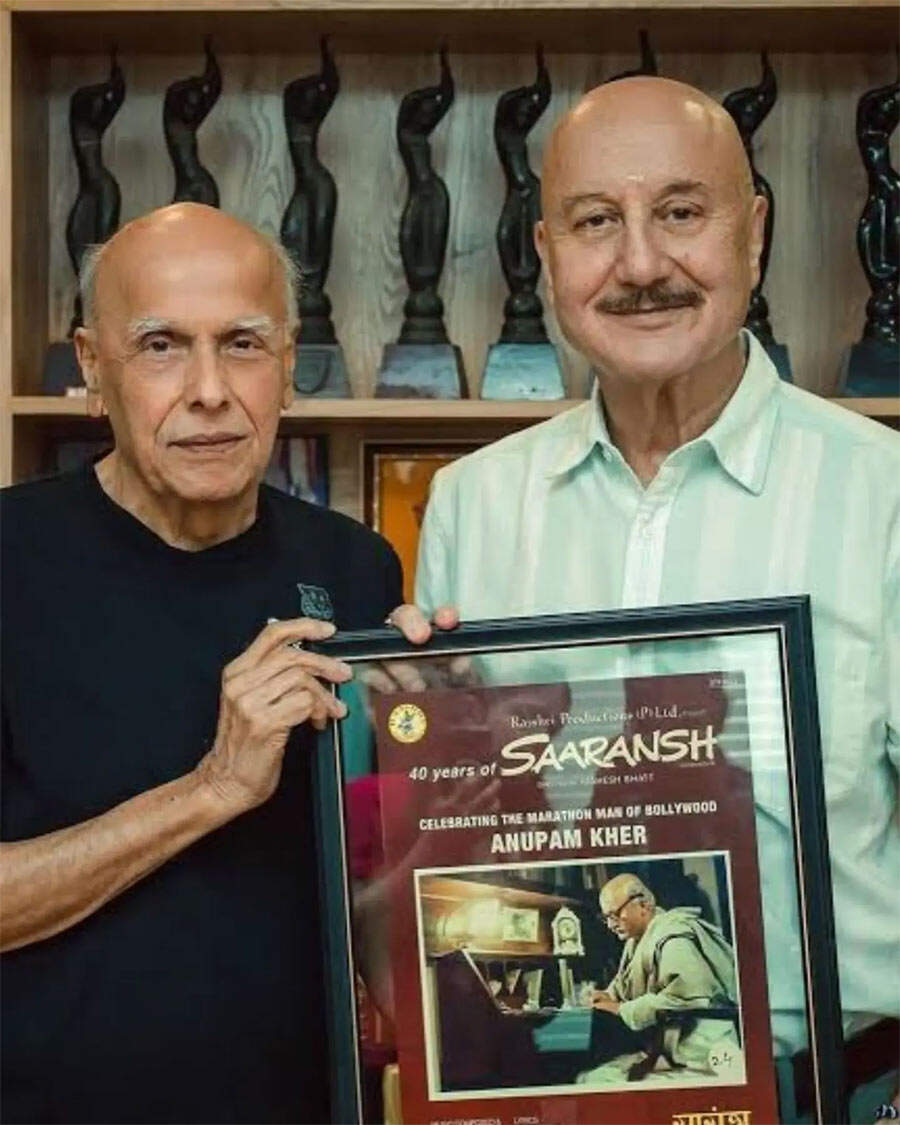
Then came Saaransh. I wanted Anupam Kher and Suhas Bhalekar. But Rajkumar Barjatya of Rajshri knew how close I was to Sanjeev Bhai. “Why not take Sanjeev in the main role,” he suggested, “and give Anupam the smaller one?”
I went to Sanjeev Bhai. Once again, he said yes.
Then Anupam found out.
He came to me furious. He fought, raged and refused to accept what was happening. The more he fought, the clearer it became to me that this burning young man was B.V. Pradhan. His hunger, his humiliation, his refusal to be dismissed—these were the film.
I called Rajkumarji and told him I wanted Anupam after all.
“You decide,” he said. “We are with you.” Now I had to face Sanjeev Bhai.
I told him the producers had decided to work with new faces. It was easier than telling him plainly that I had changed my mind.
He accepted it with complete grace and wished me luck. Whatever hurt he felt, he did not make me carry it. Saaransh was made. Before its release, Rajshri wanted Sanjeev Bhai to see it. Anupam wanted him to see it.
I wanted it most of all. And I was afraid.
He arrived alone at the small preview theatre in Prabhadevi, wearing a lungi and kurta. He went inside.
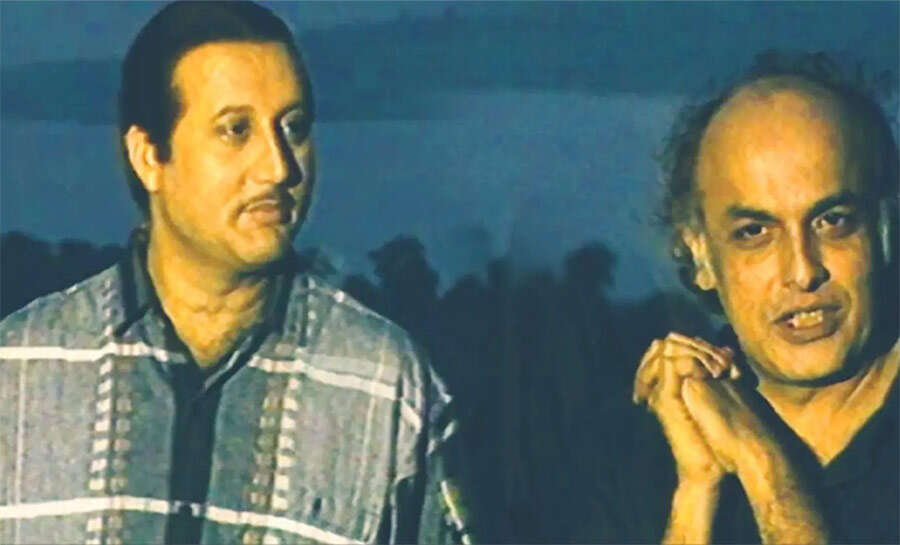
We waited outside. When the film ended, we heard a cry. We rushed into the hall.
The end titles were rolling. The music was still playing. Sanjeev Bhai was curled up on the floor of the aisle, sobbing uncontrollably. “Mahesh,” he cried.
He stretched out his hand to me. I had been waiting for his judgement on my film.
He was reaching for me. When he had gathered himself, he said, “Come with me. I want to take you somewhere.”
Anupam and I had no car. We got into his. He drove us to a hideaway near Khar Gymkhana that I never knew he had.
He took out a bottle of Vat 69 and poured us drinks.
Then he looked at me.
“Among the ten best films of my life, this is one of the best. I’m proud of you, Mahesh. My faith in you was always there, and you have proved me right.” Then he turned to Anupam.
“I couldn’t have done this role better than you.” The young actor who had taken his part sat before him, holding a drink Sanjeev Bhai had poured. That was the largeness of the man. He had lost the role, and he raised a glass to the man who had taken it.
“I’ll do anything to make this film work,” he said. Rajshri came up with the idea of a trailer in which he endorsed the film. I went and shot it.
Sanjeev Kumar, the actor I had replaced, stood before my camera and asked India to go and see Saaransh.
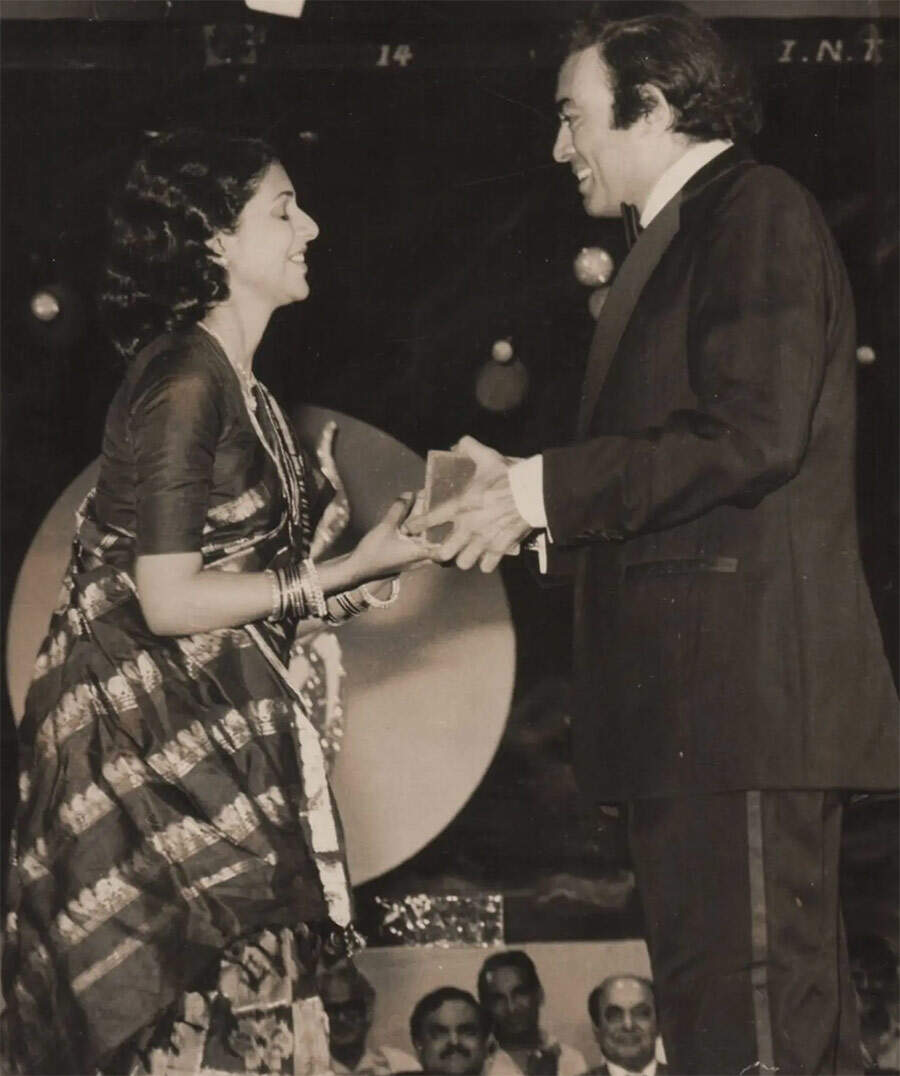
Then the rumours of his illness began. He went to America for treatment. The last time I saw him alive was at the Filmfare Awards in October 1985. Saaransh had won for its story, and Anupam had won Best Actor.
Sanjeev Bhai walked onto the stage to present an award. He had lost a great deal of weight. He wore a suit and bow tie and looked lean, almost dapper. But something about him frightened me. I told myself that he was recovering.
A few weeks later, Rajendra Kumar opened the door of the editing room at Dimple Theatre.
And so I return to where I began. The glass partition. The shocked faces. The arrangements being made around a man who could no longer hear them. He was forty-seven. He had played so many old men on screen. He never got to be one.
Late that night, we were asked to leave and return for the funeral. His body had been laid among blocks of ice. Before I left, I bent down and kissed his forehead. I walked reluctantly out onto the deserted street. At the far end, a taxi stopped. The driver stepped out and called to me.
“Bhai sahab, aapki madad chahiye.” I walked over. “Kya?”
“Sanjeev Kumar kahan rehte hain?” I pointed towards the small rise leading to Pali Hill.
“Thank you,” he said. “I have to deliver some flowers. I believe he has passed away.” “Yes,” I said. He got back into the taxi and drove slowly past me.
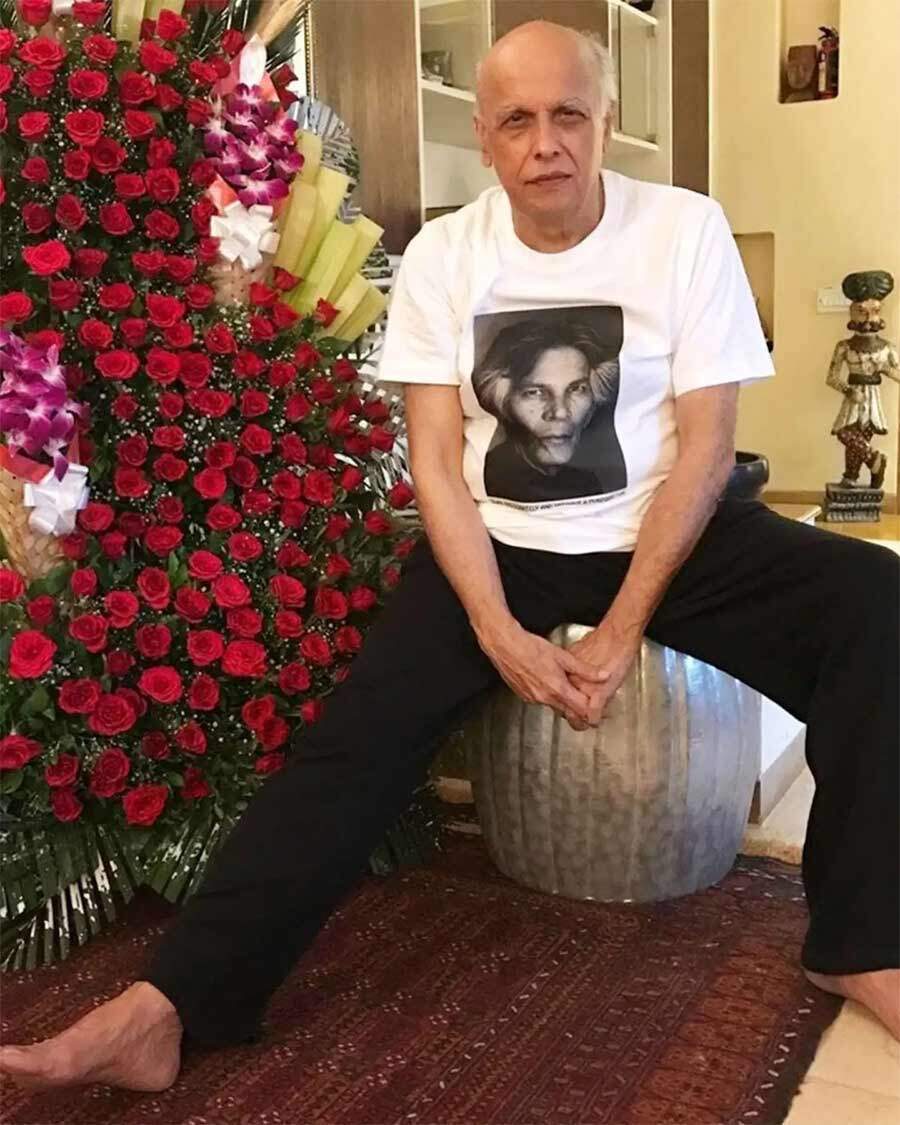
I saw the boot. It was filled with red roses.
And I was back in my parents’ living room in 1974. My sister was calling out:
“Roses! Someone has sent Mahesh roses!” There they were on top of the refrigerator. The bouquet. The little envelope. The handwriting of a man who had known me for only a few months, when I had done nothing to deserve his faith.
The takeoff may be delayed, but the flight is certain. My first film had failed.
But his prophecy had not. He had sent me roses when my flight had not yet begun. Now Arth and Saaransh were behind me. I was cutting Naam. The flight he had foreseen was underway.
And on the night his flight ended, the roses were making their way to him. I stood alone on the road and watched the taxi climb towards his house.
He had sent me my first roses. These were his last. You were right, Sanjeev Bhai. The flight was certain. I only wish yours had lasted longer.
Also Read: Editor’s Take: Remembering Sanjeev Kumar, The Actor Who Made Every Character Feel Real
Disclaimer : This story is auto aggregated by a computer programme and has not been created or edited by DOWNTHENEWS. Publisher: filmfare.com