Bhubaneswar: For decades, people living in the rugged tribal belt of Odisha’s Rayagada district carried the burden of illness almost alone. In the bauxite-rich Sijimali region, where villages remain tucked away amid dense hills and poor connectivity, healthcare was often a distant dream rather than a basic right.
Pregnant women were carried for kilometres on makeshift stretchers. Elderly villagers frequently skipped treatment because the nearest functional medical facility was too far away. Children suffering from fever or diarrhoea often depended on home remedies and faith healers due to the absence of doctors and medicines.
Despite being rich in natural resources, the region continued to struggle with chronic underdevelopment, malnutrition and poor healthcare infrastructure — a stark reminder of the uneven development in India’s mineral-bearing tribal hinterlands.
Now, a significant change is beginning to take shape in Sunger, a remote healthcare point serving nearly 20,000 people across the hilly tribal catchment area.
In a joint initiative with the Rayagada district administration, India’s leading industrial house Vedanta Aluminium has strengthened healthcare services at the Sunger Primary Health Centre (PHC).
The intervention aims to bridge a longstanding healthcare manpower crisis that had severely affected delivery of basic medical services in the region.
The PHC, which once struggled to function with skeletal staff, has now received support for deployment across all 11 key healthcare positions, including an MBBS doctor, AYUSH doctor, pharmacist, nursing staff and ambulance support.
For the local tribal communities, this is more than just an administrative upgrade — it represents access, dignity and hope.
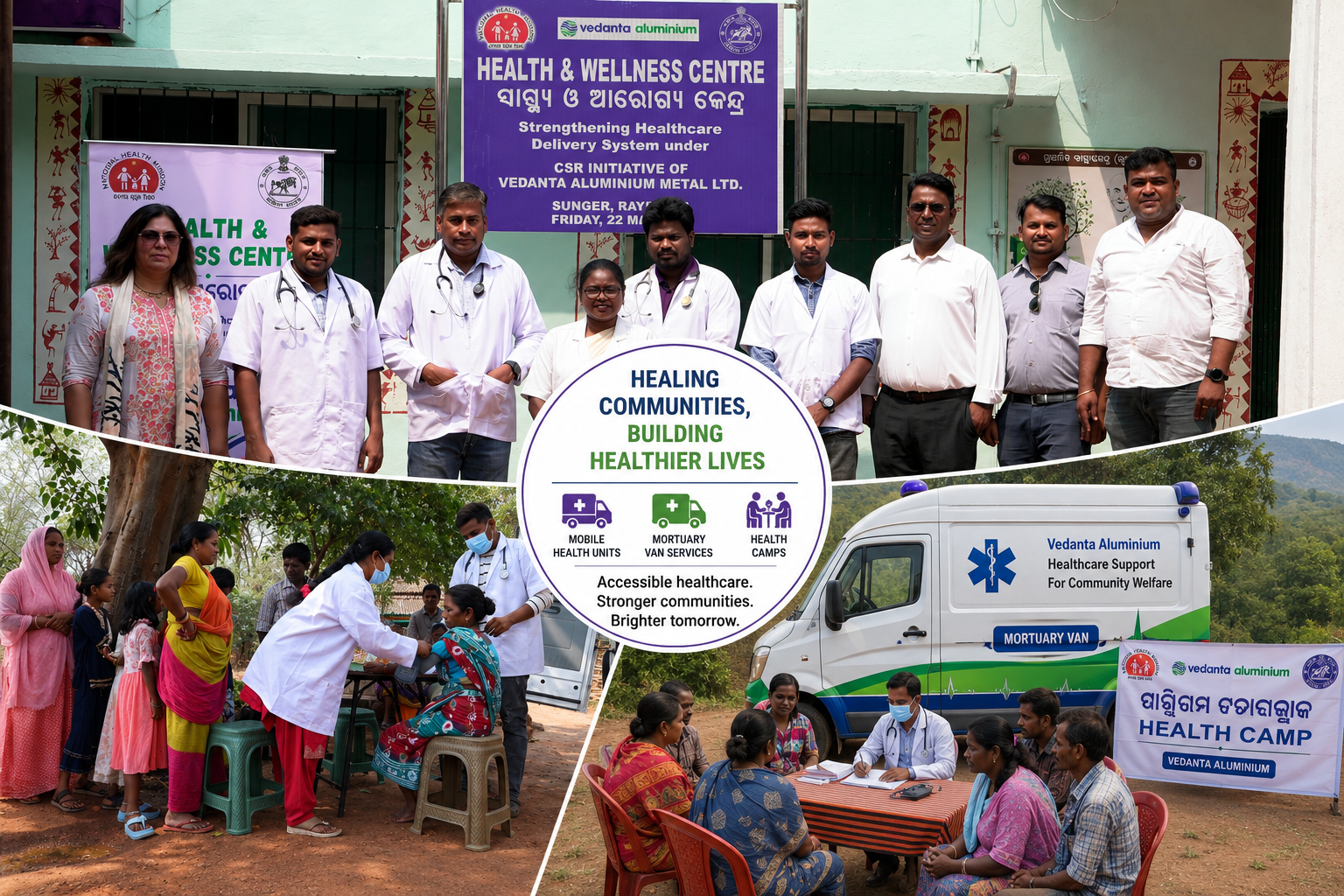
The strengthened healthcare services were formally inaugurated on Friday in the presence of local community leaders, health officials, ASHA workers, Anganwadi workers, self-help group members and villagers. Around 200 people attended the event, reflecting strong community participation and expectations from the initiative.
Importantly, the intervention directly addresses demands raised by villagers themselves during recent health camps, where residents had repeatedly appealed for permanent doctors and nursing staff at the PHC.
For people living in remote hamlets scattered across the Sijimali hills, the improved facility is expected to reduce dangerous delays in accessing treatment, particularly during medical emergencies.
“Earlier, even for minor treatment we had to travel long distances through difficult roads. During emergencies, the situation became extremely stressful for families,” said local villager Pradipta Nayak.
“Now, with doctors and medical staff available at the Sunger PHC, people feel a sense of relief and security. This initiative will especially help pregnant women, elderly people and children in our villages,” he added.
Local educationist and headmaster of Dumerpadar School, Suryanarayana Singh, said the shortage of healthcare manpower had long affected the region’s tribal communities.
“Vedanta Aluminium’s intervention is expected to bridge these critical gaps by strengthening primary healthcare infrastructure, enabling faster medical response, and ensuring better continuity of care for residents across surrounding villages,” he said.
Officials associated with the programme said the initiative is part of a broader effort to improve healthcare access in remote and underserved regions of Odisha. The healthcare initiative also includes Mobile Health Units (MHUs), mortuary van services and regular health camps in remote pockets of Rayagada and Koraput districts, addressing critical medical needs of underserved tribal communities.
In difficult terrains like Sijimali, where geography itself becomes a barrier to survival, healthcare access often determines whether communities can break free from the cycle of poverty and vulnerability.
“For many tribal families in these hills, the transformation of the Sunger PHC may appear modest by urban standards. But for a mother seeking safe childbirth, an elderly patient needing urgent care, or a child requiring timely treatment, it could mean the difference between despair and survival,” said Rajesh Patnaik, a local journalist and development activist.
Disclaimer : This story is auto aggregated by a computer programme and has not been created or edited by DOWNTHENEWS. Publisher: deccanchronicle.com