TEHRAN – The sixth edition of Health Expo Iraq, the country’s annual international health exhibition and congress, will offer Iranian health-sector manufacturers a valuable opportunity to enter the Iraqi market and expand their business in the neighboring country.
The event is scheduled to take place from October 28 to 31 at the Baghdad International Fair.
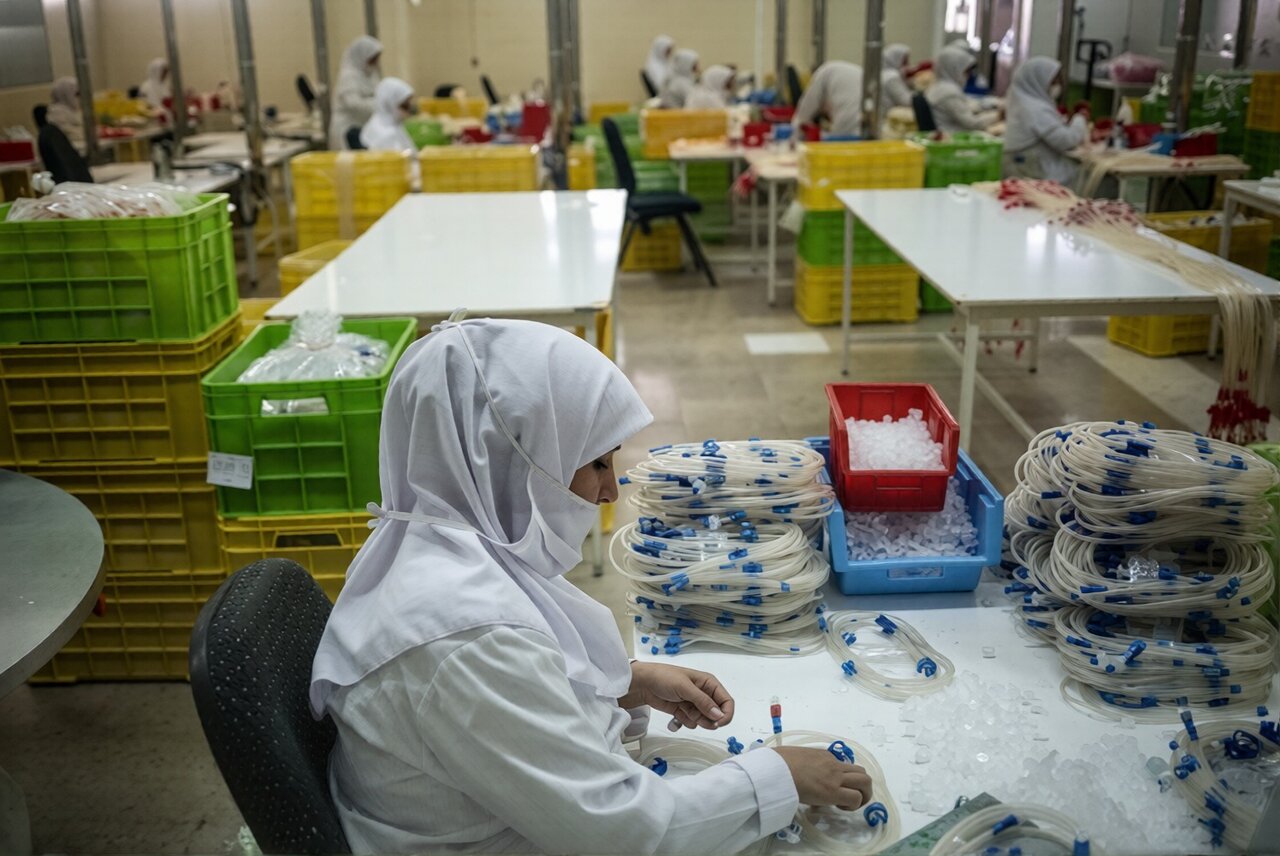
The expo will feature a wide range of products and services, including medical equipment, laboratory devices, pharmaceuticals, hospital supplies, and healthcare services. Additionally, seminars, workshops, and panel discussions are organized for participants, encouraging industry professionals to share knowledge and experiences and establish new business connections.
Iranian delegation will set up their pavilions to feature the products and achievements of the Iranian knowledge-based firms, establish connections between Iranian and Iraqi experts and stakeholders, hold B2B meetings, and identify the needs of Iraq market in the field of health.
Iran’s ambassador to Iraq and embassy advisors will visit Iranian pavilions and hold meetings with companies to explore potential and capacities for the expansion of ties between the two countries.
With a population of over 46 million and the pharmaceutical market valued at 4 billion dollars, Iraq is one of the biggest health markets in West Asia. The country is planning to meet 70 percent of its pharmaceutical needs through domestic production by 2027.
Boosting academic ties to meet domestic, regional priorities
On October 19, Iran’s scientific counselor in Iraq, Mohammad-Javad Najafi, and Iraqi Deputy Minister of Higher Education and Scientific Research, Haider Abd Dahed, discussed ways to strengthen academic cooperation between universities in the two countries, with a focus on problem-solving approaches and addressing domestic and regional needs.
Collaboration on problem-oriented research, the provision of scholarships, the facilitation of educational issues for students, and preparation for the ‘Third Iran-Iraq Science Week’ were the key topics discussed during the meeting, IRNA reported.
The officials also discussed conducting collaborative research projects, supervising joint dissertations for postgraduate degrees, and publishing joint scientific articles in globally reputable magazines.
Addressing the challenges and educational problems faced by the students in reciprocal countries was the other issue raised by the two sides.
In September, the chancellor of Shiraz University, Alireza Afsharfar, and Najafi explored the potential to expand academic ties with Iraqi universities.
The officials met on September 26, discussing ways to develop collaborative educational courses, exchange students and professors, attract international students, and conduct joint research projects, msrt.ir reported.
Establishing dual degree programs, holding summer schools and educational courses in English and Arabic languages, and participating in Iran-Iraq Science Week were among other issues highlighted by the officials.
The officials also highlighted the need to share the scientific and educational capacities and the capabilities of Shiraz University with Iraqi students, and to implement research projects on shared challenges like dust storms and the environment. They also discussed ways to foster ties with universities and scientific centers in Lebanon and Kurdistan.
Iran regional leader in health system
In May 2025, the World Health Organization’s (WHO) director for the Eastern Mediterranean Regional Office (EMRO) said Iran is a leading country in expanding its healthcare system and providing access to universal health coverage.
Lauding the country’s achievements in recent years, Hanan Balkhi said that by expanding primary health care services, increasing access to health coverage in rural areas, maintaining high vaccination rates, and reducing maternal and newborn mortality, Iran has managed to become a successful role model in the region, the health ministry’s website reported.
The official made the remarks in a meeting with Health Minister Mohammad-Reza Zafarqandi. The meeting was held on the sidelines of the 78th World Health Assembly (WHA).
The issue of medicine and medical equipment production and self-sufficiency in these areas is one of the government’s priorities, Zafarqandi said in March 2025.
Medicine and medical equipment are two important areas related to people’s health, he said, adding: “We are trying to reach self-sufficiency for the supply of medicine and medical equipment,” IRNA reported.
According to the head of Iran’s Union of Medical Equipment Manufacturers and Exporters the medical equipment is exported to more than 60 countries annually.
More than 70 percent of medical equipment and 100 percent of normal hospital beds are domestically made, IRNA quoted Abdolreza Yaqoubzadeh as saying.
Also, over 95 percent of specific ICU and CCU beds and more than 85 percent of operating room medical equipment, such as anesthesia machines and other equipment, are manufactured with cutting-edge technology in the country, he added.
Some 600 medical equipment companies are operating in the country, producing around 99 percent of the medicine supplied to the domestic market.
Medical equipment manufacturers in the country produce and supply over 10,000 types of medical equipment to domestic and foreign markets. Now, various pieces of laboratory equipment are manufactured at prices much lower than the same foreign products.
Disclaimer : This story is auto aggregated by a computer programme and has not been created or edited by DOWNTHENEWS. Publisher: tehrantimes.com