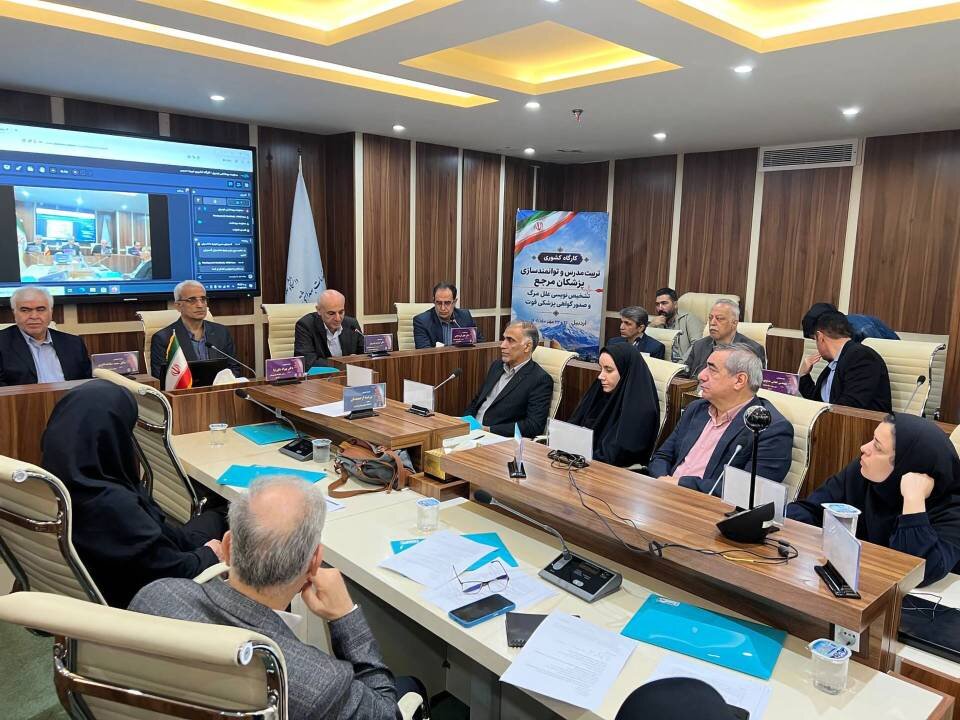
TEHRAN – The health ministry, in cooperation with the World Health Organization (WHO) Country Office, has held a training-of-trainers workshop on cause of death determination and medical death certification.
Hosted by Ardabil University of Medical Sciences in close collaboration with the Health Management and Social Development Research Centre affiliated to Golestan University of Medical Sciences, the two-day workshop was held on October 13 and 14, the WHO website announced in a press release on October 26.
The workshop provided an opportunity to further build national capacity and promote the consistent application of good practices in cause of death certification. It aimed to strengthen physicians’ knowledge and skills in accurately determining cause of death and completing medical death certificates.
The workshop was inaugurated by Saeed Sadeqiyeh Ahari, Vice-Chancellor for Public Health at Ardabil University of Medical Sciences; Jean Jabbour, WHO Representative in the Islamic Republic of Iran; Babak Farokhi, Director-General of the Health Network Management Centre, MOHME. Jaber Gharedaqi, Academic Member of the Forensic Medicine Organization; and Ardeshir Khosravi, Director of the Secretariat for Research and Development in Deputy for Public Health, MOHME.
Dr. Jabbour reaffirmed WHO’s commitment to supporting national efforts to improve the quality and accuracy of cause of death certification and highlighted the importance of reliable mortality data for understanding population health, setting priorities, and informing evidence-based health policies and planning.
The Islamic Republic of Iran has made important progress in strengthening its death registration system, including using the International Classification of Diseases (ICD) and capacity-building for physicians and medical coders.
“Better medical death certification leads to more reliable mortality data, providing a stronger foundation for evidence-informed health planning and public health action,” said Dr Jabbour.
WHO has supported MOHME in developing an applied training package to strengthen physicians’ skills in accurately completing medical death certificates. The workshop provided an opportunity to further build national capacity and promote the consistent application of good practices in cause of death certification.
Physicians from universities of medical sciences across the country and specialists from the Forensic Medicine Organization participated in the workshop, bringing together expertise from clinical practice, public health and forensic medicine. The participation of Behzad Davarnia, Chancellor of Ardabil University of Medical Sciences, underscored the commitment of academic institutions to advancing the initiative.
The workshop is part of broader efforts to strengthen vital statistics and health information in the Islamic Republic of Iran. Accurate cause of death certification is essential to generate reliable mortality data, identify health priorities, and support better-informed decisions on health policy, planning and resource allocation.
WHO will continue to work with national institutions and academic partners to support efforts to strengthen health information systems and advance evidence-informed public health action.
Recent services
WHO, with support from the Central Emergency Response Fund (CERF), has delivered 10,000 cholera rapid diagnostic tests (RDTs) to Iran’s Ministry of Health and Medical Education to strengthen early detection and help prevent potential outbreaks.
The tests will be distributed to the high-risk provinces of Hormozgan, Kerman, Sistan-Baluchestan, and Khuzestan to enable the rapid identification of cases and support timely public health responses.
“Early detection is our most critical tool in preventing infectious disease outbreaks. By equipping local health systems with these tests, we are empowering frontline workers to respond swiftly and protect vulnerable communities,” said Dr. Jean Jabbour, WHO Representative to Iran.
The broader project aims to benefit more than 112,000 people. Despite logistical challenges affecting air and sea transport, WHO is also working to deliver essential supplies for malaria and dengue fever.
In response to the growing crises affecting public health infrastructures in Iran, the WHO, in cooperation with the Health Ministry, kicked off in May a two-million-dollar project to support urgent health responses in the country.
Supported by the United Nations CERF, the project, titled ‘preventing the spread of diseases and maintaining essential health services during emergencies’, aims to minimize the outbreaks of diseases, stabilize the process of providing health services, and safeguard health system from declining performance across the country, the health ministry’s website reported.
Since the beginning of the imposed US-Israeli war against Iran, on February 28, airstrikes have lowered the country’s capacity to provide vital health services.
The aggressors destroyed 229 health centers, 49 hospitals, 78 pharmaceutical facilities, laboratories, and warehouses.
Moreover, 56 emergency bases were targeted, nine hospitals were evacuated, 47 ambulances and 10 emergency vehicles were severely damaged.
Attacks on pharmaceutical and diagnostic equipment manufacturing facilities and their surrounding areas have disrupted the domestic supply chain of medical equipment and challenged the process of providing critical care to those in need.
Climatic shocks in southern provinces of the country have exacerbated the situation. Irregular, above-normal rainfall, following prolonged periods of drought in 2025-2026, has led to localized flooding and the accumulation of stagnant water.
High-risk provinces, including Sistan-Baluchestan, Hormozgan, Kerman, and Khuzestan, are at greater risk of exposure to contaminated water sources. The situation, coupled with conflicts in water and sanitation infrastructure and disease surveillance, has increased the risks of infectious disease outbreaks and waterborne diseases, particularly cholera, and acute water diarrhea.
MT/MG
Disclaimer : This story is auto aggregated by a computer programme and has not been created or edited by DOWNTHENEWS. Publisher: tehrantimes.com