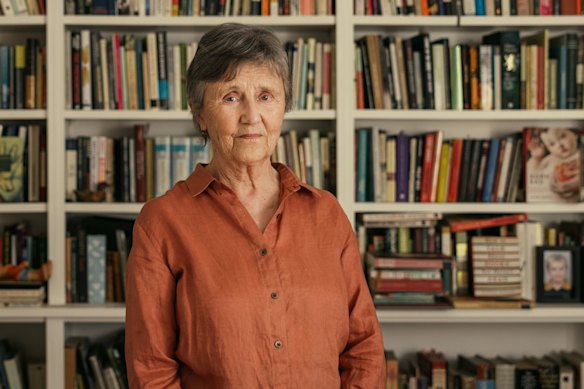

For three tumultuous weeks in 2006, Helen Garner shared her home with “Nicola”, a close friend who had come to Melbourne seeking treatment for her terminal, stage-four cancer. “It was the worst three weeks of my life,” says Garner.
The Spare Room, published in 2008, is Garner’s fictionalised account of that time: “It’s about an experience of enormous excruciation and rage and smashing self-knowledge.”
Starring Natalie Jones as a fictionalised Garner and Antoinette Halloran as Nicola, the book has been adapted into an opera that premieres this week. Devised by composer Jane Hammond and librettist Therèsa Borg of Monstrous Theatre, it is directed by Sarah Goodes and presented by Victorian Opera.
When she agreed to her friend staying, the Baillie Gifford Prize-winning author had “this Florence Nightingale-type fantasy” about her role. “I was going to be really efficient and quiet and kind, and was going to look after her lovingly. But really, it was a power struggle between me and her terror of death and her fantasy that this treatment was going to cure her, which I could see in about five minutes it wasn’t going to.
“I loved her deeply as a friend,” Garner says. “She was a wonderful person, but she was mad with fear.”
The opera has been in gestation for several years. At rehearsals this month, Halloran says she’s never experienced a production this emotional before. “And I’ve done Madame Butterfly,” she says. “It’s sort of divorced whereas this is so close to home. We’ve been through it with some of our friends, and my mother is stage four at the moment. So we’re living it. Everyone in the room [has] in some capacity.”
Jones, who plays Garner, agrees, saying the show has touched everybody. Garner writes about real people and real emotions and gets to the really uncomfortable truth of things, she says. “She doesn’t gloss over the ugliness of what happens. She feels a lot of anger and frustration with Nicola because Nicola’s not facing up to what’s happening. But then who is she to say that she should face up to it?”
As her friend’s carer, Garner felt moments of overwhelming rage. That was largely because of her friend’s denial of her reality, but the pain she was suffering, the lack of serious painkillers and the alternative treatments – which included Vitamin C infusions and coffee enemas – didn’t help.
“There was this awful glaze that was over her of always smiling and beaming and saying ‘oh yes I need you to believe in this treatment because it’s going to have the cancer on the run by the middle of next week’, and I’d just be in despair.”
Garner hasn’t seen the show yet, preferring to wait until it opens. She finds adaptations challenging and feels slightly nervous about it, even though she has great faith in the team making it. “I’ve learned to bear it, and sometimes to enjoy it enormously and to glory in it. To think, gosh, to think that they care about it enough to have done this work.”
Goodes says Garner never shies away from the domestic detail. “But when you read her work, you always know there’s this subterranean epic and spirit, and questions of faith and destiny underneath it,” she says. “Opera allows it to be celebrated or expanded and makes it a perfect fit for her.”
In the book – and the show – Garner’s fictionalised granddaughter, Bessie, brings moments of levity, and straddles this world and the afterworld. She can sense that Nicola is close to death, says Goodes. “There’s something different about Nicola. She can pick it up like animals can pick it up.”
The director says being in the room with these extraordinary singers evokes a visceral response. “The music’s taken me somewhere,” she says. “I just kept looking at [the singers] on that first week, going, ‘How are they doing it?’ They’re like athletes – they take these breaths and this extraordinary universe comes out of them.”
After The Spare Room was published, Garner was invited to speak at a Carers Australia conference; in the room were people who had carer roles for longer than she could comprehend, sometimes entire lifetimes. Many looked like they’d been to war, she recalls. Afterwards, a woman came up to her and said, we’ve all had to feel that anger, it’s part of the deal in these situations. “And she said, ‘You must never be ashamed of the anger’. And I got it. It was such a gift she gave me that day.”
The Spare Room is at Arts Centre Melbourne from October 7-10.
The Booklist is a weekly newsletter for book lovers from Jason Steger. Get it delivered every Friday.
From our partners
Disclaimer : This story is auto aggregated by a computer programme and has not been created or edited by DOWNTHENEWS. Publisher: www.smh.com.au